
Quick Facts About MP4 (For Fast Readers):
If you've ever dealt with digital video, you’ve definitely seen the .mp4 extension. But what is an MP4 file, really? Is it just a video? Is it magic?
In short, MP4 is a universal container format. In the modern digital age, whether you are watching a tutorial, uploading a gaming clip, or sharing a funny meme with a friend, you are likely interacting with an MP4. It is widely recognized as the standard for web streaming (YouTube/Netflix) and social media sharing. It efficiently wraps together high-quality H.264/AVC and H.265/HEVC codecs, along with metadata and subtitle streams, into one neat, easily sharable package.
In this comprehensive guide, we are going to dive deep into what the MP4 format is, answer questions like what's the difference between MP3 and MP4, and teach you exactly how to work with these files like a pro. Let’s break it down together!

When most people ask what MP4 is, they assume it’s just a specific video format. But to truly understand what MP4 means, you have to learn the difference between a container and a codec.
Think of an MP4 file like a digital lunchbox. The lunchbox itself doesn't taste like anything; it's just a sturdy plastic container designed to hold your food and keep it organized. In the digital world, this lunchbox is a digital multimedia container.
Inside this MP4 lunchbox, you pack your different items:
1. The Sandwich (Video Data): This is the actual moving picture.
2. The Juice Box (Audio Data): This is the sound, usually compressed using AAC audio.
3. The Napkin and Note (Metadata): These are the extras, like chapter markers, album art, and subtitle text.
So, when someone asks what an MP4 file format is, the most accurate answer is that it's a container that holds all these multimedia elements so your media player can play them back at the same time.
If you check the properties of the last five videos you saved to your camera roll, you'll likely find they're all MP4s. But why? What does MP4 stand for, and why is it so universally loved? (It officially stands for MPEG-4 Part 14, by the way). Here is why this format absolutely dominates the digital landscape today.
Before MP4 became the standard, we had to choose between lossy and lossless formats. Lossless files (which throw away no data) look beautiful but are gigabytes in size. Older lossy formats were small but looked like pixelated messes. MP4, utilizing advanced codecs, perfectly balances this. By intelligently managing the bitrate (the amount of data processed per second) and the frame rate (the number of images displayed per second), an MP4 can deliver a crisp, beautiful video that is small enough to email or text to your friends.
Have you ever watched a movie on your tablet and tapped the screen to skip to the next scene or turn on the English subtitles? You can thank the MP4 format for that. Unlike older, simpler video formats, MP4 supports complex metadata and subtitle streams. This means creators can embed multiple language tracks, 3D graphics, album artwork, and scene chapters directly into the single .mp4 file. It's incredibly user-friendly.
As we consume more content in ultra-high definition, platforms need a way to send massive amounts of data over the internet without constant buffering. Because MP4 is optimized for modern web protocols, it acts as a highly efficient pipeline. When you boot up Netflix to watch a 4K show, the platform is likely delivering the content in an MP4 container with an HEVC codec. It streams smoothly, looks stunning, and doesn't melt your router.
Even though MP4 is the undisputed king of compatibility, it isn't the only container out there. Understanding what the MP4 video file format is also means understanding how it stacks up against its biggest rivals.
This is a super common question! While the names sound like direct sequels, they serve entirely different purposes.
If you have an MP4 file that only contains a black screen and music, you can easily use a converter to strip the video away and turn it into an MP3 to save space on your phone!
If the MP4 is the lunchbox, the codec (coder-decoder) is the recipe for preparing the food inside, so it fits perfectly. Codecs use video compression to shrink massive raw video files down to manageable sizes.
When playing these files, your computer uses hardware acceleration—tapping into your graphics card—to quickly decode the complex math of these codecs without freezing your system.
MKV (Matroska) is an open-source container that is incredibly popular among movie enthusiasts and anime fans.
MOV is Apple's proprietary video container, originally designed for the QuickTime player.
If you're shooting video on your phone to edit later, check your camera settings! Most phones allow you to choose Most Compatible (which saves as MP4) instead of High Efficiency (which often saves as MOV or HEIC).
Sometimes, you might end up with a video file that your default media player won't play, or a massive 4K MKV file you need to shrink to an MP4 for a school presentation. This is where video transcoding comes in.
Over the years, I’ve tested dozens of multimedia tools. To avoid malware, adware, or tools that ruin your video quality, I highly recommend using dedicated, professional software. Here is how you can easily manage, play, and convert your files using the AnyMP4 software suite.
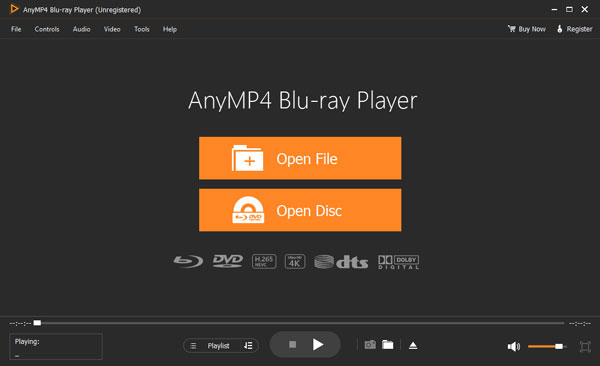
If your computer's built-in media player is acting up, AnyMP4 Blu-ray Player is a fantastic alternative. Despite the name, it’s not just for discs; it is a universal media player that can handle almost any digital file you throw at it, including 4K and 8K MP4s, without lag.
Free download AnyMP4 Blu-ray Player via the following buttons. (Always download software directly from official sites to stay safe!)
Secure Download
Secure Download
1. Launch the Player
Open the application on your PC or Mac. A clean, intuitive interface'll greet you. Click on the Open File button in the center of the screen.
2. Select and Play MP4
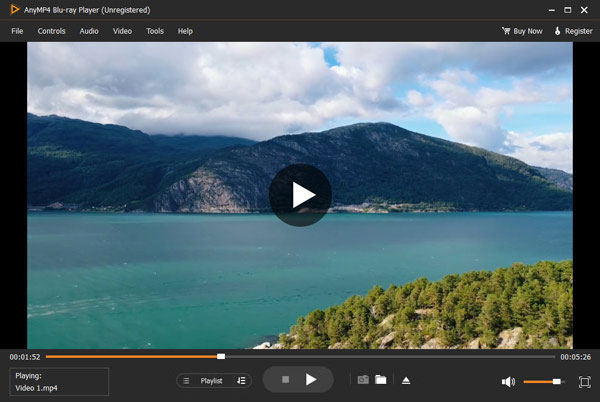
Browse your computer for your MP4 file (or MKV, MOV, AVI, etc.), select it, and hit open. The video will start playing immediately with crisp audio and picture.
If you have a stubborn video format you need to convert to a highly compatible MP4, AnyMP4 Video Converter Ultimate is my absolute go-to tool. It uses hardware acceleration to convert files incredibly fast while maintaining the original visual quality.
Free download and install AnyMP4 Video Converter Ultimate from the following buttons.
Secure Download
Secure Download
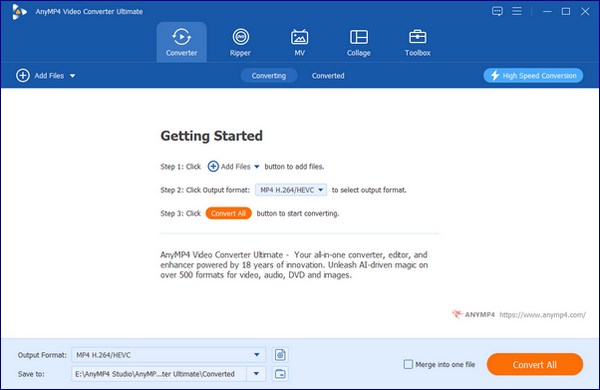
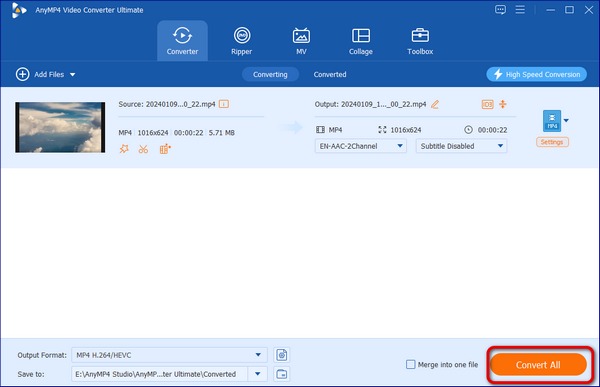
1. Add Your Video
Open the program. Drag and drop your source video (like an MOV or MKV) directly into the main window, or click the big + button to add it.
2. Choose MP4 as Output
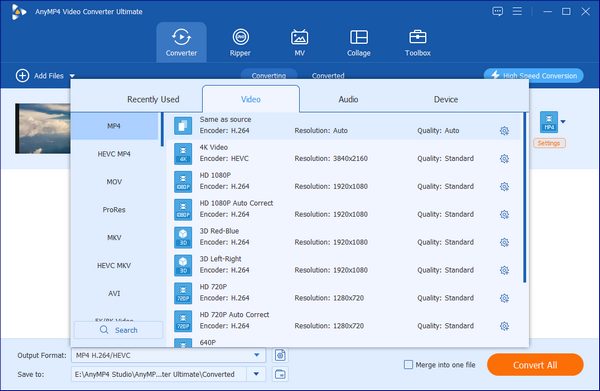
On the bottom-left side of the video listing, click the output format drop-down menu. Go to the Video tab, select MP4, and choose your desired resolution (e.g., Same as source to keep the original quality, or 1080p to shrink the file size).
3. Convert Video to MP4
Select a destination folder at the bottom of the screen to specify where your new file will end up. Finally, click the big, orange Convert All button. Within moments, you’ll have a fresh, highly compatible MP4 file ready to share!

Is MP4 the same as MPEG-4?
Not exactly, though they are closely related. MPEG-4 is a broad set of methods for compressing digital audio and video data. MP4 (specifically MPEG-4 Part 14) is the actual digital container format used to store that compressed data. Think of MPEG-4 as the rules of the game, and MP4 as the stadium where the game is played.
Does converting to MP4 lose quality?
It entirely depends on your settings during video transcoding. MP4 is a lossy format, meaning it uses compression. However, if you use a good converter (like AnyMP4 Video Converter Ultimate) and set a high bitrate, the quality loss will be completely undetectable to the human eye. If you compress a massive 10GB file down to 10MB, yes, you will lose noticeable quality.
Can MP4 hold 8K video?
Absolutely! Because MP4 is just a container, it can hold footage at incredibly high resolution, provided the right codec is used. When paired with the newer H.265/HEVC or AV1 codecs, an MP4 file can easily store and play back stunning 8K video for advanced monitors and modern smart TVs.
Can MP4 files carry viruses?
This is a crucial security question. A true, standard MP4 file containing only video and audio data cannot execute code, meaning it cannot run a virus on your computer. However, hackers are sneaky. They often disguise malicious software by renaming it (e.g., cool-video.mp4.exe). If a file ends in .exe or prompts your media player to download a special codec to play it, delete it immediately. Always ensure your file extensions are visible in your operating system settings, so you know exactly what you are clicking!
So, what is the MP4 file format? It is the undisputed champion of the digital video world. By acting as a highly efficient digital multimedia container, it brings together high-quality video, crystal-clear audio, and essential metadata into a package that works on literally every device you own. Whether you are a high school student rushing to turn in a multimedia project, an aspiring YouTuber, or just someone who loves sharing clips with friends, understanding how MP4s work gives you a massive advantage in our digital-first world.
The next time you right-click a video and see .mp4, you'll know exactly what's going on under the hood—from the codecs that compress the data to the AAC audio that makes it sound great.
Secure Download
Secure Download
 Updated by Alice Thorne to Convert Video, Glossary
More readings
 What Is An MKV File and How to Play It without Quality Loss
Do you have a video in MKV file and want to learn more information about it? You are at the right place since this concrete guide will tell you everything.
 MOV File - How to Open and Convert a MOV File
What is a MOV file? How to open MOV file? Is MOV better than MP4 and carry a better quality? How to convert MOV to MP4? All the answers about MOV are here.
 WMV File - What Is a WMV File and How to Open/Convert WMV Format
What is a WMV file? What will play a WMV file on Mac? Is WMV better than MP4? How to convert WMV to MP4? All the answers about WMV format are here.
 AVI File – Everything You Need to Know about Video File Format
AVI is a computer file format that contains audio and video data and plays back the audio and video data simultaneously. Get more info from this post.
 Add your comments to join the discussion here