
SUMMARY:
MKV format is best suited for archiving, Blu-ray disc backups, multichannel audio, subtitles, and chaptered movies, whereas MP4 format is more compatible with portable devices, TV players, web browsers, and video editing software.
Choosing between MKV vs MP4 can be confusing, as both formats can store high-quality videos. But the real difference is how each container handles streams/tracks and where you plan to use the video. MKV is an open container that can hold multiple tracks and is preferred on Blu-ray rips. MP4, on the other hand, is a universal container that supports H.264 and is mostly compatible with nearly all devices you can name. This post compares their compatibility, quality, size, subtitle handling, editing, and streaming capabilities. We also cover how to convert MKV to MP4 and how to play these formats error-free.

| MKV | VS | MP4 |
| Computers, media servers, home theaters, archiving, and recording | Compatibility | Computer, mobile devices, smart TVs, socials, editors, and web browsers |
| Up to 8K or higher, depending on the internal video codec | Quality | Up to 8K |
| 112.5 MB to 270 MB | Size (3-minute 1080p video) | 180 MB to 400 MB |
| SRT, ASS/SSA, PGS, VobSub, and WebVTT | Subtitles | Soft subtitles, hard subtitles, and closed captions |
| Not the best for direct video editing | Editing | Basic, short, or casual editing |
MKV, also referred to as Matroska Video, is an open-source multimedia container format. It can hold multiple video, audio, picture, subtitle, and chapter tracks in a single file. MKV Blu-ray rips are common because they preserve high-quality video, multiple audio tracks, and subtitles.
The difference between MKV and MP4 is that MP4 is a universal multimedia container format. It is supported on most modern devices, operating systems, editing applications, and web browsers. And, the MP4 H.264/AAC has the widest possible playback support.
MP4’s compatibility has more advantages because you can play it on smartphones, computers, video editors, socials, and even smart TVs. MKV, on the other hand, also works with modern media players and devices. However, the playback depends on the encoding used.
MKV and MP4 files have virtually the same size if they use the same video codec, resolution, and bitrate. So, if you’re asking which is better: MKV or MP4, the answer is neither. If you put the exact same video and audio streams into either file, their file sizes will be the same.
When comparing MKV vs MP4 quality, neither offers better video quality. The actual quality depends on the codec and bitrate being used. If both use the same exact video codec, audio codec, and bitrate, their quality would be the same.
In this regard, MKV offers superior subtitle support compared to MP4. MKV subtitles can natively handle multiple tracks, rich text styling, and image-based formats. MP4 is also good at handling subtitles. It can contain hard-coded subtitles, soft-coded subtitles, and even closed captions. (Check closed captions vs subtitles here).
MP4 is supported by most of the leading video editors in the area of editing. MKV is also editable in compatible software, but some applications will not import all MKV files or reconfigure all its tracks. MP4 is the obvious winner for general editing compatibility.
For MKV vs MP4 streaming, MP4 is the standard format used for online streaming. And MKV is better suited to local media servers and home streaming systems. However, transcoding is required for unsupported codecs or subtitle formats.
AnyMP4 Video Converter Ultimate is a professional video-to-video conversion software that can both remux and re-encode video files. It can batch-process hundreds of MKV files simultaneously without experiencing lag or crashes. This software adopts the most advanced hardware-accelerating media processing to achieve a 120× conversion speed.
1. Download the MKV-to-MP4 converter and complete the installation.
Secure Download
Secure Download
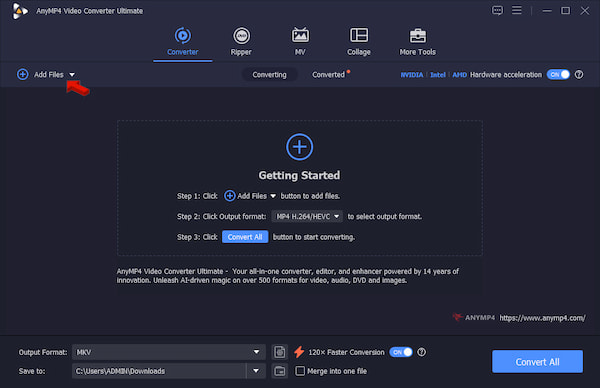
After setup, AnyMP4 opens to the Converter tab. Click +Add Files to import the MKV videos.
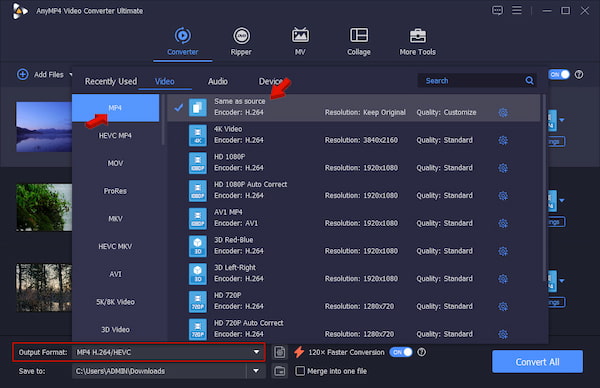
2. Go to Output Format and select MP4 under the Video category. Select Same as Source as your quality preset to convert MKV to MP4 without altering the underlying media stream.
3. Return to the main interface and activate Hardware Acceleration to speed up the conversion. Set the output destination, then click Convert All.
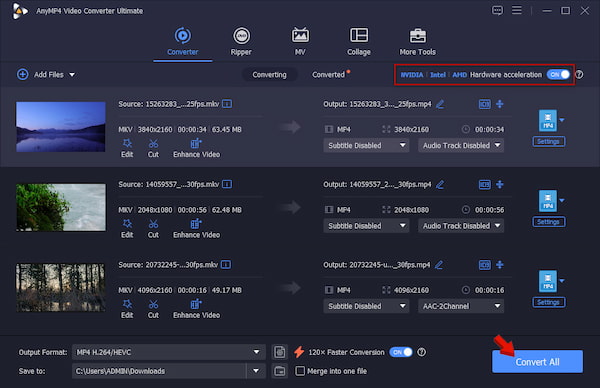
AnyMP4 Video Converter Ultimate isn’t limited to MKV-to-MP4 conversion. As a multi-format video-to-video conversion software, it can re-encode or remux MKV to more than 500+ formats.
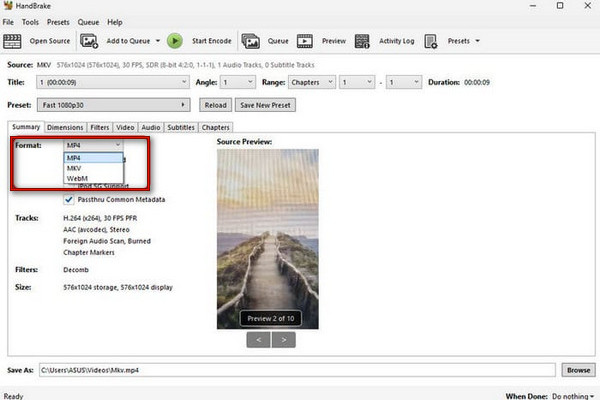
HandBrake is a long-running open-source video transcoder that can decode MKV and re-encode it into a new MP4 stream. It includes pre-made presets, such as Fast 1080p30, to quickly optimize videos for web streaming or mobile devices.
AnyMP4 MKV MP4 Player is a premium software that can play back any file you throw at it. Beyond Blu-rays, BDMV folders, and ISO, it can play MKV files and other digital video formats. Regardless MKV is encoded with H.264, H.265/AAC, XVID, or AV1, you can open and view it.
1. Download AnyMP4 MKV MP4 Player, set it up, and complete the installation.
Secure Download
Secure Download
Click Open File in the main interface and select the MKV video you want to play.
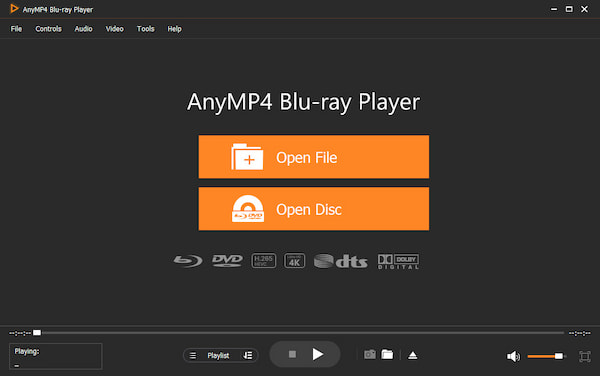
2. As it loads, the playback starts immediately. Use the controls below to pause, resume, and stop the MKV playback.
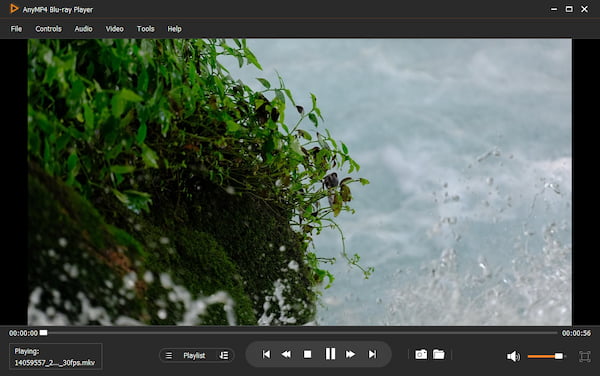
AnyMP4 MKV MP4 Player can play almost any media you name. It also uses hardware acceleration to process heavily compressed MKs, such as H.265 (HEVC) or AV1, without buffering.
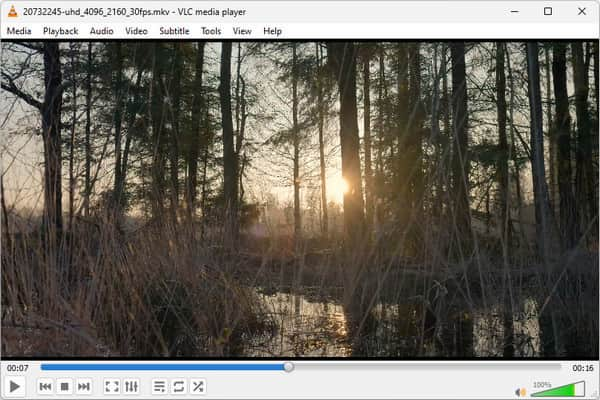
VLC is a time-tested media playback software available on Windows, Mac, and Linux. As a multimedia player, it can play Matroska video without needing separate codec packs. Aside from video files, it can also play audio files like MP3, WAV, FLAC, and more.
MKV if you are creating your own media collection, trying to save the Blu-ray files, or need more than one stream into one file. However, if compatibility is what you need, then go for MP4, which is the best choice for playback and sharing.
Will I lose quality converting MKV to MP4?
No, you will not lose quality if you remux the file. Remuxing only changes the container while keeping the underlying media streams completely untouched.
Can MP4 files contain malware?
Yes, MP4 files can contain malware, though a simple video file cannot run code on its own. When a vulnerable media player tries to read it, it can trigger memory corruption.
Which is smaller: MKV or MP4?
Neither. If you put the same media streams with the same settings into both files, their sizes will be almost identical (the container difference is less than 0.1%).
When choosing between MKV vs MP4, the true choice is flexibility and compatibility. MKV is best for Blu-ray rips, multiple streams, and archiving. But if your priority is streaming, get the MP4 format. There is no better quality or smaller file size, so choose for your playback needs. If your device cannot play MKV files, you can remux them to MP4 with AnyMP4 Video Converter. And if you don’t want to convert, use AnyMP4 MKV MP4 Player as a media player to play MKV files.
 Updated by Alice Thorne to Glossary
More readings
 7 Best MKV to MP3 Converters (Free, Online & 320kbps) | 2026
Discover the top 7 free MKV to MP3 converters for Mac, Windows, and online. Batch convert, keep 320kbps quality, and no size limits.
 MKV vs WebM: A Breakdown of Key Differences and Performance
Do you want to learn the difference between MKV and WebM video formats? Read this article for a complete technical breakdown of the two software.
 Best 4 MKV Cutters for Lossless Trimming (2026 Tested)
Need to trim MKV files without losing quality? We tested the top MKV cutters for speed and lossless output. Find the best Matroska trimmer for your OS.
 MKV to WebM: Convert with AV1/VP9 for High-Quality Web Video
Easily convert MKV to WebM while preserving 4K quality. Compare three reliable VP9/AV1 encoders. Reduce HTML5 streaming file size today.
 Add your comments to join the discussion here