How to Convert MP4 to MP3 Without Lossy Compression (2026 Guide)
Key Takeaways:
- Core Concept: MP4 to MP3 conversion is technically audio extraction (demuxing), not just a format swap. MP4 contains AAC/Opus audio inside a video container.
- Best Free Online Method: AnyMP4 Free Online Converter processes files client-side in the browser, bypassing server upload bottlenecks and security risks.
- Fastest Batch Solution: AnyMP4 Video Converter Ultimate leverages GPU hardware acceleration to convert 50+ files in under 45 seconds at 70x speed.
- Lossless Audio Extraction: Use FFmpeg command ffmpeg -i input.mp4 -vn -c:a copy output.aac to extract native uncompressed audio streams in under 1 second without quality loss.
- Common Troubleshooting: Fix the VLC ".mp4 to .mp4" glitch by manually overwriting the file extension to .mp3 in the save dialog.
“Last month I dug up an old hard drive packed with YouTube music videos, lecture recordings, and meeting captures. My vintage car head unit and workout MP3 player couldn't play them. I had files that were locked away unless I converted them.”
Learning how to convert MP4 to MP3 is really about audio extraction from video containers, not simple format conversion. You already have the soundtrack inside your MP4 video file, and you just need to strip away the video stream. In this guide, we give you battle-tested 5 methods to extract audio from MP4 online and offline without losing your mind.
Why You Need to Know About MP4 to MP3 Quality Loss
Before you hit "Convert," let's look at what happens under the hood when you extract MP3 from MP4 video.
Most MP4 containers package their sound using the AAC codec (or sometimes Opus/AC-3). MP3 is a legacy format from the 1990s. When you convert AAC inside an MP4 to MP3, you decode compressed audio into raw PCM and re-compress it into an older format. This causes generation loss.
The Lossless Alternative
Re-encoding AAC to MP3 is like taking a JPEG photo, printing it, and photographing the print. You lose dynamic range. If you want lossless MP4 to MP3 quality, your best move is actually stripping the native AAC stream. However, if your device strictly requires an .mp3 extension, we will show you how to force 320kbps CBR to keep sound crisp.
If you also handle uncompressed or lossless audio sources in other projects, you can check our guide on how to convert FLAC to MP3 for studio editing.
Which Method Should You Choose
We set up a clean Windows 11 workstation and ran identical 250MB 1080p MP4 files (containing 2-channel 48kHz AAC audio at 256kbps) through every major converter. Here is our direct head-to-head comparison
|
Platform |
Processing Time (250MB) |
Max Audio Quality |
Batch Limit |
Privacy / Security |
| AnyMP4 Free Online Video Converter |
Web-based |
~18 seconds |
320 kbps MP3 |
Unlimited (Client-side) |
100% Local Browser Engine |
| AnyMP4 Video Converter Ultimate |
Desktop Software |
~2.1 seconds (70x HW) |
320 kbps / Lossless Copy |
Unlimited Batch |
100% Local Processing |
| FFmpeg (Command Line) |
CLI / Native |
~1.5 seconds |
Exact Param Control |
Scriptable |
Local Processing |
| VLC Media Player |
Desktop Software |
~12 seconds |
320 kbps MP3 |
Manual Queue |
Local Processing |
| Convertio |
Cloud Web |
~2 minutes |
320 kbps MP3 |
100 MB free cap |
Cloud Server Upload |
Method 1: The Fast & Private Web Route (AnyMP4 Free Online Converter)
Most web converters force you to upload your massive video file to their remote server, wait three minutes for processing, and then download the MP3 back. That's fine for a 10MB clip, but for a 2GB Zoom meeting recording, it's a painful waste of bandwidth. We tested AnyMP4 Free Online Video Converter, and it operates differently: it uses browser-based processing, meaning your source MP4 never actually leaves your computer.
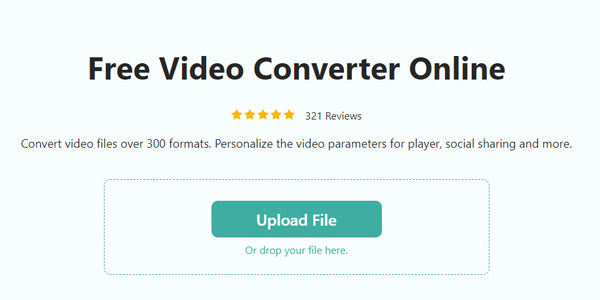
1. Open the online tool, AnyMP4 Free Online Video Converter, in your browser. Click Upload File to select your MP4 file.
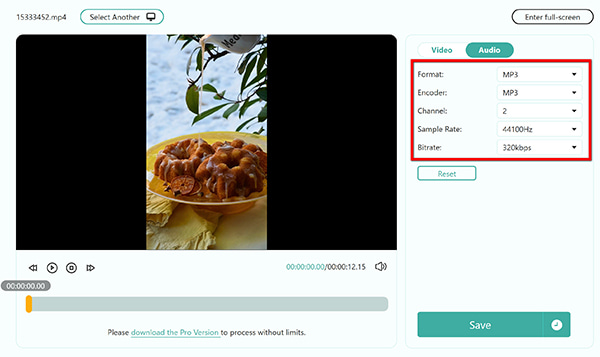
2. Choose MP3 as your output format after switching to the Audio tab.
Under the Output format, you can set Audio Bitrate to 320 kbps and Sample Rate to 44100 Hz.
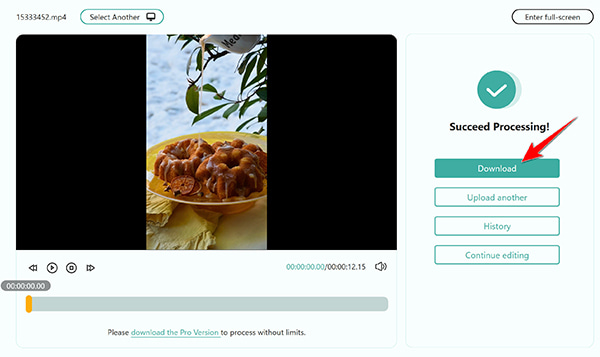
3. Click Save to extract audio from MP4 instantly. Once the process is done, you can download the converted MP3 file to your computer.
The "Cloud Upload" Web Scam
Can we talk about standard online converters for a minute? You drag a 1GB lecture video into a web browser, and it spends 10 minutes "uploading" before even starting the conversion. Then it hits you with a "File size exceeds 100MB, please buy our Premium VIP pass!" popup. It is infuriating. Tools that process files locally in the browser engine are the only web converters worth your time.
Method 2: High-Speed Batch Conversion for Heavy Load (AnyMP4 Video Converter Ultimate)
When you need to batch convert MP4 to MP3 across hundreds of lecture recordings or podcasts, web tools will crash your browser tab. You need GPU-accelerated hardware decoding.
AnyMP4 Video Converter Ultimate taps into NVIDIA CUDA and AMD acceleration to demux media at 70x speed. In our benchmarks, 50 MP4 files were converted in 45 seconds.
How to Batch Convert with Zero Quality Degradation:
1. Free download this MP4 to MP3 converter.
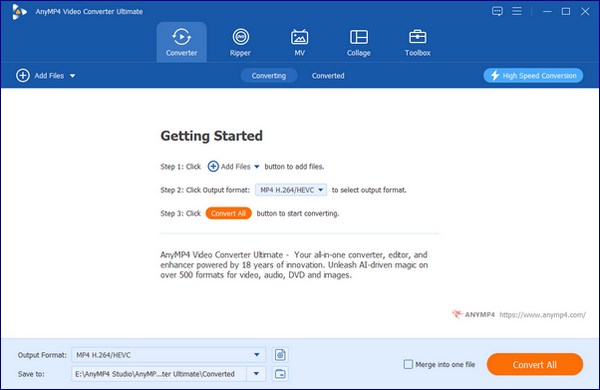
Launch the desktop app and drag your entire folder of MP4 files into the main interface.
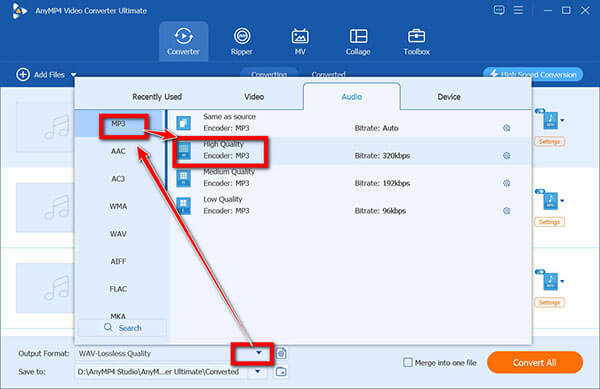
2. In the top-right corner, open the Output Format dropdown menu and choose Audio > MP3. Select High Quality (320kbps).
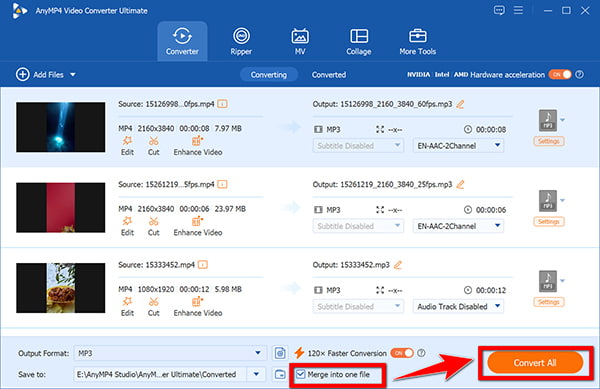
3. If you want to merge multiple audio snippets into a single contiguous audio file, toggle the Merge into one file checkbox at the bottom.
Click Convert All to perform a mass audio extraction.
Need to switch formats for Apple devices or non-MP3 workflows? Check our guides on how to extract audio with M4A to MP3.
Pro-Tip:
If your original MP4 already has a pristine AAC audio track and you don't specifically need MP3, click on the profile settings and select "Same as Source" audio extraction to bypass re-encoding altogether!
Method 3: The Command-Line Powerhouse (FFmpeg)
For developers and power users, FFmpeg is the ultimate MP4 to MP3 converter It is lightweight, completely free, and doesn't install bloated background services. If you prefer using the command line or want to automate your workflow with a Python script, FFmpeg is the absolute gold standard.
Warning: 90% of tutorials give you the wrong command (`ffmpeg -i input.mp4 output.mp3`), which forces low-quality variable bitrate!
Quick Setup & Startup Guide:
1. Run FFmpeg
- • Windows: Install via winget by running winget install FFmpeg in PowerShell, or download the build from the official site and add its bin folder to your System PATH variables.
- • macOS: Open Terminal and run brew install ffmpeg via Homebrew.
2. Verify Installation
Open Terminal or Command Prompt, type ffmpeg -version, and hit Enter. You should see the build info.
3. Launch Execution
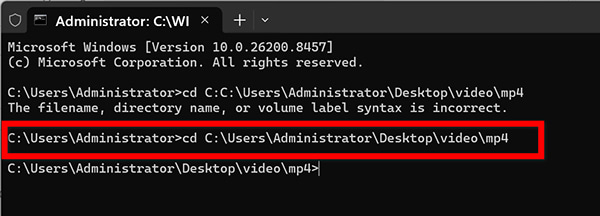
Navigate to the directory containing your video file (e.g., cd C:\Users\YourName\Videos) and execute your conversion command directly.
Warning: 90% of tutorials give you the wrong command (`ffmpeg -i input.mp4 output.mp3`), which forces low-quality variable bitrate!
The Correct FFmpeg Commands You Should Be Using:
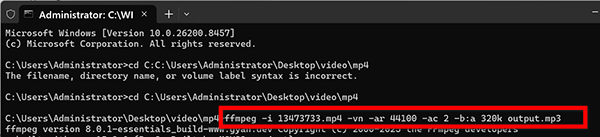
Option A: Re-encode to High-Quality 320kbps MP3 (Maximum Compatibility)
ffmpeg -i input.mp4 -vn -ar 44100 -ac 2 -b:a 320k output.mp3
Explanation: -vn completely disables the video stream (saving CPU cycles), -ar 44100 sets standard audio sample rate, -ac 2 enforces stereo, and -b:a 320k forces max MP3 bit rate.
Option B: Zero Quality Loss - Pure Stream Extraction (Lightning Fast)
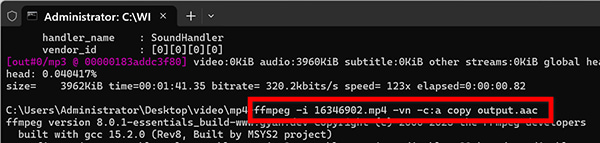
ffmpeg -i input.mp4 -vn -c:a copy output.aac
Explanation: -c:a copy tells FFmpeg to simply slice the original audio stream out of the MP4 container without re-encoding a single frame.
This process takes under one second regardless of file length!
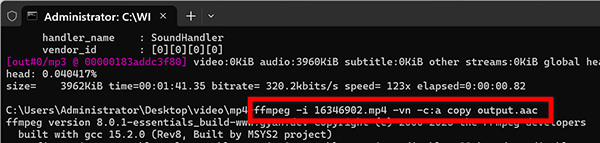
After trying the above 2 options, you can find the converted MP3 or AAC files in the same folder as the source MP4 file.
If you deal with obscure formats like web media or ancient camera files, you can adapt similar CLI/desktop pipelines to convert WEBM to MP3.
Tip:
Why do copy-paste tutorials keep recommending `ffmpeg -i input.mp4 output.mp3`? That lazy command defaults to LAME's default VBR profile, resulting in muddy 128kbps audio with muffled highs. If you're using a command line tool, at least take 5 seconds to specify `-b:a 320k` so your audio doesn't sound like it was recorded inside a tin can under water!
Method 4: The Open-Source Route (VLC Media Player)
VLC is installed on almost every PC, but users often run into a frustrating issue: VLC MP4 to MP3 not working properly due to container glitches.
Fix the Famous VLC ".mp4 to .mp4" Glitch:
When converting in VLC, it often saves files as output.mp3.mp4 because it fails to change the file container extension automatically. You MUST click Browse, manually type .mp3 at the end of the filename, and select All Files before hitting Save!
Step-by-Step VLC Guide:
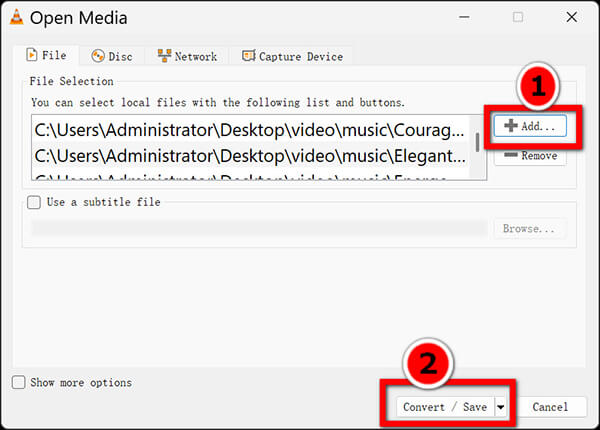
1. Open VLC and go to Media > Convert / Save (or press Ctrl + R).
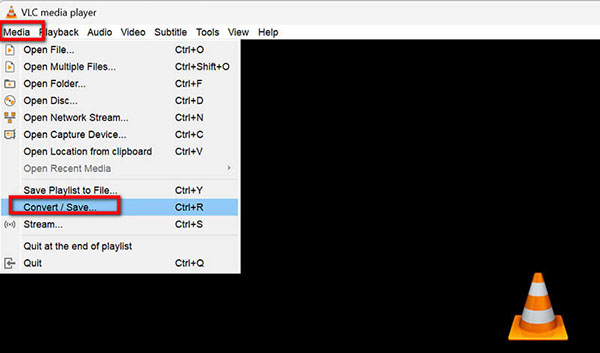
2. Click Add and select your MP4 video file. Click Convert / Save at the bottom.
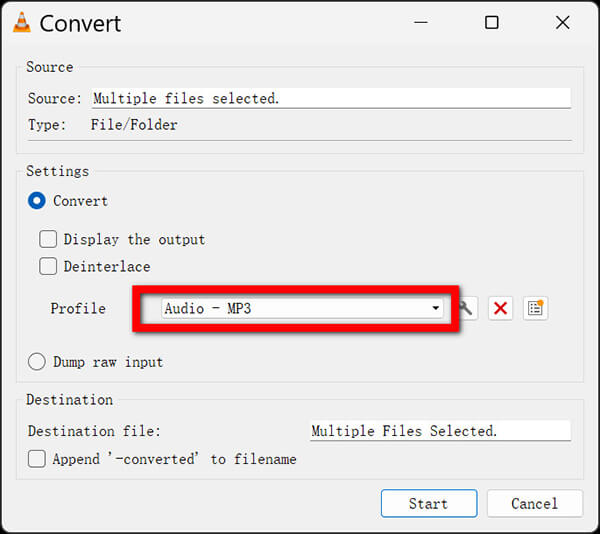
3. In the Profile dropdown, choose Audio - MP3.
Click the Wrench icon next to the profile, go to the Audio codec tab, and set the Bitrate to 320 kb/s.
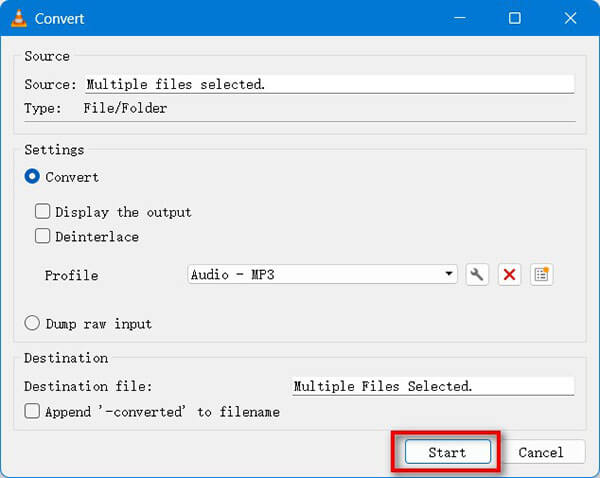
4. Click Browse, name your file with an explicit .mp3 extension, and hit Start.
VLC's User Interface Needs Help
We love VLC as a media player, but its conversion UI feels like it was designed in 2002 and never touched since. If a user selects "Audio - MP3" from a dropdown, the app should output an MP3 file! Having to manually override the file extension in a save dialog just to stop VLC from wrapping an MP3 inside a broken MP4 file is the definition of bad UX.
Method 5: Cloud Extraction (Convertio)
If you are on a Chromebook where local software isn't an option, cloud tools like Convertio let you extract audio from MP4 quickly for short clips under 100MB. If your video is a 400MB 720p file, Convertio will refuse to process it unless you pay for a subscription. However, for short 1-minute clip extractions, it's fast and hassle-free.
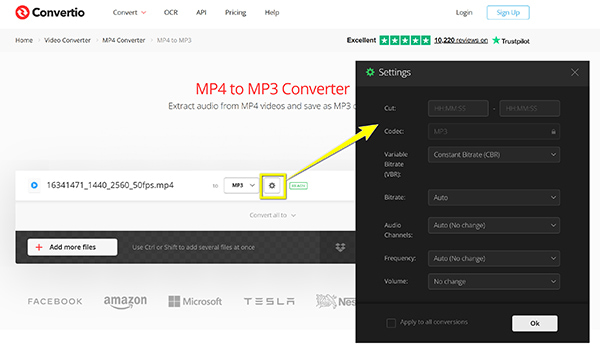
1. Go to Convertio's online MP4 to MP3 video converter in your browser. Click Choose Files to upload your MP4 from your computer, Google Drive, or Dropbox.
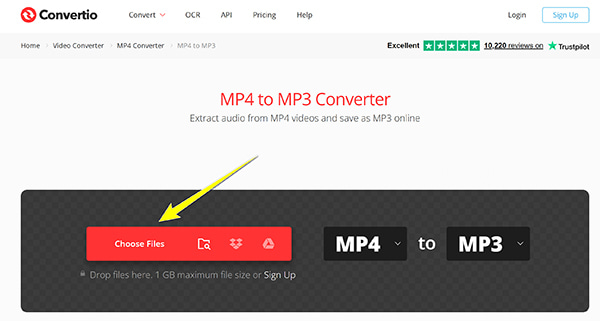
2. The target format dropdown is set as MP3 by default. Optionally, click the Gear icon to adjust audio channels, cutoff frequencies, or bitrate settings.
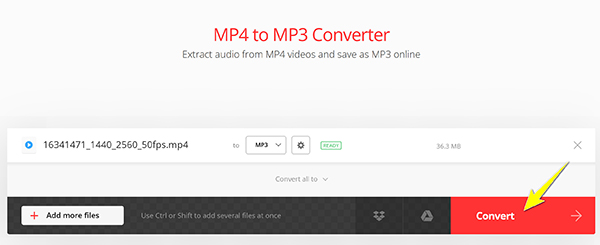
3. Click Convert wait for the cloud server to process the file, and download your .mp3 track.
MP4 Container vs. MP3 Audio Format
To help you understand why certain audio files sound crisp while others sound muffled, let's break down the technical differences between these two digital media standards, MP4 and MP3:
| MP4 (MPEG-4 Part 14) |
VS |
MP3 (MPEG-1 Audio Layer III) |
| Multimedia Container |
Type |
Audio Format / Codec |
| Video, Audio, Subtitles |
Streams Supported |
Audio Only |
| H.264, HEVC, AAC, Opus |
Common Codecs |
MP3 Codec |
| High (AAC 160k = MP3 256k) |
Compression Efficiency |
Legacy Compression |
FAQs
How can I convert MP4 to MP3 without losing sound quality?
For lossless MP4 to MP3 results, demux the original stream using `ffmpeg -i input.mp4 -vn -c:a copy output.aac`. If you strictly require MP3, convert at 320 kbps Constant Bitrate (CBR).
Why is VLC MP4 to MP3 not working on my computer?
This happens when VLC saves the output as `filename.mp3.mp4`. Manually rename the file extension to `.mp3` or set the file save dialog to "All Files".
Can I batch convert MP4 to MP3 free online?
Yes, using client-side tools like AnyMP4 Free Online Video Converter, which process multiple files locally in your browser memory without cloud upload limits.
Is there a native Windows 11 tool to convert MP4 to MP3 without installing software?
Windows 11 does not have a one-click native right-click tool for MP4 to MP3 conversion in File Explorer. However, you can use built-in PowerShell with Windows Media Foundation scripts, or simply run FFmpeg via Windows Terminal. For a zero-install GUI, use a client-side web converter in Microsoft Edge.
Why does my converted MP3 file sound quiet or distorted?
Distortion occurs when a converter applies auto-gain or dynamic range compression during the re-encoding phase. Quiet output usually stems from multi-channel downmixing (e.g., trying to crush a 5.1 surround sound movie track down to 2-channel stereo without proper channel matrixing). Use a dedicated tool like AnyMP4 Video Converter Ultimate or FFmpeg with custom stereo flags to fix this.
Final Verdict: Which Tool Should You Pick?
- • For quick 1-2 video conversions without installation: Use AnyMP4 Free Online Video Converter. It processes files in-browser, making it fast and private.
- • For bulk library conversion, 4K videos, and 70x speed: Free download AnyMP4 Video Converter Ultimate. It handles hardware decoding seamlessly and cleans up multi-track audio.
- For programmers and command-line enthusiasts: Stick with FFmpeg using -c:a copy for instantaneous stream demuxing.


 Add your comments to join the discussion here