
Free Download100% Clear & Secure
Free Download100% Clear & Secure
Whether you're trying to get your music library working seamlessly with Apple devices, freeing up storage space, or preparing audio files for a YouTube upload—converting MP3 to AAC is a common task.
In this guide, we'll explain when conversion makes sense and walk you through a professional tutorial on how to convert MP3 to AAC using 5 proven methods on Windows 10/8/8.1/7/XP, Mac OS, and online.
| Platform | Batch Conversion | Internet Required | Bitrate Control | Best For | |
|---|---|---|---|---|---|
| AnyMP4 Video Converter Ultimate | Windows & macOS | Yes (Lightning fast) | No | Excellent (Fully custom) | Professional, lossless batch conversion |
| iTunes | Windows & macOS | Yes (Slower) | No | Good (Limited presets) | Existing Apple ecosystem users |
| Convertio (Online) | Web browser (Any OS) | No (Max 100MB on free tier) | Yes | Basic (No custom control) | Quick, single-file conversion on the fly |
As the successor of the MP3 format, AAC (Advanced Audio Coding) is a proprietary audio coding standard for lossy digital audio compression. But should you convert your existing files?
| Feature | MP3 | AAC |
|---|---|---|
| Developed | 1993 (Fraunhofer) | 1997 (MPEG) |
| Compression | Lossy | Lossy (More efficient) |
| Quality at 128kbps | Good | Better |
| File size (same quality) | Baseline | ~30% smaller |
| Apple ecosystem | Compatible | Native (iTunes, Apple Music, iOS) |
| Streaming services | Universal | Preferred by YouTube, Spotify, Apple |
Important Note:
Converting a lossy format (MP3) to another lossy format (AAC) will NOT improve the original quality. The quality ceiling is set by the original MP3. However, compared to MP3, AAC usually delivers better sound quality at the same bit rate. The real value of converting MP3 to AAC is achieving excellent music entertainment on iOS devices, better Apple compatibility, and potentially unified smaller file sizes.
Best for: Batch conversion and users who want to strictly control audio quality (bitrate/sample rate).
Time Required: Instant for single files; under 1 minute for large batches.
Requirements: Windows or macOS installation.
When we talk about the best way to convert MP3 to AAC, we expect a tool with extensive features, and AnyMP4 Video Converter Ultimate perfectly fits the bill. It is incredibly easy to use, allowing even beginners and ordinary people to grasp the AAC converter in a few seconds. For those seeking lossless convert, this software uses advanced technology to keep or optimize the original quality. It offers rich features with a variety of custom options for advanced users creating personalized results.
Beyond MP3, it boasts higher compatibility, supporting a wide range of input formats like MP4, MOV, FLAC, AIFF, ALAC, DVD, and more. You can also directly edit AAC files before conversion, utilizing powerful editing features to split, merge, edit ID3 tags, or add audio into a video. Best of all, it is fast and quick, integrating multi-thread technology to convert MP3 to AAC in batch seamlessly.
1. Import MP3 files into the best AAC converter
Video Converter Ultimate is a desktop program, so you need to install it on your PC or Mac.
Secure Download
Secure Download
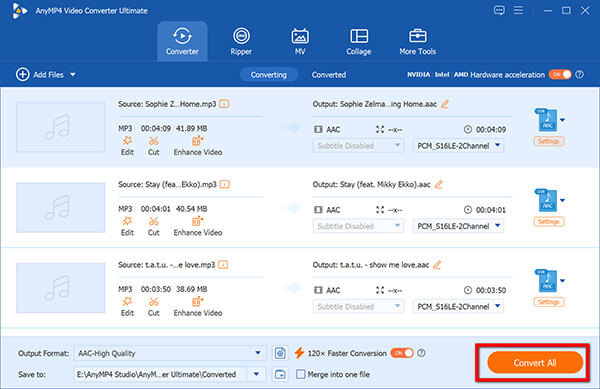
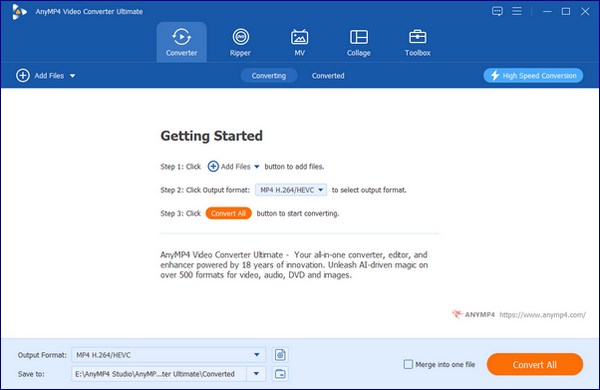
Launch it when you need to convert MP3 to AAC, click on the Add Files menu, navigate to the MP3 files, and open all of them into the converter. You can also click the big plus button in the middle or drag and drop the MP3 files directly into this software.
2. Set AAC as the output format
Next, head to the bottom left area, click and unfold the Output Format dropdown menu, and select AAC from the Audio tab.
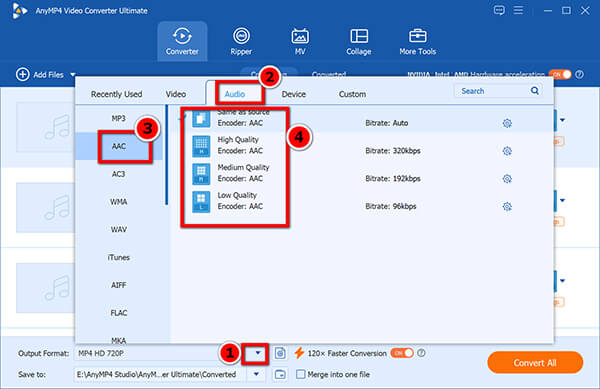
Other custom options are available in the settings dialog, which shows up once you hit the Custom Profile gear icon next to the output AAC format to adjust the audio codec, bitrate, etc.
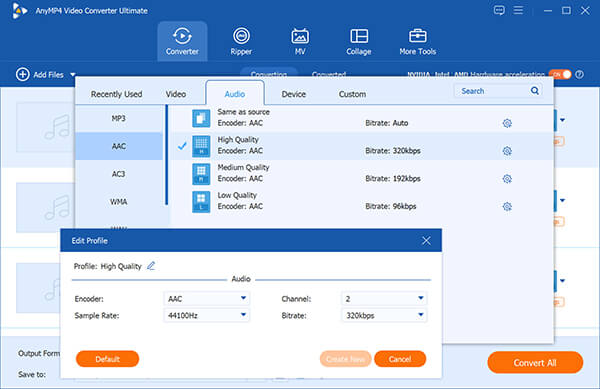
3. Convert MP3 to AAC in a single click
Finally, click on the Convert All button at the bottom right to initiate saving MP3 to AAC without losing quality. When it is done, you can listen to the AAC audios in the built-in media player.
Our Experience: I process a lot of audio files for video editing, and what impressed me most here is the multi-thread technology. I dumped a folder of over 50 high-res MP3s into the software, and it chewed through the batch conversion in seconds. Plus, being able to edit the ID3 tags before exporting keeps my library perfectly organized.
Best for: Mac users and those who already use iTunes to manage their music.
Time Required: 2–3 minutes (including setup).
Requirements: iTunes installed on Windows or Mac.
iTunes is a powerful tool for iPhone owners to download and purchase app and multimedia contents. In fact, it is able to convert music to popular formats. If you already have iTunes on your Mac or PC, it is a good way to get the job done.
1. Open iTunes Preferences
Start your iTunes and update it to the latest version. Head to Edit -> Preferences on Windows or iTunes -> Preferences on Mac.
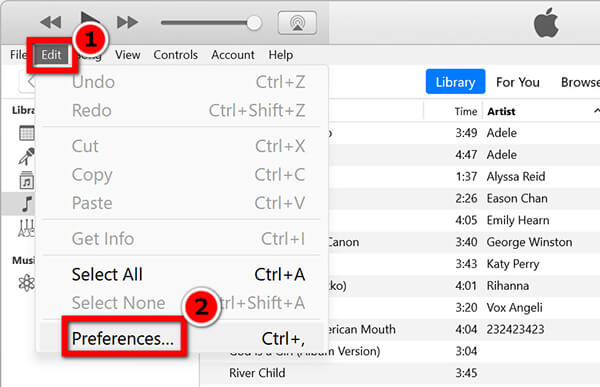
2. Select AAC Encoder
Go to the General tab and then click on Import Settings. Unfold the Import Using dropdown list and select AAC Encoder. Reset other custom options or keep them default. Hit OK to confirm.
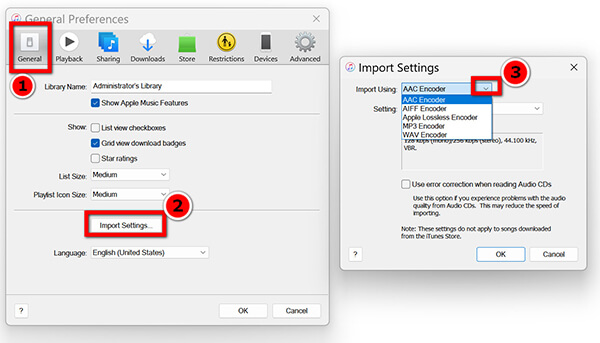
3. Add MP3 to iTunes
Go back to the main interface, click on the File menu, select Add File to Library, and import the MP3 files you want to save to AAC format into the iTunes Music Library. (If they are already in your library, skip this).
If you want to handle AAC files that are from your iPhone, then you can transfer music from iPhone to iTunes with the USB cable.
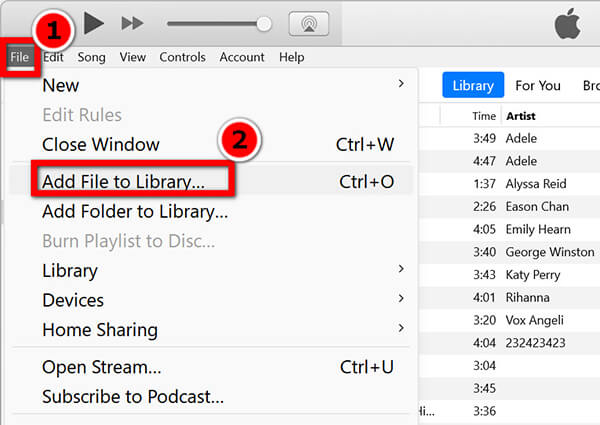
4. Create AAC Version
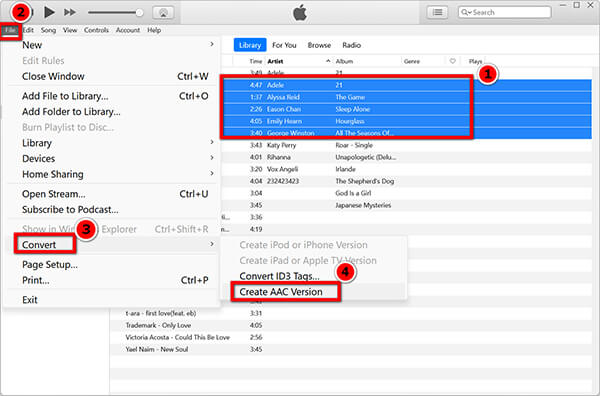
Hit the Music icon at the upper left corner to open the Library, highlight all MP3 files you want to convert, and navigate to File -> Convert -> Create AAC Version. This will create AAC audios and save them directly.
5. Find Generated AAC Files
Go to your iTunes Library folder; you can find both original MP3 files and the new AAC audios saved under the same name. The file extension (.m4a or .aac) will help you distinguish them.
Do not know the iTunes Library folder location? You can ask iTunes exactly where it is saving your files:
1. Open iTunes.
2. Go to Edit > Preferences (Windows) or iTunes > Preferences (Mac).
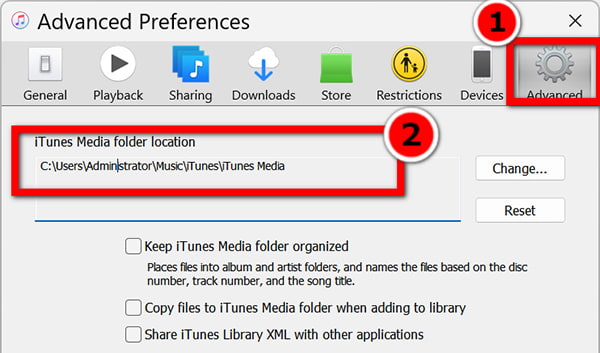
3. Click on the Advanced tab at the top.
4. Look at the box labeled iTunes Media folder location. This will show you the exact file path on your computer where your MP3 and new AAC files are stored.
Our Experience: Since I already manage my iPhone backups via iTunes, this is a very natural workflow. The setup is a bit buried in the preferences menu—which took me a minute to find the first time—but once you set the Import Settings to AAC, converting future files is just a two-click process. I love that it saves the new files directly next to the originals in the library.
Best for: Quick online conversion of a single audio file from any device.
Time Required: ~2 minutes (depends on your upload speed).
Limitations: Maximum file size is 100MB on the free tier.
For users who prefer not to install desktop software, or perhaps are using a restricted work computer, a web-based converter is an ideal alternative. Convertio stands out in the crowded online converter market due to its clean interface and robust cloud storage integration.
1. Open Convertio MP3 to AAC Converter
Open your web browser and navigate to the Convertio MP3 to AAC webpage.

2. Upload MP3 Audio
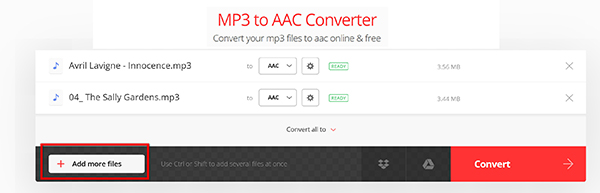
Click the large Choose Files button. You can upload an MP3 directly from your local hard drive, or click the respective icons to import it seamlessly from your Google Drive or Dropbox.
The maximum file size is 100 MB, if your files is too large, you can compress MP3 firstly.
3. Convert MP3 to AAC in Convertio
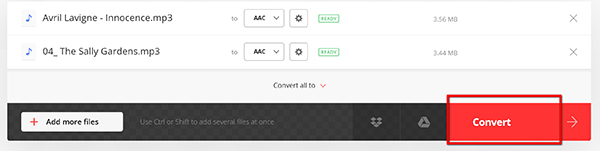
Ensure the output format dropdown is set to AAC. Click the red Convert button. Wait for the uploading and processing phases to finish, then download your new AAC file to your device.
Our Experience: Convertio is our team's go-to solution when working remotely on a laptop or when we need a quick format switch on our mobile phones. The standout feature is definitely the cloud integration—pulling a file directly from Google Drive and saving the converted AAC back to the cloud without eating up local bandwidth is a massive time-saver. While the 100MB limit restricts you from converting full albums for free, it flawlessly handles individual music tracks with zero hassle.
If you use a tool like AnyMP4 Video Converter Ultimate that allows custom profiles, you might wonder what bitrate to choose:
| Target Bitrate | Recommended Use Case |
|---|---|
| 128 kbps | Podcasts, voice recordings, or extreme space-saving. |
| 192 kbps | General music listening. Good balance of size and quality. |
| 256 kbps | Standard. Matches iTunes and Apple Music quality. |
| 320 kbps | Audiophiles wanting the absolute highest ceiling (though file sizes will be larger). |
Does converting MP3 to AAC improve sound quality?
No. Both are lossy formats. Converting from lossy to lossy cannot restore audio data that was already compressed. The main benefit is smaller file size and better Apple compatibility.
Is AAC better than MP3?
Yes, at the exact same bitrate, AAC generally sounds better and clearer than MP3. It compresses more efficiently, producing smaller files at an equivalent perceived quality.
Can I convert MP3 to AAC on my phone?
Yes, you can use online tools like Convertio on your mobile browser, but for batch converting entire libraries, desktop software is highly recommended.
Does iTunes convert MP3 to AAC for free?
Yes, the conversion feature is built natively into iTunes and is completely free to use.
What bitrate should I use for AAC conversion?
For standard music, 256kbps is highly recommended. For speech and podcasts, 128kbps is sufficient.
Is MP3 to AAC conversion legal for personal use?
Yes, format shifting legally purchased music for your own personal use across different devices is generally permissible.
Can I batch convert multiple MP3 files to AAC?
Yes. AnyMP4 Video Converter Ultimate supports batch conversion of multiple files at once, saving you significant time.
Will AAC files play on Windows Media Player?
Yes, Windows Media Player 12 (built into Windows 7 and later) natively supports the playback of AAC audio files.
As AAC becomes increasingly popular among music enthusiasts and the public, optimizing your old MP3 to AAC files simply makes sense—especially because AAC works seamlessly on the iOS ecosystem.
Which Method Should You Choose?
Choose the method that fits your workflow, pick up your favorite tool, and get better audio experiences today!
 Updated by Alice Thorne to Convert Audio
Related Articles
 AAC to MP3 – Convert Audio Files from AAC to MP3 Format in Batch
This article collects top 10 AAC to MP3 converters on multiplatform. Thus, you can convert AAC file to MP3 online and offline based on your need freely.
 Convert Video to MP3 with The Ultimate Way and Top 10 Online Ways
This article gives you the ideal ways of converting videos to MP3 with the best video to MP3 converter applications for Windows 10/8/7/XP and Mac OS.
 How to Convert MP3 to M4A: 4 Fast & Free Ways (2026 Guide)
Need to change MP3 to M4A? Discover 4 easy ways to convert MP3 to M4A on Windows, Mac, and online for high-quality, fast, and free audio conversion.
 Top 5 Best Methods to Convert AMR to MP3 Online and Offline
What should you do to convert AMR to MP3? Go through the tutorial below to gain 5 best AMR to MP3 converter to solve the problem with ease.