
Quick Answer:
For raw speed and preserving 4K quality, AnyMP4 Video Converter Ultimate handles hardware-accelerated batch jobs cleanly. If you prefer free and open-source software, HandBrake is powerful, though it takes some manual configuration. For quick conversions without installing software, tools like FreeConvert get the job done on the fly.
If you have ever tried to play a video on your old car stereo or an ancient DVD player, only to see a File Not Supported error? Do not worry. Most modern cameras and phones record in MP4, but older hardware often demands AVI. To fix that, you just need to convert MP4 to AVI.
In this guide, we tested 7 tools. Whether you need a high-quality MP4 to AVI file for a big screen or just want a simple MP4 to AVI converter to get a clip working on a legacy device, you can find the answer quickly.

MP4 rules the modern web, but older hardware like legacy DVD players and vintage car infotainment systems still speak AVI natively. Feed them an MP4, and they'll often throw an error. Converting is just a practical workaround to keep old gear working.
The idea that AVI automatically means low quality is a myth; it all comes down to the underlying codec. With the right configuration, you can convert without losing fidelity. Professional editing and broadcast pipelines still lean on it, too, which is why it sticks around.
If you're curious about the technical differences, you can check out this AVI vs MP4 comparison to see how they stack up.
If you want the best MP4 to AVI converter for Windows 11 or Mac, this is it. AnyMP4 Video Converter Ultimate uses AI-enhanced upscaling and GPU acceleration (NVIDIA/AMD/Intel) to make AVI conversions lightning-fast. It's perfect if you have multiple MP4 files and need to batch convert to AVI with subtitles and audio tracks without losing data. While converting, this software also gives you fine control over bitrate, encoder, frame rate, resolution, and other parameters with ease, making it the top pick. If you want to edit your AVI files before exporting, there are over 20 tools that enable you to crop, trim, merge, and collage videos freely.
Secure Download
Secure Download
1. Import Your Files
Open the software and drag your 4K/8K MP4 files right into the main window. You can also import whole folders if you have a lot of files.
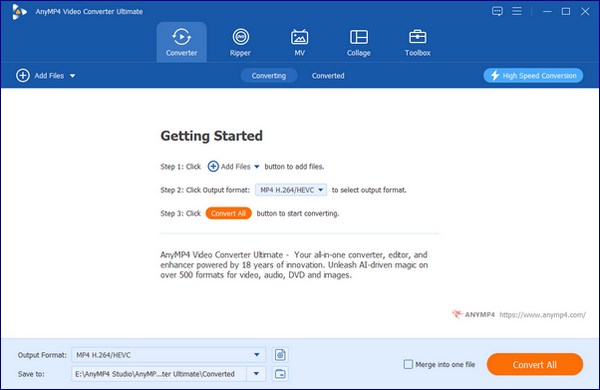
2. Select AVI Profile
Click the Output Format menu. Find the Video tab, and choose AVI and then pick a high-bitrate profile that matches your original quality.
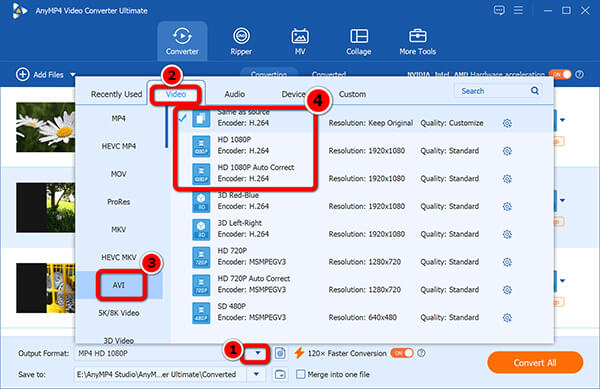
Enhance optionally: You can use the built-in AI tools to touch up the video before you start. It's a great way to ensure you get a high-quality MP4-to-AVI conversion.
3. Convert MP4 to AVI
Hit the Convert All button. Then this software will start transcoding MP4 to AVI immediately.
To speed up the conversion process, do not forget to enable the GPU acceleration toggle on the top-right corner.
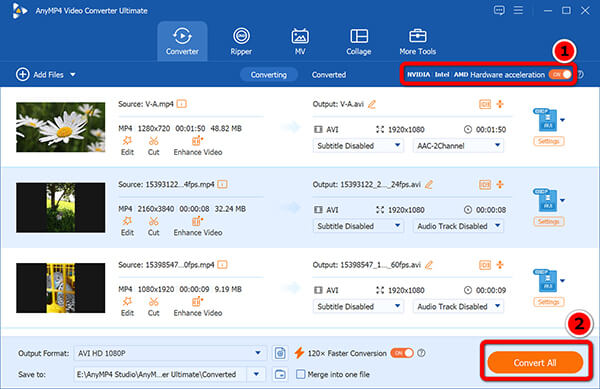
If you ever need to go the other way, you can also use their AVI to MP4 free tool.
Summary of this method:
Using a dedicated desktop converter like AnyMP4 Video Converter Ultimate guarantees the fastest conversion speeds and flawless hardware utilization, making it the ultimate hassle-free solution for heavy multimedia tasks.
Real-World Performance Test
HandBrake is a classic open-source tool for heavy-duty video work. Newer versions dropped native AVI support to keep things streamlined, so you might need to dig up an older build or tinker with settings if you're dealing with legacy files. But for pure, free control over codecs, it's hard to beat.
1. Download and open an older, compatible version of HandBrake that still supports AVI containers.
Drag and drop your source MP4 video into the main interface.
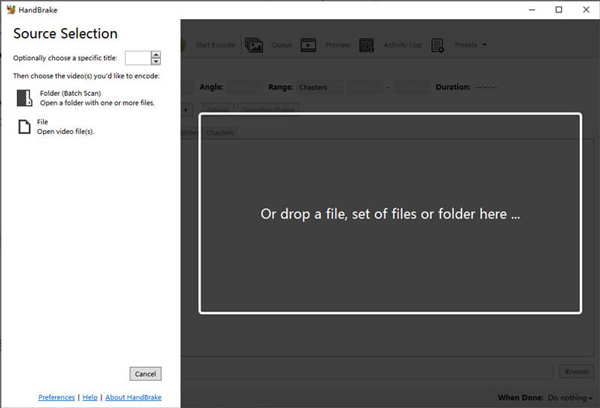
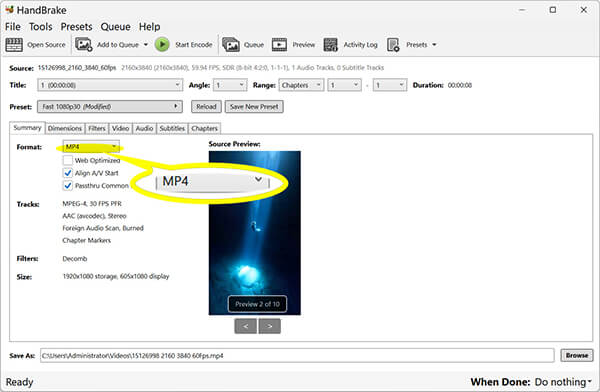
2. Go to the Summary tab, make sure MP4 is selected in the Output option.
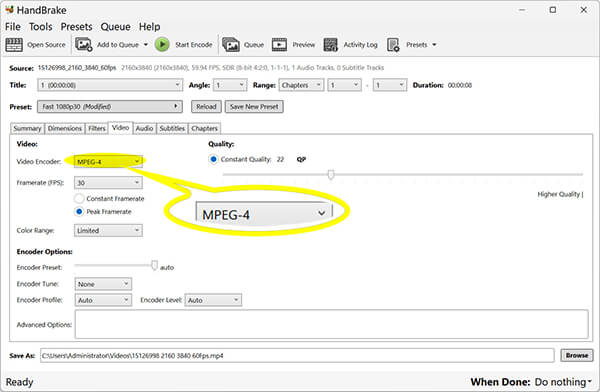
Then go to the Video tab to select MPEG-4 from the dropdown list as the video encoder.
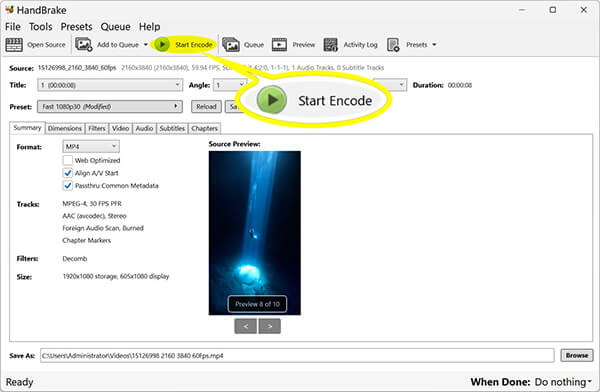
3. Choose your destination folder using the browse button at the bottom. Click the green Start Encode button to begin processing your file.
Summary of this method:
HandBrake gives advanced users total control over every encoding setting. Just keep in mind that older legacy formats like AVI might need a bit of tweaking or an older version to run smoothly.
Most people just use VLC as an AVI player to watch movies, but it doubles as a handy converter for quick file tweaks. It's a lifesaver when you're stuck on a machine without dedicated conversion tools and need a fast fix.
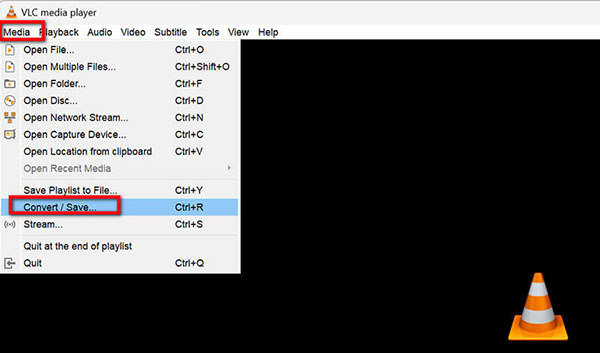
1. Open VLC Media Player on your computer. Click on the Media menu at the top left and select Convert/Save.
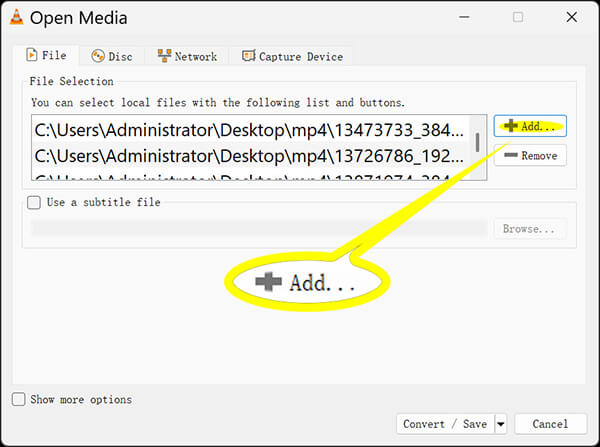
2. Click the Add button to browse and select your target MP4 file. Then, click Convert/Save at the bottom,
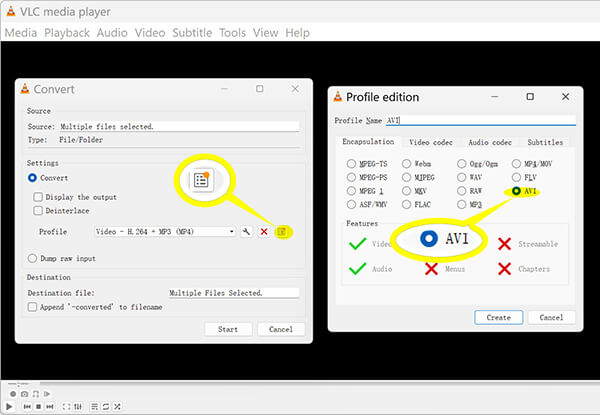
3. In the Convert window, look next to the Profile dropdown and click the Create a new profile button (the paper icon). Give your profile a name, select AVI under the Encapsulation tab.
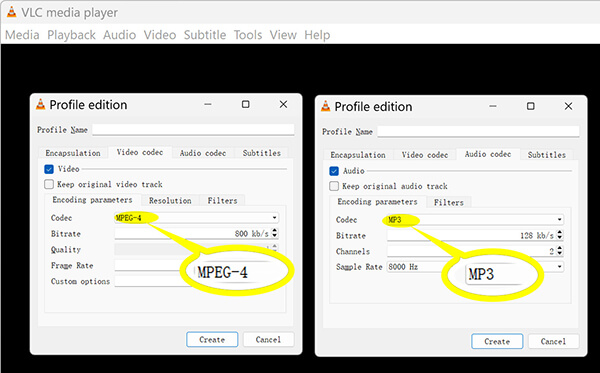
And then configure your preferred video and audio codecs (like MPEG-4 and MP3) in their respective tabs before clicking Create.
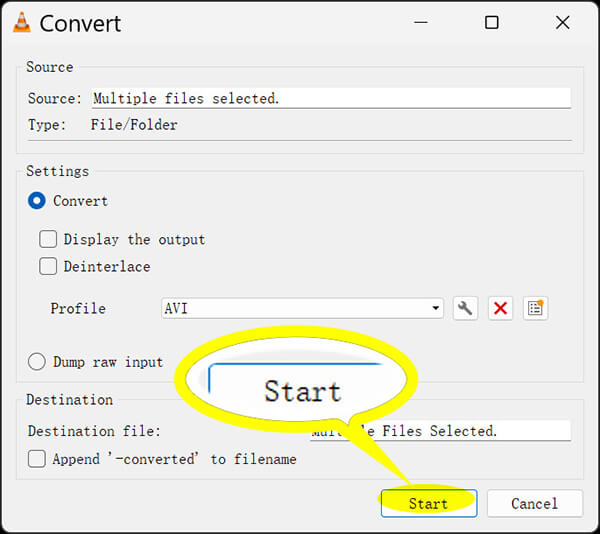
4. Choose the AVI profile from the Profile dropdown menu. Select your destination path with the Browse button and click Start to run the conversion.
Watch out for audio-sync issues on files exceeding 1080p. If the sync feels off, stick to desktop software designed for larger 4K files.
Summary of this method:
VLC provides a convenient, and built-in conversion solution, though it lacks advanced multi-track management for heavy files.
If you like the command line, FFmpeg is the best AVI converter tool. It's not beginner-friendly, but nothing beats it for speed and automation. You can write quick scripts to batch convert files across a drive in seconds. There is a learning curve, but once you run ffmpeg -i input.mp4 output.avi a few times, clicking around buttons feels entirely too slow.
1. Download and install FFmpeg, then add it to your system's environment variables. Open your Command Prompt, PowerShell (Windows), or Terminal (Mac/Linux).
Navigate to the folder where your video is saved using the cd command (e.g., cd Desktop).
Here, there is a quick tip to run FFmpeg in PowerShell Terminal: Put FFmpeg.exe shortcut file in the same folder as the MP4 files.
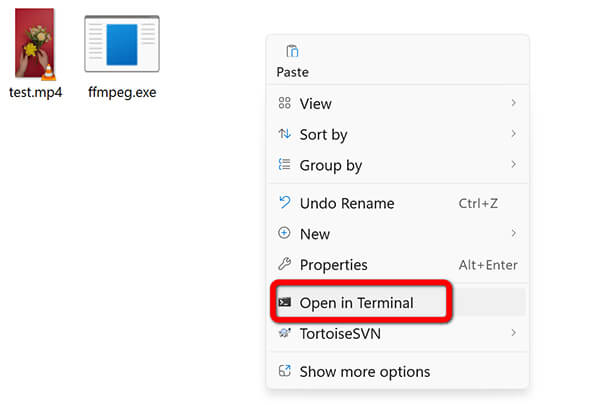
2. Type the conversion command:
ffmpeg -i input.mp4 -c:v libx264 output.avi
Do not forget to replace input.mp4 with your actual file name.
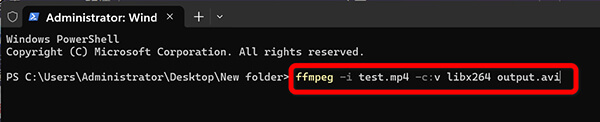
3. Press Enter and let the command-line tool process and export your new AVI file.
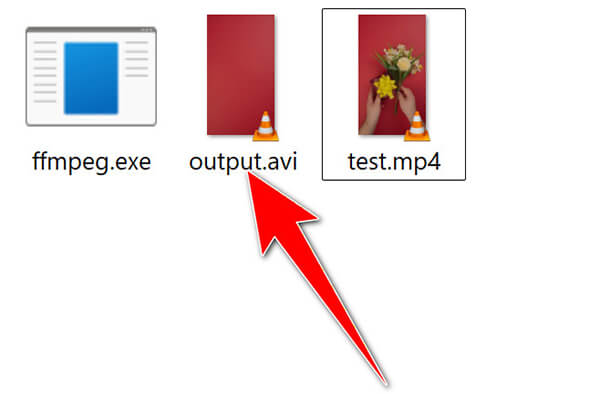
Note: To batch convert MP4 to AVI files, you can use the following command line in the PowerShell command window:
Get-ChildItem *.mp4 | ForEach-Object { ffmpeg -i $_.Name -c:v mpeg4 -qscale:v 3 -c:a mp3 ($_.BaseName + ".avi") }
In seconds, you can find the converted AVI files in the same folder as the source MP4 files. You can play AVI on Mac or Windows as you wish.
If you are running your commands inside a PowerShell window (where lines start with PS), make sure you use PowerShell-specific syntax like Get-ChildItem. Copying older CMD syntax (such as for %i in) directly into PowerShell will trigger a ParserError because the two shells parse loops differently. Always match your script style to your active terminal environment!
Summary of this method:
Using FFmpeg delivers ultimate automation capabilities and lightning-fast script-based batch processing, making it ideal for technical power users who prefer working inside a command-line interface.
Online tools are great when you're on a public PC or just don't want to install anything.
Here, since all the 3 tools work in similar steps to convert MP4 to AVI, so we only take FreeConvert as an example to show you the detailed steps:
1. Head to the FreeConvert MP4 to AVI converter on your browser and click Choose Files to select and upload your MP4 files.
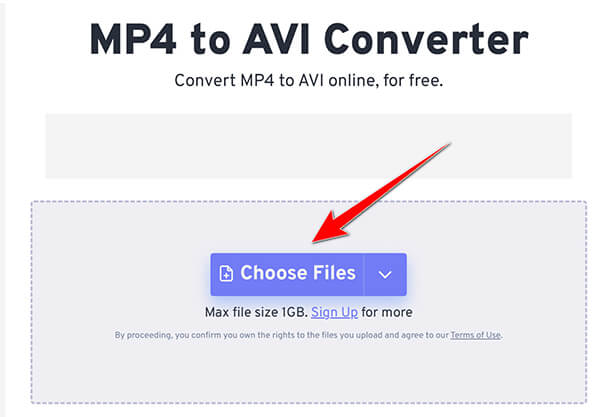
This online AVI converter only supports a maximum file size of 1GB in its free version.
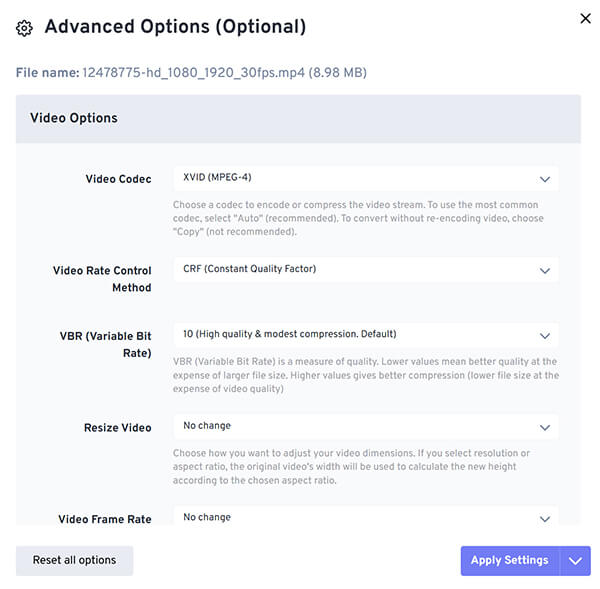
2. Ensure AVI is selected as the output. Optionally, click the settings option next to AVI, to adjust the video codec, video rate, frame rate, and more.
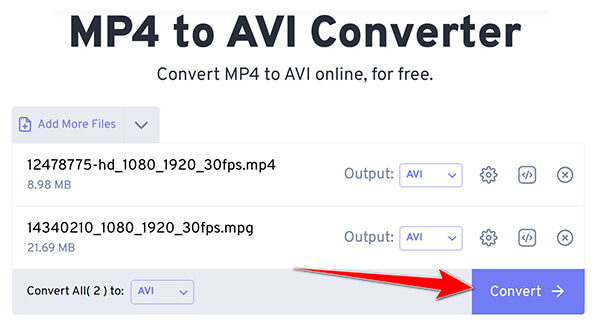
3. Click Convert. Then this freeware will start converting the MP4 files to AVI, and you can download the converted AVI files once it is done.
Safety Verdict: While online tools are convenient, they aren't great for sensitive or huge files. For those, a desktop tool like AnyMP4 is much safer since the processing happens right on your own machine.
| Feature | MP4 (MPEG‑4) | AVI (Audio Video Interleave) |
|---|---|---|
| Best For | Modern streaming, mobile, web | Legacy DVD players, car audio |
| Codec Support | H.264, H.265 (HEVC) | XviD, DivX, Uncompressed |
| Compatibility | Everywhere today | Older, hardware‑specific devices |
| File Size | Generally smaller (efficient) | Can be larger |
Is AVI better quality than MP4?
Not really. It all comes down to the codec inside. MP4 handles compression much better today, while AVI is mostly a legacy container for older gear.
How can I convert MP4 to AVI for free without a watermark?
VLC and FFmpeg are completely free and don't add watermarks. For a smoother experience, many freemium tools offer free conversions for single files.
Does converting MP4 to AVI lose quality?
If you choose the right settings and high bitrates, the loss is usually invisible to the human eye. It's only a problem if you compress it too much.
Which AVI codec is best for legacy hardware compatibility?
XviD or DivX are the gold standards for older DVD players and car stereos.
Converting your MP4 to AVI for working on older hardware shouldn't be a headache. By choosing the right tool, whether it's the speed of AnyMP4 Video Converter Ultimate for your 4K files or the simplicity of VLC for a quick one-off, you can solve your playback issues in minutes.
Secure Download
Secure Download
Remember, if you are looking to convert MP4 to AVI without losing quality, always check your codec settings before you hit the convert button. Got an old DVD player that's been collecting dust? Now you know how to bring it back to life with your favorite digital videos!
 Posted by Alice Thorne to Convert Video
More readings
 Convert AVI to MP3 in 4 Ways: 2026 Full Guide on Windows/Mac
Looking for the fastest way to convert AVI to MP3? We tested the top desktop and online converters. Discover the best tools for lossless quality.
 AVI to H.264 Guide in 2026 [100% Lossless Conversion]
Want to convert AVI to H.264 with ease? Read this guide now to learn how to do it with zero quality loss. Choose one that suits you best from the three methods.
 Five Easy Ways to Convert DVDs to AVI [2026 Updated]
Here are 5 easy and free ways to convert DVDs to AVI without any quality loss to watch DVDs on more devices and platforms.
 3 Easy Ways to Convert MP4 to MPG for DVD & Old TVs
Want to convert MP4 to MPG for DVD or legacy playback? Follow our step-by-step guide to make the conversion using desktop, online and free tools.
 Add your comments to join the discussion here