
Quick MP4 to FLV Solutions
What to do if your system rejects modern videos and you only have an MP4 file? Usually, MP4 is the standard video format for everything on the web today, as the Adobe Flash EOL happened years ago. However, if you are dealing with legacy technical debt, you may find that you can’t use MP4 files for your projects. Older ecosystems, such as an aging RTMP streaming server, a corporate Learning Management System (LMS), or a legacy build of Adobe Animate, are fundamentally different from modern platforms. They strictly require the .flv extension and will outright reject modern H.264 video uploads. That is why you need to convert MP4 to FLV? This article explains 3 proven methods to change MP4 to FLV on your desktop or online without losing video quality.
Test Environment & Methodology
It is hard to find a good tool to change video formats today because many old programs no longer work. To give you the true answers, we tested three methods ourselves.
We used a standard 2-minute 1080p MP4 video for the test. We ran these tests on a Windows 11 PC and an M3 MacBook Pro.
Our main goal was to find out how to convert MP4 to FLV without losing quality. During the test, we checked three simple things: how fast the tool is, how much computer power it uses, and the final file size.
| Speed | Quality Retention | Hardware Load | Best For | |
|---|---|---|---|---|
| AnyMP4 Video Converter Ultimate | Fastest | 100% Lossless | GPU Accelerated | Batch video conversion & custom codecs |
| AnyMP4 Free Online Video Converter | Moderate | Good | Browser-based | Quick LMS uploads, zero installation |
| VLC Media Player | Slow | Average | CPU Heavy | Zero-cost, existing VLC users |
The entire internet moved on to HTML5, and MP4 is the undisputed king of video file compatibility. FLV is entirely a legacy container. But while the format is dead to the modern web, it is very much alive in enterprise archives and closed-loop systems.
Here is a quick breakdown of their core differences:
| Features | MP4 | FLV |
|---|---|---|
| Primary Use | Modern web streaming & mobile recording | Legacy Flash projects & aging RTMP servers |
| Compatibility | Universal (iOS, Android, Chrome, Edge) | Very limited (Standalone players, specific LMS) |
| Video Codecs | H.264, HEVC (H.265), AV1 | Sorenson Spark, VP6, older H.264 wrappers |
| Current Status | Global Industry Standard | Obsolete for web (Adobe Flash EOL) |
When Adobe pulled the plug, native support for FLV vanished. It transformed from a standard web streaming format into an "island" format. It still holds audio and video data perfectly well, but it requires specific, often outdated environments to actually execute that data. You are actively trading modern convenience (like playing a video on your iPhone) for backward compatibility with systems that refuse to update.
The demand for FLV conversion software is driven by strict software limitations. Many corporate E-Learning platforms were hard-coded a decade ago to accept only FLV uploads for interactive modules. Digital archivists working with emulation platforms (like the Flashpoint project) rely heavily on original file extensions to rebuild old web games. Furthermore, specific aging broadcast hardware pipelines still demand an H.264 to FLV codec structure to function without throwing fatal errors.
When you convert MP4 to FLV, does the video lose quality? No. If you use the right tool, the video and audio quality will stay the same. The picture stays just as clear.
However, you do lose device compatibility. The FLV format is old, so modern phones and computers cannot play it natively. For instance, you can’t send an FLV video to an iPhone and expect it to play. It simply won’t open. You are only changing the format so it works with your specific old software.
Best For: Heavy users, developers needing exact codec matching, and lossless quality preservation.
If you need to process dozens of files for a massive archival project, AnyMP4 Video Converter Ultimate is the heavy hitter you want. Online MP4 to FLV tools are great for small files, but they hit a wall when you need to process gigabytes of data with multiple FLV files. This software gives you deep control over the underlying parameters, allowing you to adjust specific video and audio codecs perfectly to your target platform's requirements. More importantly, it uses your computer's GPU for hardware acceleration, so you can batch-convert MP4 to FLV at once without melting your CPU. Besides, its video enhancer, video watermark remover, video speed changer, and over 20 tools to edit and refine your video footage.
1. Import Your MP4 Video
Free download the installer from the following buttons. Run the setup file on your Windows or Mac machine, and launch the application.
Secure Download
Secure Download
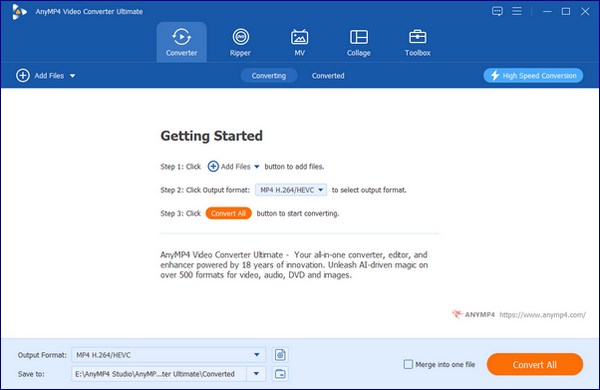
Click the big "+" icon in the center of the interface, or simply drag and drop your MP4 media directly into the window. You can drop an entire folder here if you have multiple video files to process for batch conversion.
2. Select FLV as Output
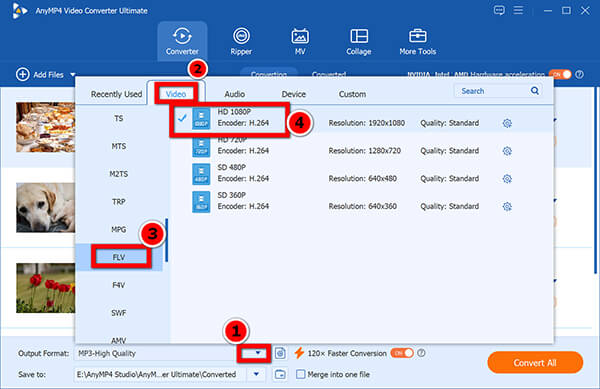
Click the "Output Format" dropdown menu in the bottom left. Navigate to the "Video" tab, scroll down to FLV, and select the resolution profile you want. This is the best way to convert MP4 to FLV while maintaining your original resolution.
Extra settings:
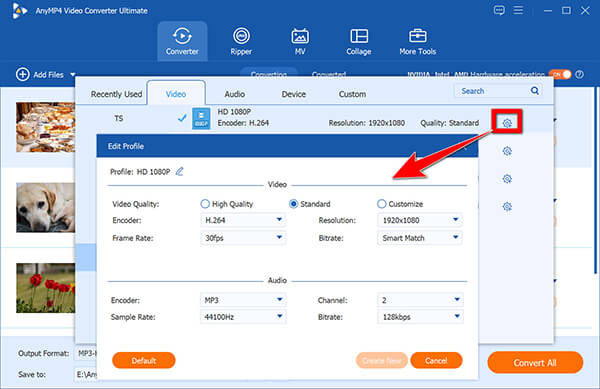
If you are converting this MP4 specifically to import into a legacy version of Adobe Animate or Flash Professional, click the "Custom Profile" gear icon next to the FLV profile. Ensure your output frame rate (e.g., 24fps or 30fps) exactly matches your Adobe timeline settings. Mismatched frame rates during FLV import will cause severe audio drift in older Adobe software.
If your legacy RTMP server has strict bandwidth limits, use this menu to lower the video bitrate or compress the audio track before conversion.
3. Convert MP4 to FLV
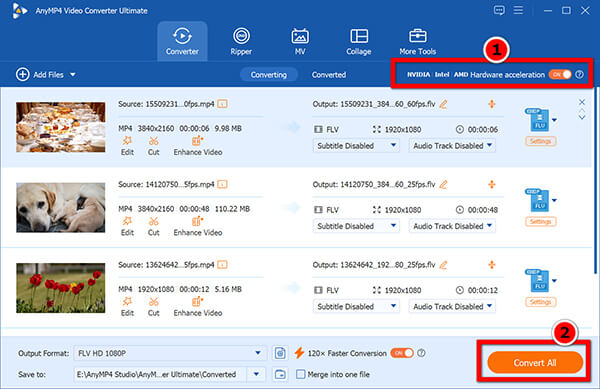
Back to the main interface of this software, choose your destination folder at the bottom of the screen. Do not forget to enable the GPU acceleration at the top-right corner to speed up your whole process.
Finally, click the "Convert All" button. The software will start the conversion.
Summary
In short, AnyMP4 Video Converter Ultimate is the premier choice for users prioritizing time-saving hardware acceleration, flawless video fidelity, and seamless batch processing capabilities.
Best For: Zero-cost, existing VLC users willing to navigate hidden menus.
You likely already use VLC to play weird, unsupported video formats. Most people don't realize it houses a built-in export engine. You don't get the lightning-fast hardware acceleration or the intuitive batch processing of dedicated software, but for a quick MP4 to FLV conversion in VLC on a tight budget, it gets the job done natively on your machine.
1. Access the Convert / Save Menu
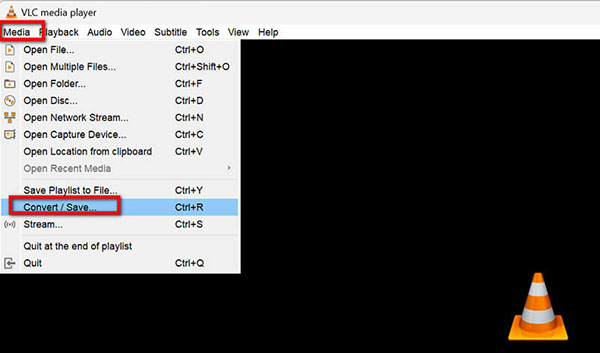
Open VLC. In the top menu bar, click on "Media" and select "Convert / Save" from the dropdown list.
2. Add Your File
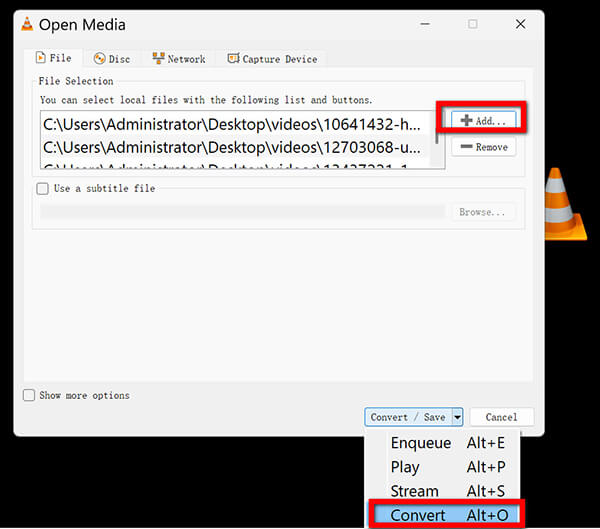
A new window appears. Click the "Add" button, browse your computer to select your MP4 file, and then click the "Convert / Save" button at the bottom.
3. Create a Custom FLV Profile (Crucial Step)
VLC does not have a default FLV option in modern versions. You have to build it yourself:
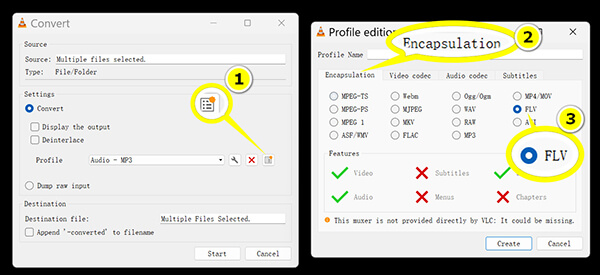
1. Next to the "Profile" dropdown menu, click the "Create a new profile" icon.
2. In the "Encapsulation" tab, select FLV.
3. Go to the "Video codec" tab, check the "Video" box, and check "Keep original video track" (this prevents quality loss and speeds up the process). Do the same in the "Audio codec" tab.
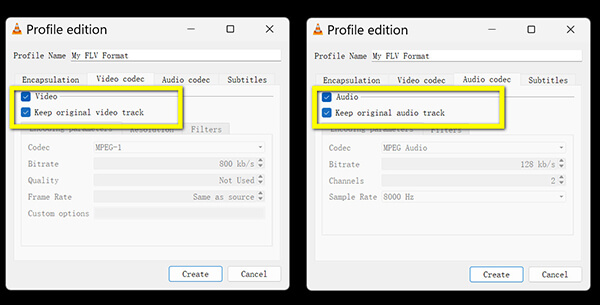
4. Name the profile "My FLV Format" at the top and click Create.
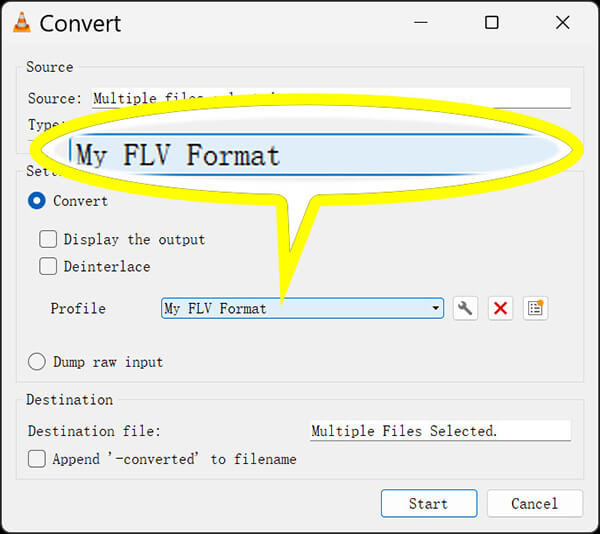
5.Now, select your newly created "My FLV Format" from the main Profile dropdown.
VLC is heavily CPU-dependent and is not optimized for massive batch jobs. If you are trying to convert massive MP4 files to FLV free for a heavy game modding project, expect your computer fans to spin up aggressively. Do not attempt to process 50 files this way; stick to single, small files to avoid software crashes.
4. Set Destination and Convert
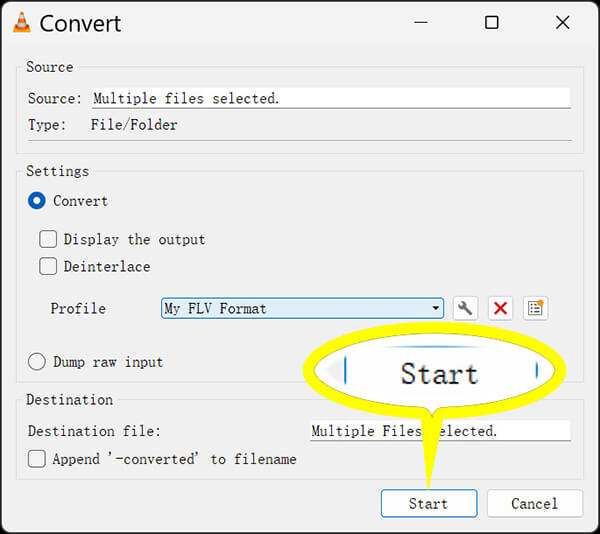
Click "Browse" in the Destination section to choose where the new file will live. Finally, hit "Start" and wait for the blue progress bar at the bottom of the player to finish.
Summary
In conclusion, VLC Media Player is a highly convenient and capable alternative for standard-quality FLV extractions if you prefer using your existing media player for free.
Best For: One-time users, quick jobs, converting on restricted corporate computers.
Sometimes you are staring at an LMS dashboard on a locked-down company laptop that blocks all third-party software installations. This browser-based tool handles the conversion entirely over the cloud. AnyMP4 Free Online Video Converter acts as a highly capable free MP4 to FLV converter online no watermark attached. No signups, no software deployments, just a fast cloud-based workflow.
1. Access the Free Web Tool
Navigate to AnyMP4 Free Online Video Converter via your web browser on your computer or mobile phone.
2. Upload and Select Format
Click the Upload File button to upload your MP4 file from your local drive.
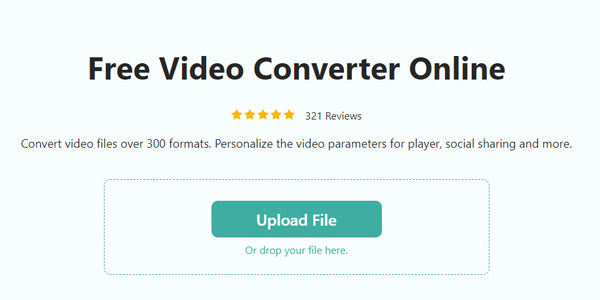
Once the file appears on the screen, look at the format bar on the right panel and click the "FLV" under the Video tab.
As you wish, you can change the FLV video codec, bitrate, frame rate, and resolution according to your device.
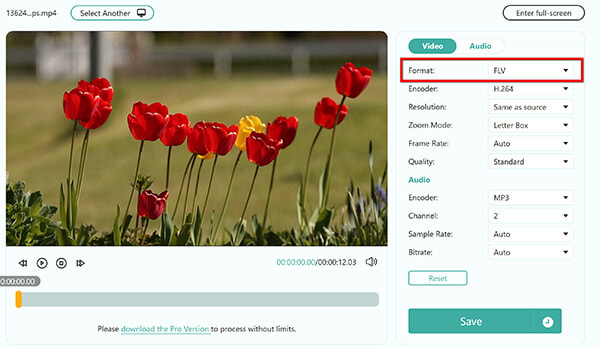
3. Convert and Download
Click the "Save" button. Then this free tool will process the MP4 to FLV conversion on the web. Once the process is done, you can download the converted FLV file on your device.
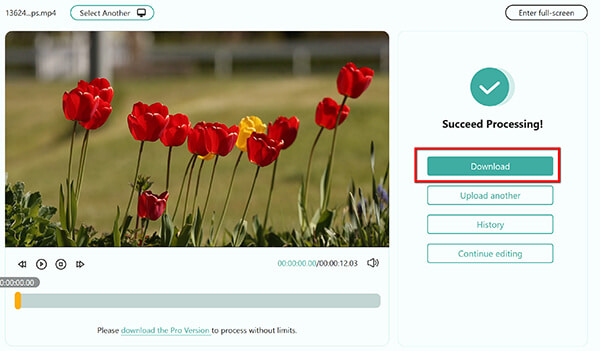
Does your company system ask for an FLV file, but your work computer won't let you install new software? Just save this web page. The conversion happens entirely online. You do not need to download any apps, so you can get your FLV file and upload it right away. Select a folder on your computer, and the cloud engine will process and download the file right back to your hard drive.
Is FLV still supported in 2026?
Natively in web browsers, no. Browsers blocked the plugins required to play these files long ago. However, FLV remains fully supported by standalone media players like VLC and is a strict requirement for accessing legacy LMS platforms, old Flash game archives, and specific aging broadcast hardware.
Can I play FLV files on my phone?
You cannot play them using the default iOS or Android galleries. You must download a third-party FLV player application, such as VLC for Mobile, to handle the playback of this streaming video legacy format on a modern smartphone.
Does converting MP4 to FLV lose quality?
It depends entirely on the software you use and your parameter settings. If you use a professional tool and match the source file's original bitrate and resolution, the conversion will be visually lossless.
How to batch convert MP4 to FLV?
The only efficient way to handle multiple files is with dedicated desktop software. Drag your folder of MP4s into a program like AnyMP4 Video Converter Ultimate, set FLV as the master output, and let the FLV to MP4 converter software process them simultaneously using hardware acceleration.
You now know exactly how to convert MP4 to FLV quickly. For a single file, VLC and free web tools work fine. But if you need to batch process large videos for an old LMS, use AnyMP4 Video Converter Ultimate. It is a fast MP4 to FLV converter that keeps your original video quality. Pick the right tool for your project and start your conversion today.
 Updated by Alice Thorne to Convert Video
More readings
 4 Best Ways to Convert FLV to MP4 Without Quality Loss
Still stuck with old Flash Video files? Learn how to convert FLV to MP4 from the guide for lossless conversion, batch processing, and AI upscaling tips.
 5 Best Ways to Convert FLV to MP3 Without Quality Loss
How to extract audio from FLV? Get the top 5 FLV to MP3 converters (free, online, and desktop) for batch processing and 320kbps high-quality extraction.
 [Best 15-list] Free AVI to MP4 Converter for Windows/Mac/Online
How can I convert AVI to MP4 for free? Which is the best freeware to change AVI to MP4? Check the updated list of best 15 open source software.
 Convert MP4 to MOV (Lossless & Fast) - 4 Best Ways [2026]
How to convert MP4 to MOV without quality loss? Follow our guide to convert formats in seconds with desktop or free online tools. Secure, fast, and 4K included.
 Add your comments to join the discussion here