
Quick Answer:
You only need to change your video format when an old office machine or a stubborn presentation app refuses to play your MP4 files.
If you are trying to open a video on an old office computer, you will frequently run into playback errors. When a legacy presentation app freezes on a slide deck right before a meeting, you need an immediate solution. You can avoid file compatibility issues by learning how to convert MP4 to WMV to get your media working correctly on restricted Windows systems.
You should only change your file type when your target hardware or software explicitly demands it. Otherwise, keeping your original files intact is always the best solution. Let's look at how you can solve this format conflict quickly and efficiently.

| Best For | Ease of Use | Batch Support | Main Catch | |
|---|---|---|---|---|
| AnyMP4 Video Converter Ultimate | Large libraries, high speed | Very Easy | Yes | Paid desktop app |
| VLC Media Player | Quick free local transcodes | Medium | No | Clunky menus |
| Online converters | Single small files | Easy | Varies | Size limits & ads |
You do not always need to change your files. MP4 works on almost every screen you own. But you might still hit a wall with legacy Windows Media systems or locked-down enterprise hardware.
If you drop a video into PowerPoint on an old office PC, it might throw a frustrating error. That is when you need an effective MP4 to WMV converter to fix the compatibility gap.
The WMV9/VC-1 codec is pretty ancient at this point. It packs video into a specific container vs codec structure built by Microsoft. When you check MP4 file size against older formats, you might notice the older files take up way more room on your hard drive. You don't need to change anything if your media player opens your current files just fine.
Check the details below to see the difference between MP4 and WMV.
| MP4 (MPEG-4 Part 14) | WMV (Windows Media Video) | |
|---|---|---|
| Developer / Creator | Moving Picture Experts Group (ISO/IEC) | Microsoft |
| Primary Compatibility | Universal (Mac, Windows, iOS, Android, smart TVs, web browsers) | Primarily Windows PCs and Microsoft ecosystem products |
| Common Use Cases | Online streaming, YouTube, mobile recording, general playback, editing | Legacy Windows software, corporate PCs, older PowerPoint presentations |
| Video Codecs Used | H.264, HEVC (H.265), AV1, MPEG-4 | WMV7, WMV8, WMV9 / VC-1 |
| File Size & Compression | Highly efficient; provides excellent visual quality at smaller file sizes | Generally larger file sizes at comparable quality levels |
| Native Mac Support | Fully supported out-of-the-box by QuickTime and macOS | Not natively supported by Apple apps (requires conversion) |
When you have a massive folder of MP4 video clips, web tools will crash. You need a dedicated WMV converter for Windows or Mac to handle the heavy lifting. You can use AnyMP4 Video Converter Ultimate to handle large video libraries. It features a proprietary conversion engine that leverages Mac's M1/M2/M3 silicon and Intel Quick Sync for fast batch processing with zero-loss high-speed re-muxing. You can explore more choices with a solid WMV converter if you want to test other formats.
1. Free download and open the software on your desktop.
Secure Download
Secure Download
Click that giant plus button in the middle to toss your MP4 video files into the queue.
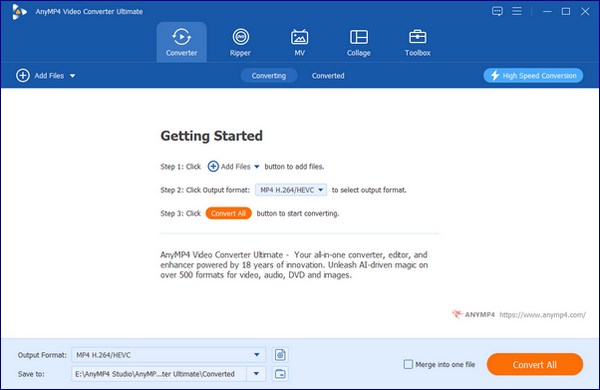
2. Open the Output Format menu at the bottom left. Click over to the Video tab and pick WMV from the left sidebar. Don't accidentally click audio, or you'll wonder why your output file has no picture.
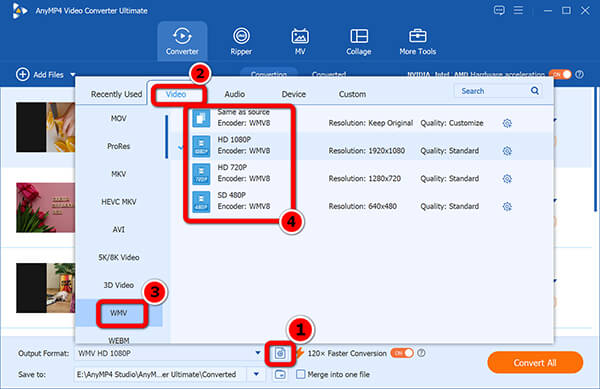
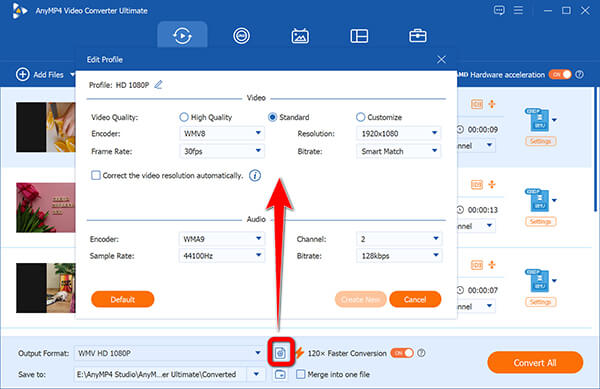
If you want to change the output WMV resolution or codec, just click the gear option next to the output format. Don't crank up the bitrate settings to max if you just want a standard file for work. You will end up with a bloated file that takes forever to share with your coworkers.
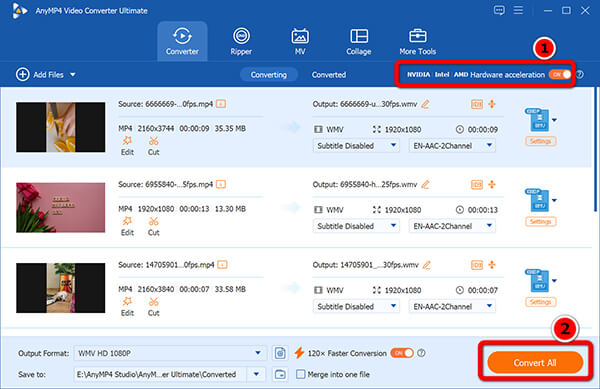
3. Choose your output folder at the bottom of the window so you can actually find your exported video later.
Hit the Convert All button and let the app do its thing. If you want to make the conversion process 70 times faster, just toggle on the GPU acceleration at the top-right corner before starting converting it.
Personal experience of using AnyMP4 Video Converter Ultimate:
I didn't have to wait around forever for the export to finish. The software kept my audio and video locked in sync, and I didn't see any weird compression artifacts on my final clips. If you want to polish your output files further, you can check out a helpful best WMV editor guide.
If you don't want to buy desktop software, you can use a free app you probably already have on your machine. VLC is great for quick, one-off jobs. You can use VLC to save files in different formats without paying a single dime. It lets you transcode media right on your local drive.
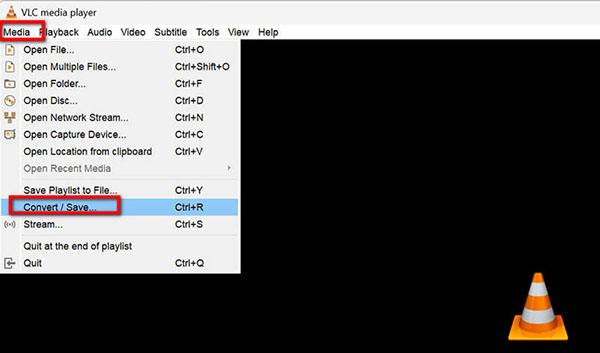
1. Open VLC on your computer. Click on the Media menu at the top left, then choose the Convert / Save option.
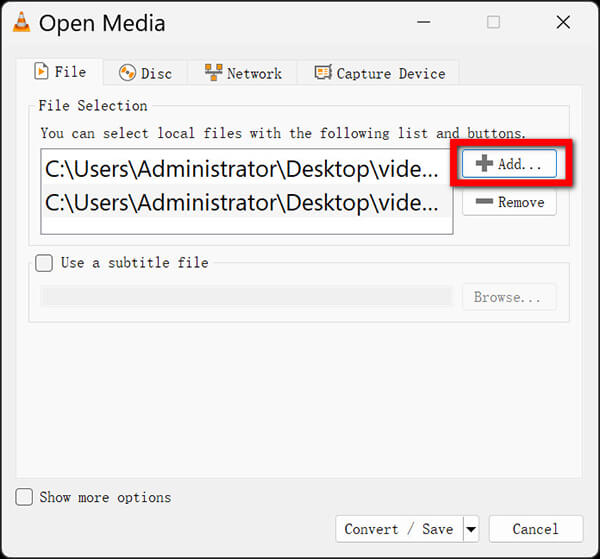
2. Click the Add button to pick the video file from your local hard drive.
Click the Convert / Save button at the bottom to move forward to the settings screen.
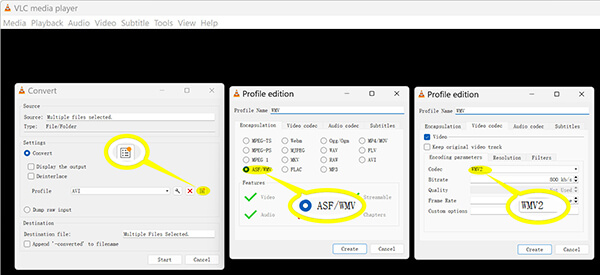
3. Since VLC lacks a default WMV option, click the Create a new profile icon (it looks like a sheet of paper with a plus sign) right next to the Profile drop-down menu.
In the profile edition window, type a name like WMV in the Profile Name box, choose ASF / WMV under the Encapsulation tab, select WMV 2 under the Video codec tab, and click Save.
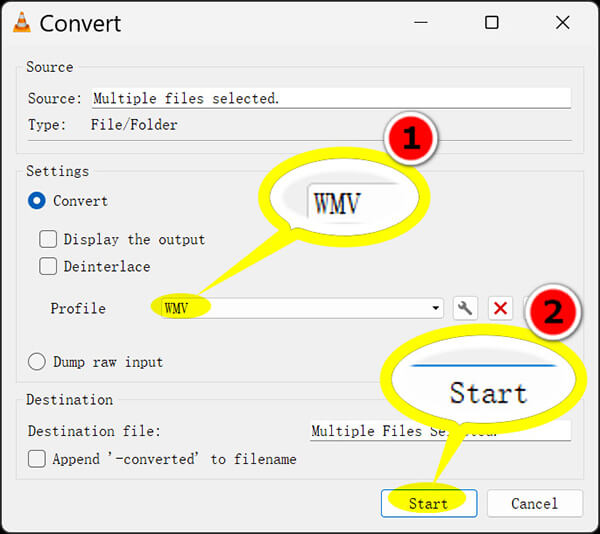
4. Select your newly created custom profile from the drop-down menu, choose your destination file path using the Browse button, and hit Start.
VLC does not have a real batch manager. If you load up twenty files at once, you have to baby-sit the queue, and configuring custom profiles feels like navigating a maze built in 2005.
Personal experience of using VLC:
I use VLC all the time to watch movies, but the conversion menu takes a few clicks to figure out. It gets the job done if you only have one or two files to process. If your default player gives you trouble later, you can read up on how to play WMV on iPhone or grab a dedicated WMV player. You can also read a detailed what is a WMV file overview to learn more about the format history.
Mac users often feel left out when dealing with stubborn Microsoft formats. Apple's native iMovie cannot export WMV files at all, which leaves you hunting for other paths. You can use a browser tool to handle your files right on macOS. You don't need to waste time hunting down broken links or sketchy plugins.
| Max File Size | Sign-up / Email | Watermark | Batch Support | Privacy Note | Final Verdict | |
|---|---|---|---|---|---|---|
| AnyMP4 Free Online Video Converter | No strict cap |  |
|
 |
Files deleted automatically | Best free web choice |
| CloudConvert | 250MB (Free) | Optional | |
|
Data stored temporarily | Good, but strict file limit |
| Zamzar | 50MB | (for download link) |
|
|
Standard cloud retention | Requires email routing |
| Online-Converter | 100MB | |
|
|
Standard privacy policy | Quick for tiny clips |
| FreeConvert | 1GB | Optional | |
|
Encrypted transfers | Decent size allowance |
| Convertio | 100MB | Optional | |
|
Deletes files in 24 hours | Clean user interface |
| AConvert | 200MB | |
|
|
Basic server security | Dated web design |
| OnlineConvertFree | 100MB | |
|
|
Standard web storage | Basic single-file utility |
Most web MP4 to WMV converter tools work similarly to complete the conversion process. So here, we only take one of them, AnyMP4 Free Online Video Converter, as an example to show you the steps.
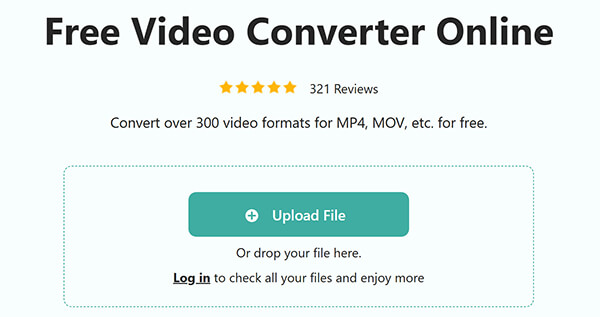
1. Open up Safari or Chrome and go to AnyMP4 Free Online Video Converter on your computer or mobile phone.
Click the Upload File button to add your MP4 clip.
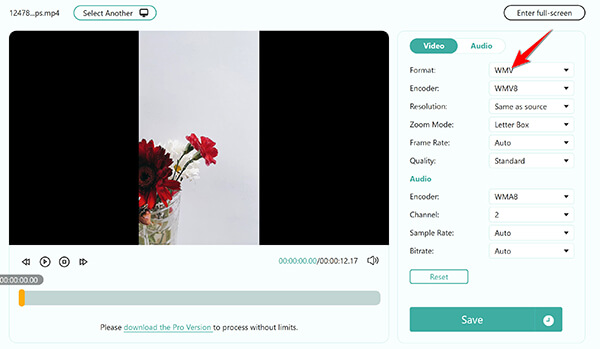
2. Select WMV from the dropdown list of Format at the right side. If you need, you can also adjust the output WMV video resolution, frame rate, encoder, and more parameters.
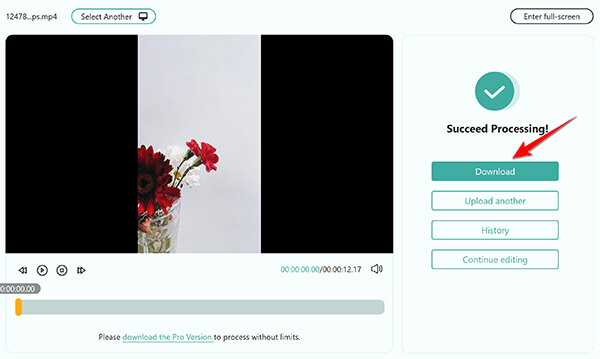
3. Click Save to convert MP4 to WMV, and download the finished file right back to your Mac once the conversion is done.
Web tools rely entirely on your internet upload speed. If your video file is massive, you'll spend half your morning staring at a slow progress bar.
Personal experience of using online tools:
I like this browser method when I am working on a laptop away from my main desktop. It takes seconds to load up, and you don't have to install heavy apps just to fix a quick presentation asset.
Why would I convert MP4 to WMV?
You only need to change formats if an old piece of software or a locked office computer refuses to open standard modern video files.
Does converting MP4 to WMV lose quality?
Yes, every time you transcode a compressed video file into a new format, you lose a tiny bit of image data. You can minimize this drop by keeping your bitrate settings high.
Can Windows Media Player play or convert MP4 files?
Newer versions of the player handle MP4 clips fine, but older legacy versions require you to use a WMV converter for Windows to change the file first.
What is the best free MP4 to WMV converter online?
AnyMP4 Free Online Video Converter lets you handle conversions right in your browser without forcing you to deal with annoying ads or watermarks. It can be the best free WMV converter to convert MOV, MKV, AVI, MP4, and more to WMV.
How do I convert MP4 to WMV for PowerPoint on a Mac?
You can use a browser-based tool or a local app to prepare your presentation assets before dropping them into your slides.
Choosing the right way to convert MP4 to WMV depends entirely on what you are trying to accomplish. If you manage a large media library, batch convert MP4 tasks require a heavy desktop app. Pick AnyMP4 Video Converter Ultimate when you need speed and high output quality.
Secure Download
Secure Download
If you only need to fix one quick file, use a web browser tool. If you care deeply about local file privacy and want to keep your data offline, use VLC.
 Posted by Alice Thorne to Convert Video
More readings
 [2026] 3 Efficient Methods on How to Play WMV on iPhone
How to play WMV on iPhone iPad? Here are the methods to play WMV videos on iPhone iPad after converting WMV for playback on iPhone and iPad device.
 GIF to WMV – Top 5 GIF to WMV File Converters Online/Offline
Read and get your best GIF to WMV converter. You can convert animated GIF to WMV files on Windows, Mac, iPhone, iPad, and Android with any GIF converter here.
 4 Best Ways to Convert WMV to MP3 for High-Quality Audio
Looking for the best way to convert WMV to MP3? This guide covers four methods, including desktop and free online tools. Extract MP3 audio from WMV in seconds.
 [Certified] Top 4 Ways to Convert/Change WMV to MP4
The easiest ways to change your files from WMV to MP4 are all in this post. Follow our step by step guides to convert WMV to MP4 on Windows, Mac, and online.
 Add your comments to join the discussion here