8 Best Podcast Recording Software for Pro-Quality Audio in 2026
Quick Summary of Podcast Recording Tools:
When you break it down, podcast recording software usually falls into four main types:
- Remote interview tools (like Riverside or Zencastr) that record you and your guests locally so the audio doesn't lag over the internet.
- AI editors (like Descript) that let you edit your audio just by tweaking a text transcript.
- Free desktop programs (like Audacity and GarageBand) for recording yourself offline with multiple tracks.
- All-in-one capture tools (like AnyMP4 Screen Recorder) that are great for recording voice calls while keeping your mic and system sounds completely separate.
You just wrapped up a 45-minute interview with a dream guest, only to find their audio sounds like it was recorded in low quality, or worse, the tracks are completely out of sync. Choosing the right podcast recording software isn't just about capturing sound; it's about saving yourself hours of miserable post-production work. That is why you are in the right place. Here, we gather the top 8 list of podcast recording tools to help you get crisp audio, when you're flying solo in a home studio or managing remote co-hosts across different time zones.
How We Tested & Selected These Podcast Recording Tools
To find the actual best tools, we run the real test through local laboratory testing workflows, recording 15-minute test episodes to benchmark data metrics. We tested using standard studio equipment, including Blue Yeti and Rode NT-USB microphones, to see how each software handled variable inputs.
Audio Quality & Recording Reliability
We checked how well these tools actually handle audio compression. A good recorder needs to capture high-quality sound (up to 320kbps) without glitching or dropping out just because someone's internet lagged for a second. We also made sure they support multi-track recording so you can isolate each person's voice—which is an absolute must when it's time to edit.
Ease of Use & Editing Workflow
Your software shouldn't make your life harder. We actually timed how long it takes to start a project, get a guest into the room, and export your raw files. We specifically highlighted tools that speed up your workflow with features like text-based editing, automatic filler word removal, and timelines that are actually easy to navigate.
Value for Money & Platform Support
We weighed the price tag against the features you actually get. We also tested everything on both Windows 11 and Mac setups to make sure the software runs smoothly without freezing your computer or eating up all your CPU power.
Tips
Always do a 30-second "clap test" before starting your actual recording. Have everyone clap on the count of three. If you ever need to manually sync tracks later, you'll be incredibly thankful for that visual audio spike on your waveform!
Quick Comparison: Best 8 Podcast Recording Software at a Glance
|
Best For |
Remote Setup |
AI Features |
Free Option |
| AnyMP4 Screen Recorder |
Capturing Skype/Zoom |
 Desktop Routing Desktop Routing |
 Basic Basic |
Free Trial |
| Riverside.fm |
Pro Video Interviews |
Native Local |
Basic |
Yes (Watermarked) |
| Descript |
Fast Post-Production |
via SquadCast |
Advanced |
Yes |
| Zencastr |
Browser-only Podcasts |
Native Local |
Auto-mix |
Yes (14-day trial) |
| Audacity |
100% Free Offline Editing |
Manual routing |
None |
Completely Free |
| Adobe Audition |
Pro Audio Workstation |
External routing |
Advanced repair |
7-day trial |
| GarageBand |
Free Mac Recording |
Manual routing |
Basic |
Completely Free |
| AnyMP4 Free Audio Recorder Online |
Quick Web Capture |
Browser only |
None |
Completely Free |
Best 8 Podcast Recording Tools Review
1. AnyMP4 Screen Recorder - Versatile All-in-One Alternative
- • Best For: Capturing video podcasts, local VoIP calls, and desktop media streams
- • Starting Price: Free trial; Lifetime license or monthly license at $12.45/month
- • Platform Support: Windows 11/10/8/7, macOS
- • Supported Formats: MP3, M4A, AAC, WMA, MOV, MP4
- • Watermark: No watermark on recorded audio
- • Free Trial: Free evaluation version available
- • Key Features: System sound & microphone isolation, hardware acceleration, noise cancellation, audio trimming
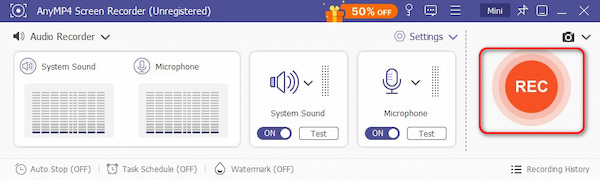
While primarily recognized for video capture, AnyMP4 Screen Recorder captures various types of screen activity, including recording podcasts. This podcast recorder lets you capture both your screen and the system audio and microphone input simultaneously, making it suitable for recording podcast discussions, interviews, and solo sessions. On top of that, it supports recording in high quality, preserving the video and audio clarity essential for podcasts.
PROS
- Sets up hassle-free multi-track recording without driving you crazy configuring virtual audio cables.
- Set-and-forget reliability-it captures mic and system sound simultaneously with zero latency lag.
- Built-in noise cancellation feature helps improve podcast recording quality.
CONS
- It's built as a capture utility, so you'll still want a dedicated DAW timeline editor for heavy post-production cutting.
- Trial version export limited lengths.
2. Riverside.fm - Best for Professional Remote Interview Recording
- • Best For: Remote hosts, video podcasters, and interview-based shows
- • Starting Price: Free tier available; paid plans start at $15/month
- • Platform Support: Web browser, iOS, Android
- • Supported Formats: Uncompressed WAV (audio), MP4 up to 4K (video)
- • Watermark: Watermark applied to video exports on free tier; none on paid tiers
- • Free Trial: Free forever plan with basic capabilities
- • Key Features: Local double-ended recording, separate multi-track stems, AI transcription, live audience streaming
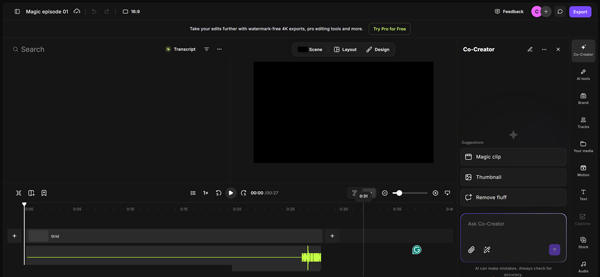
Riverside.fm fixes the worst part of remote podcast recording. Instead of relying on a live internet stream that can lag or stutter, it records the audio and video locally right on everyone's computer. So, even if your guest's Wi-Fi completely drops out for a second, you still end up with a clean, uncompressed 48kHz WAV audio file. When we tested it, the platform held up great, and it just quietly uploads those local files to the cloud in the background while you talk.
PROS
- Absolute lifesaver when guests have patchy Wi-Fi, and local recording means zero internet glitches on the final track.
- Super dummy-proof for guests; you literally just send them a link, and they’re in without downloading bloated software.
- Magic Clips AI saves tons of time turning long interviews into short viral TikToks/Reels.
CONS
- Chrome browser resource hog-if your guest runs a low-spec laptop, their fan will sound like a jet engine.
- Upload sync anxiety: if a non-tech guest closes their browser tab the microsecond you wrap up, their track can get stuck in cloud limbo.
3. Descript (with SquadCast) - Best for AI-Powered Editing & Transcription
- • Best For: Creators looking to drastically speed up post-production
- • Starting Price: Free tier available; Creator plan starts at $12/month
- • Platform Support: macOS, Windows, Web browser
- • Supported Formats: MP3, WAV, AAC, M4A, AIFF
- • Watermark: No watermark on audio; video watermark on free plan
- • Free Trial: Free plan with 1 hour of transcription per month
- • Key Features: Text-based audio editing, Studio Sound AI noise removal, Overdub voice synthesis, SquadCast integration
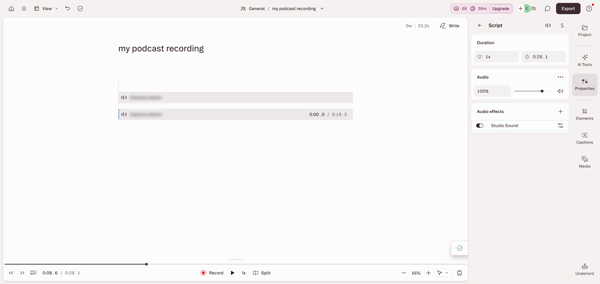
Descript totally changes the way you look at audio editing software. Instead of staring at confusing timelines, it turns your entire recording into a text transcript. Editing your audio podcast is literally like editing a Word document, just highlight a sentence you don't want, hit delete on your keyboard, and that audio clip is instantly cut from the track. It also has SquadCast built right in, making it super easy to record remote guests and get an instant transcription. Honestly, choosing dedicated podcast editing software like this saves you from spending hours manually slicing up tiny audio clips, which really speeds up how fast you can publish episodes.
PROS
- "Studio Sound" feels like pure black magic-it turns a noisy bedroom recording with echo into a studio mic setup with one click.
- Text-based editing is a game-changer if you hate staring at squiggly waveforms for hours just to cut out "ums" and "ahs".
- Integrated SquadCast makes going from remote recording straight to timeline editing completely painless.
CONS
- The timeline takes getting used to if you're an old-school audio editor accustomed to traditional DAW controls.
- The monthly transcription limits hit pretty quickly if you run a weekly long-form podcast.
4. Zencastr - Best Browser-Based Solution for Podcasters
- • Best For: Lightweight remote discussions and effortless guest onboardings
- • Starting Price: Free plan available; Professional plan starts at $18/month
- • Platform Support: Web browser (Chrome, Firefox, Edge)
- • Supported Formats: MP3, 16-bit 44.1k WAV
- • Watermark: No watermarks
- • Free Trial: 14-day full feature trial
- • Key Features: Built-in VoIP, automatic audio post-production, cloud drive sync (Dropbox/Google Drive), 4K video capture
Zencastr makes remote recording incredibly simple because it runs entirely in your web browser. Your guests don't have to download any installers or set up an account—they literally just click a link to join. It records high-quality, separate audio tracks for every participant directly to their own computer before safely syncing the files up to the cloud. If you really don't want to spend hours editing, Zencastr also has a built-in auto-mixing feature that automatically balances out everyone's volume levels and cleans up basic background noise for you.
PROS
- Great straightforward interface for simple audio interviews-guests rarely get confused about where to click.
- Automatic post-production leveling handles volume balancing between quiet and loud speakers surprisingly well.
- Direct Google Drive/Dropbox integration means your raw backup files land straight in your cloud storage.
CONS
- Mobile browser support is pretty clunky; guests really need to join from a desktop computer.
- Occasional track drift issues reported on sub-par connections if auto-post-production isn't toggled on.
5. Audacity - Best Free Open-Source Podcast Recording & Editing Tool
- • Best For: Independent creators wanting a 100% free, desktop-based local recorder
- • Starting Price: Completely Free (Open-Source)
- • Platform Support: Windows, macOS, Linux
- • Supported Formats: WAV, AIFF, MP3, OGG, FLAC
- • Watermark: No watermarks
- • Free Trial: Fully open-source without restriction
- • Key Features: Non-destructive editing, VST plugin support, spectral editing view, noise removal filters
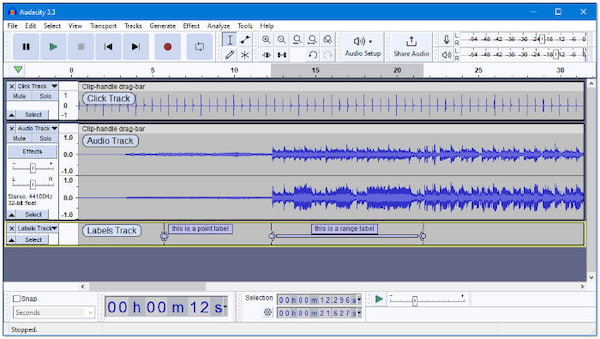
Audacity is still one of the most popular podcast recording tools out there because it is free and lets you edit your audio waveforms after recording. Recent updates finally gave the friendly interface and added non-destructive track effects, which is a huge plus. It’s also good for offline audio production. You get total hands-on control over things like volume envelope shaping, equalization, compressor thresholds, and noise reduction directly on your hard drive, without ever needing an internet connection.
PROS
- Zero subscription tax-it's completely free forever and doesn't lock features behind a paywall.
- Bulletproof workhorse that runs super fast, even on an ancient $200 laptop without crashing.
- Massive online community on Reddit; if you run into an audio issue, someone solved it on a forum 10 years ago.
CONS
- The user interface still looks like it was designed for Windows 95 and has a bit of a learning curve.
- No built-in way to call remote guests natively-you have to mess with virtual audio cables or record Discord calls separately.
6. Adobe Audition - Best Professional Audio Workstation for Podcasts
- • Best For: Audio engineers, narrative producers, and broadcast-quality production
- • Starting Price: $22.99/month (Single App) or included in Creative Cloud Suite
- • Platform Support: Windows, macOS
- • Supported Formats: All major industry audio formats (WAV, MP3, AAC, AIFF, FLAC, etc.)
- • Watermark: No watermarks
- • Free Trial: 7-day free trial
- • Key Features: Spectral Frequency Display, Essential Sound panel, multitrack session templates, adaptive noise repair
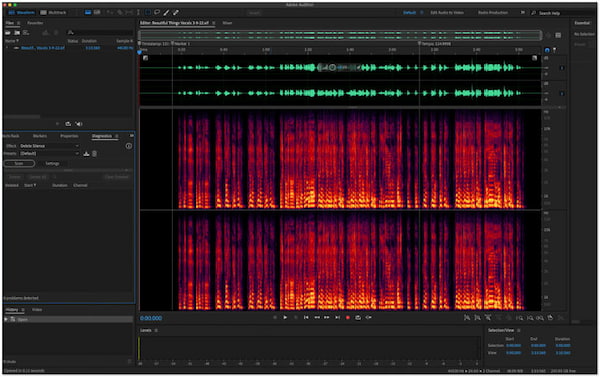
Adobe Audition is a professional digital audio workstation built for maximum precision and audio repair. Its Spectral Frequency Display allows you to visually pinpoint unwanted background sounds-like a door slam or mic bump-and erase them cleanly from the audio track. If you frequently host interview sessions over web conference apps, learning how to record a podcast on Zoom and import those multi-channel tracks into Audition gives you total control over dynamic levelling and broadcast loudness standards.
PROS
- The Spectral Frequency display is unmatched-you can literally see a siren or dog bark on a color grid and paint it out.
- Batch processing lets you apply the exact same EQ, compression, and loudness settings across 20 audio clips instantly.
- Unbeatable multitrack stability for complex, heavily edited audio dramas or narrative podcasts.
CONS
- Expensive Adobe Creative Cloud subscription rent model stings if you only use it once a week.
- Massive overkill if you just need to chop up a casual 2-person conversation.
7. GarageBand - Best Free Podcast Recorder for Mac Users
- • Best For: Apple users seeking a pre-installed, easy-to-use local studio
- • Starting Price: Completely Free (Pre-installed on macOS and iOS)
- • Platform Support: macOS, iOS, iPadOS
- • Supported Formats: AIFF, WAV, CAF, AAC, MP3
- • Watermark: No watermarks
- • Free Trial: Fully accessible for free
- • Key Features: Dedicated podcast templates, Apple Loops library, visual EQ, Smart Controls
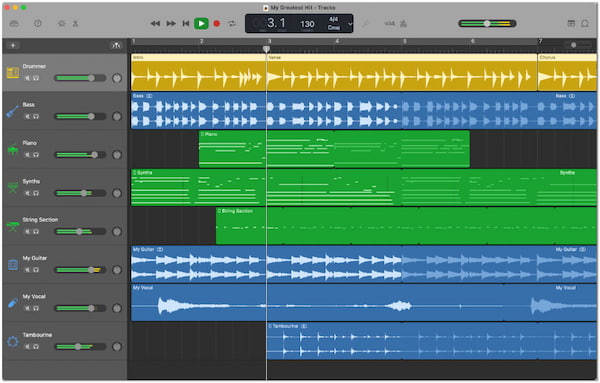
If you use a Mac, you can record a podcast directly to your hard drive. GarageBand comes with built-in podcast templates that have vocal compression, EQ, and de-Esser settings ready to go. The layout is super visual: you can easily drag in background music, slide your vocal tracks around, and balance the volume without digging through confusing technical menus.
PROS
- Completely free and already installed on your Mac, no downloads, account setups, or subscriptions needed.
- The built-in vocal presets make beginners sound surprisingly good right away, even if you know nothing about audio engineering.
- You can start a recording on your iPhone or iPad while traveling, and finish editing it later on your MacBook.
CONS
- Apple only. If your co-host uses a Windows PC or an Android phone, they can't use it.
- Missing some higher-end features you’d find in paid tools, like automatic loudness leveling (LUFS) or deep background noise removal.
8. AnyMP4 Free Audio Recorder Online - Free Web-Based Recording Option
- • Best For: Quick, zero-install voice notes, solo commentary, and browser capture
- • Starting Price: Completely Free
- • Platform Support: Any web browser (Windows, Mac, Chromebook, Linux)
- • Supported Formats: MP3
- • Watermark: No watermarks
- • Free Trial: Fully free web tool
- • Key Features: One-click web recording, localized client-side processing, zero installation required
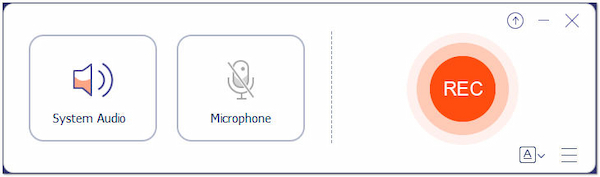
Sometimes you just need to record a quick intro, a short solo take, or a voice note without running massive desktop program. For that, AnyMP4 Free Audio Recorder Online gets the job done fast. It works right in your browser, and just pick your mic and start talking. Everything is saved straight to your computer, so your audio stays private instead of sitting on an external server.
Note: If you're interviewing a guest over a standard video call like Zoom, just leave this running in a browser tab to record your own mic. Even if the call connection gets choppy or compresses the sound, your side of the conversation will still sound perfectly clean!
PROS
- Good for quick emergency recordings without downloading a large installation file.
- Easy to navigate podcast audio recording from its friendly interface, just hit the big red button, talk, and save.
CONS
- Only exports standard MP3 files, so you can't get uncompressed WAV outputs.
- Very basic, and you won't find any advanced multitrack features or plugin support here.
How to Choose the Best Podcast Recording Software for Your Needs
How to pick the right software? It all just depends on how you record, who your guests are, and your budget:
- • If you do remote interviews: Go with Riverside.fm or Zencastr. Because they record the audio locally on both sides, you'll still get crisp, uncompressed WAV files even if someone's internet connection acts up.
- • If you want to edit audio as easily as text: Opt for Descript. Its AI-driven transcription, text-based cutting, and filler word removal save hours in post-production.
- • If you prefer working with video creators: You should explore dedicated best video podcast software with editing platforms to handle high-resolution multi-camera switching and visual layouts simultaneously.
- • If you are on a tight budget: Use Audacity (for Windows/Linux) or GarageBand (for Mac). Both provide robust multitrack recording and editing capabilities at zero cost.
- • If you need to capture local calls or desktop media: Use AnyMP4 Screen Recorder to isolate system sounds and microphone tracks into separate audio files for flexible mixing.
Essential Equipment for Recording a Podcast
To get a high-quality podcast recording , it is not enough to select the best tool for your needs. It also needs you to prepare the following essential equipments:
- • Microphone: That built-in laptop mic is a hard no. Grab a dynamic USB or XLR microphone instead (the Shure MV7 or Audio-Technica ATR2100x are solid picks). You specifically want dynamic microphones because they ignore background noise and room reverb. Beginners always buy highly sensitive condenser mics and immediately regret it when their recording picks up the AC unit running two rooms away.
- • Headphones: You absolutely need closed-back headphones for both you and your guests. If you play sound through regular speakers, the voice will bleed right back into your microphone and cause a terrible echo loop.
- • A Quiet Acoustic Space: Believe it or not, a walk-in closet full of clothes sounds way better than a big empty office with hard floors. Soft clothes absorb the sound and easily get rid of room echo.
FAQs About Podcast Recording
What is the easiest software to record a podcast for beginners?
For complete beginners, GarageBand (on Mac) or web tools like Zencastr and AnyMP4 Audio Recorder Online are the easiest. They require zero complex virtual cable routing-you simply choose your microphone input and hit record.
Can I use Zoom to record a podcast?
You can, but you probably shouldn't if you care about how it sounds. Zoom heavily compresses your audio just to keep the call from lagging, which is why voices often sound flat or robotic. If you want good quality, use a tool like Riverside.fm instead. It records the audio right on your guest's computer, completely skipping the internet connection issues.
How do I record multiple microphones on a single computer?
To record two or more local XLR microphones, you need an audio interface or mixer (such as a Focusrite Scarlett 2i2 or Rodecaster Pro) paired with software that supports multi-track recording, such as Audacity, Adobe Audition, or GarageBand.
Is free podcast recording software good enough?
Absolutely. Free tools like Audacity and GarageBand have plenty of features to get the job done. You really only need to spend money if you want to record high-quality remote interviews (like Riverside), edit your podcast by reading a text transcript (like Descript), or need heavy-duty tools to fix bad background noise (like Adobe Audition).
Final Words
You don't need to overcomplicate your podcast setup. The best podcast recording software is just the one that gets out of your way. If bad Wi-Fi keeps ruining your guest interviews, use a local recorder. If you hate cutting audio, grab a text-based editor. If you have zero budget, free desktop tools work perfectly fine. Pick the platform that solves your biggest headache right now. Plug in a decent mic, check your volume levels, and press record. Your listeners are showing up for your conversations, not your tech stack.


 Add your comments to join the discussion here