How We Tested These FLAC Converters
To figure out which conversion tools actually hold up in daily use, we set up a multi-platform testing environment on both macOS Sequoia and Windows 11.
Test Setup & Hardware
- • Testing Rig: 2023 Apple MacBook Pro (M2 Pro, 16GB RAM) and a custom Windows 11 PC (Intel Core i7-13700K, 32GB RAM).
- • Monitoring Gear: Sennheiser HD 600 headphones connected through a Topping DX3 Pro+ DAC/AMP so we could listen for any subtle audio artifacts.
- • Test Library: Five 24-bit/96kHz high-resolution audio FLAC tracks (around 55 MB per file) loaded with embedded metadata, ID3 tags, and high-res cover artwork.
Conversion Speed & Quality Metrics
We timed how fast each tool processed both single songs and multi-disc albums. After transcoding, we ran every output file through Spek spectrum analysis to check for high-frequency clipping or artificial volume roll-offs. We also performed null tests on our FLAC to ALAC converter exports to guarantee bit-exact signal matches against the original studio source.
Key Findings
- • Desktop tools with GPU hardware acceleration processed our 50-track benchmark album up to 12x faster than single-threaded terminal commands.
- • FLAC metadata preservation (album art, track numbers, release years) was surprisingly hit-or-miss-command-line tools often dropped embedded cover art unless we manually supplied explicit tag flags.
- • Downsampling 24-bit studio tracks down to standard 16-bit audio at sample rate 44.1kHz prevented distortion and clipping on portable playback gear.
Quick Comparison - Best FLAC Converter at a Glance
|
Best For |
Conversion Speed |
Audio Quality |
Price |
Platform |
Format Support |
| AnyMP4 Video Converter Ultimate |
Batch collections, preserving cover art, all skill levels |
Ultra‑Fast (GPU Acceleration) |
Lossless / Bit‑exact support |
Free Trial / Paid |
Windows, Mac |
FLAC, MP3, WAV, ALAC, AAC, M4A, 500+ formats |
| Audacity |
Editing tracks before exporting, quick single files |
Moderate (Manual Export) |
Pristine (Custom Dithering) |
Free (Open Source) |
Windows, Mac, Linux |
FLAC, MP3, WAV, OGG, AIFF |
| FFmpeg |
Terminal users, developers, automated server scripts |
Fast (CLI Native) |
Bit‑Exact |
Free (Open Source) |
Windows, Mac, Linux |
Universal Codec Support |
| Online Converters |
Quick 1‑track conversions without installing software |
Slow (Upload dependent) |
Standard |
Free (Size Limited) |
Web Browser |
Basic formats (MP3, WAV, AAC) |
AnyMP4 Video Converter Ultimate (Recommended)
When we need to transcode several multi-disc albums without losing embedded tag data or album covers, AnyMP4 Video Converter Ultimate is our go-to choice. Whether we need a reliable FLAC converter for Mac or a Windows utility, this tool pairs an intuitive drag-and-drop workflow with powerful batch FLAC conversion features.
A major headache we run into with free converters is tag stripping: you finish converting 50 songs, only to find blank gray album art on your phone. AnyMP4 handles FLAC metadata preservation properly, keeping artwork, track numbers, and artist details intact across every file. Thanks to multi-core GPU acceleration, we were able to process multi-gigabyte folders in minutes. Whether your goal is to convert FLAC to MP3 320 kbps for your car or run a FLAC to WAV converter pass for audio editing, AnyMP4 lets you tweak bitrates, channels, and sample rates without getting buried in technical jargon.
PROS
- GPU-Accelerated Batch Speed: Utilizes hardware acceleration to transcode multi-gigabyte audio collections in minutes.
- Lossless Metadata Preservation: Keeps embedded ID3 tags, album artwork, track numbers, and release years completely intact.
- Full Audio Customization: Flexible control over sample rates (e.g., 44.1kHz/48kHz), audio channels, and bitrates (up to 320 kbps CBR).
- Massive Format Support: Converts FLAC to over 500+ audio and video formats, including MP3, WAV, ALAC, AAC, and M4A.
CONS
- Trial Limits: The free evaluation version limits output audio duration and total batch file conversions.
Practical Tip from Our Testing:
We have wasted way too many afternoons fixing broken music libraries after running files through cheap converters. Finding out that a tool erased your track numbers or scrambled your multi-disc tags right before a long road trip is pure frustration. AnyMP4 Video Converter Ultimate keeps tag blocks intact, saving us hours of manual tagging.
Step-by-step guide: Convert FLAC to MP3/WAV/ALAC:
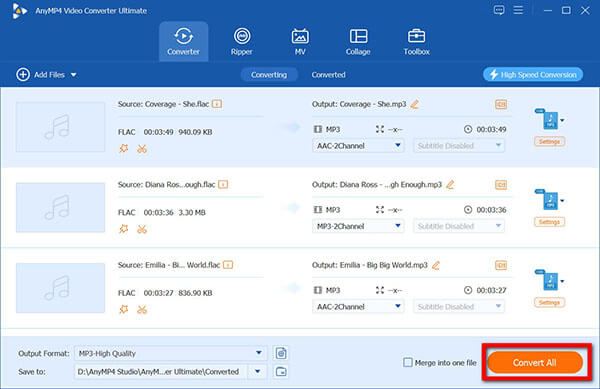
1. Free download and open AnyMP4 Video Converter Ultimate on your PC or Mac.
Drag your FLAC tracks or an entire music folder right into the main window.
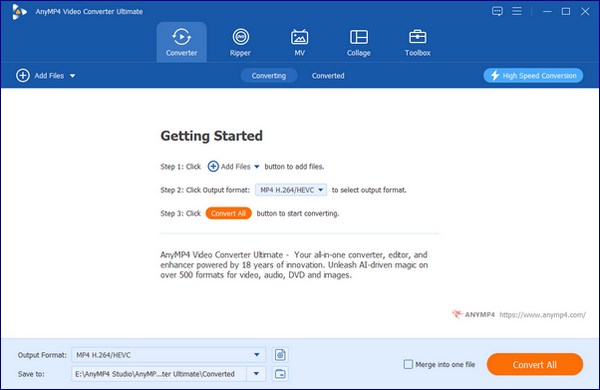
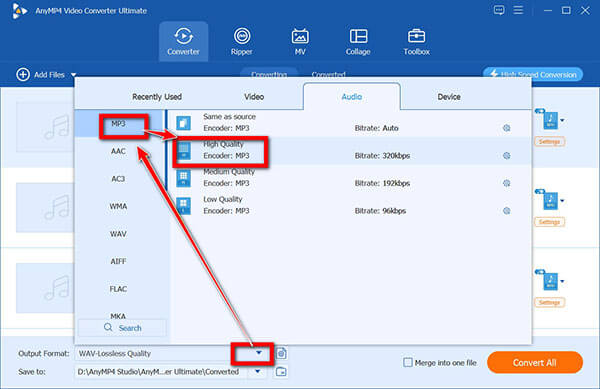
2. Click the Output Format drop-down menu in the top-right corner and pick the Audio tab:
• To convert FLAC to MP3: Choose MP3 and pick the High Quality (320 kbps) profile.
• To use the FLAC to WAV converter: Choose WAV and select Same as Source.
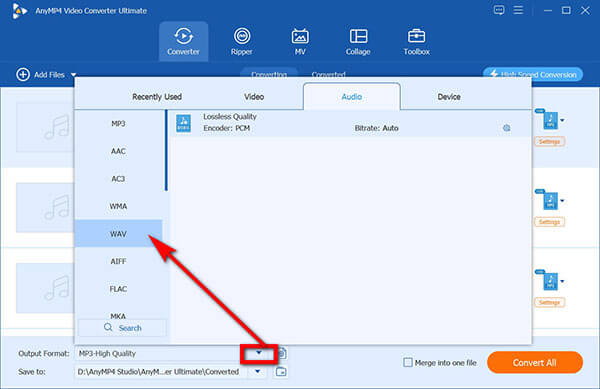
• To use the FLAC to ALAC converter: Choose ALAC for native Apple ecosystem compatibility.
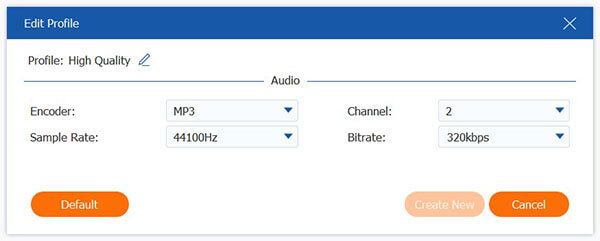
Optional step: Click the gear icon next to the output format to adjust parameters like audio bitrate, sample rate 44.1kHz, or stereo channel mapping.
3. Pick your destination folder at the bottom and hit Convert All to run the batch job.
For speed up the FLAC conversion process, do not forget to enable GPU acceleration toggle at the top-right side.
Summary
AnyMP4 Video Converter Ultimate is best for Mac and Windows users who want fast batch transcoding, zero metadata loss, and a straightforward interface. It gives us a great balance between processing speed and clean audio fidelity. Everything runs locally on your computer-meaning no privacy risks, no file size caps, and no waiting around for slow web uploads. Any real-world AnyMP4 FLAC converter review will point out that its clean batch processing and tag preservation make it well worth having on your desktop.
Audacity - Convert FLAC with Audacity (Free)
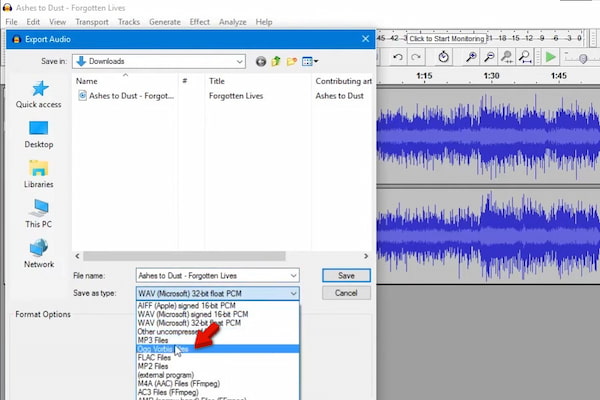
Audacity is a fantastic free FLAC converter when you only need to process one or two tracks, or when you want to trim an audio file before saving it. We just open Audacity, drop in our FLAC track, head over to File > Export Audio, choose our target format, and tweak our Audacity FLAC export settings before saving. If you have multiple FLAC files, you can use Audacity to merge audio tracks before exporting.
That said, Audacity is an audio editor first, not a dedicated batch converter. If you want to transcode 100 songs across three albums, setting up macro chains in Audacity gets clunky fast. When we have large music collections to process, we usually skip Audacity and head straight for a dedicated batch utility like AnyMP4 Video Converter Ultimate.
PROS
- 100% Free & Open-Source: Full-featured audio editor with zero hidden fees, subscriptions, or watermarks.
- Built-in Waveform Editing: Allows you to trim, apply EQ profiles, adjust volume gain, and remove noise before exporting.
- Cross-Platform: Runs natively on Windows, macOS, and Linux systems.
CONS
- Clunky Batch Workflow: Not designed for fast batch conversion; exporting multiple albums requires setting up manual macro chains.
- Poor Artwork Handling: Does not easily carry embedded cover art over to exported audio files.
FFmpeg Command Line (For Advanced Users)
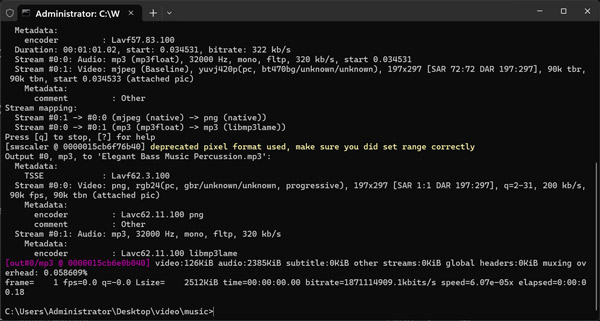
When we want to automate conversions inside scripts or handle tasks from a terminal, FFmpeg is the ultimate command line audio converter. It runs with virtually zero system overhead and gives us complete command over encoding flags, sample rates, and bitrates.
Here is the exact terminal command we use to transcode a FLAC file to 320 kbps MP3 while keeping metadata:
ffmpeg -i input.flac -b:a 320k -map_metadata 0 output.mp3
To convert FLAC to Apple Lossless (ALAC) while keeping the original sample rate:
Bash
ffmpeg -i input.flac -c:a alac output.m4a
If we need to run a FFmpeg FLAC to MP3 batch script across a full directory on Windows PowerShell, we use this loop:
Get-ChildItem *.flac | ForEach-Object { ffmpeg -i $_.FullName -b:a 320k "$($_.BaseName).mp3" }
FFmpeg gives us total control and speed, but you have to be comfortable with terminal commands. Leave out one metadata flag, and you might end up stripping cover art or mixing down audio channels by mistake.
PROS
- Zero System Overhead: Lightweight CLI tool that executes lightning-fast conversions directly from terminal or console.
- Fully Automatable: Easy to integrate into custom PowerShell, Bash, or Python scripts for server-side processing.
- Unrestricted Codec Control: Complete freedom over encoding flags, dithering, mapping passes, and container specs.
CONS
- Steep Learning Curve: Demands familiarity with terminal syntax; no graphical user interface (GUI).
- Easy to Miss Tags: Leaving out precise metadata mapping flags will strip cover art and track details during conversion.
Online FLAC Converters (Quick & Browser-Based)
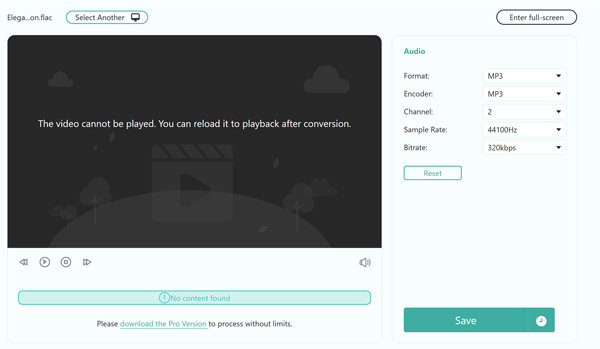
If you only need to transcode a single FLAC track on a borrowed laptop or restricted work computer, a web-based tool like AnyMP4 Free Online Audio Converter is a solid quick fix. It allows you to drag and drop FLAC files directly into your browser, adjust basic output bitrates (such as MP3 at 320 kbps or WAV), and download converted files without installing desktop software or registering an account.
However, browser-based tools carry inherent limitations compared to desktop utilities. Large high-resolution 24-bit albums can hit strict file size caps, and uploading gigabytes of lossless audio consumes heavy network bandwidth. For single quick conversions, web tools are convenient; for full multi-disc music collections, a desktop tool like AnyMP4 Video Converter Ultimate remains the better choice.
PROS
- Zero Installation Needed: Transcodes files directly inside your web browser without downloading software.
- Wide Device Compatibility: Works across Chromebooks, mobile browsers, and restricted work PCs.
- Basic Audio Customization: Supports bitrate selection (up to 320 kbps), sample rate adjustments, and multichannel options.
CONS
- File Size & Upload Limits: Capped file sizes make converting large 24-bit lossless albums nearly impossible.
- Bandwidth Dependent: Slow upload and download times, especially on unstable or capped network connections.
- Privacy Risks: Uploading non-copyrighted or personal audio files to third-party web servers introduces privacy concerns.
What Is FLAC and Why Convert It?
FLAC stands for Free Lossless Audio Codec, an open-source audio format designed to shrink digital audio files without throwing away a single byte of sound data. We like to think of FLAC as a ZIP folder for sound: when you play a FLAC track, your media player unpacks it back into the exact PCM audio wave recorded in the studio.
Lossless vs. Lossy: The FLAC Advantage
Unlike lossy formats like MP3 or AAC-which permanently shave off high-frequency details to save disk space-FLAC keeps the full dynamic range. A standard 16-bit/44.1kHz FLAC file streams at a high audio bitrate between 800 and 1000 kbps, whereas standard lossy MP3s top out at 320 kbps. Most FLAC files default to compression level 5, which gives us the sweetest spot between encoding speed and compressed file size.
Common Scenarios for FLAC Conversion
- • Apple Ecosystem Restrictions: Apple Music and QuickTime do not natively play standard FLAC tracks; we have to convert FLAC to ALAC for iTunes so our high-res library syncs seamlessly to iPhone and iPad.
- • Saving Storage on Mobile Drives: High-res FLAC albums swallow gigabytes of space fast. Transcoding those files down to 320 kbps MP3 shrinks our storage footprint by about 75% while keeping quality high enough for daily commutes.
- • In-Car & TV Incompatibility: Older car head units and smart TVs usually lack FLAC decoders, requiring standard formats like MP3 or WAV to play music over USB.
FLAC vs. MP3 vs. WAV vs. ALAC - Which Format Should You Use?
Here is how these four popular audio containers stack up against each other based on our real-world testing:
|
FLAC |
MP3 |
WAV |
ALAC |
| Type |
Lossless (Compressed) |
Lossy |
Uncompressed |
Lossless (Compressed) |
| Bitrate |
~800 - 1411 kbps |
Up to 320 kbps |
1411 kbps (CD standard) |
~800 - 1411 kbps |
| File Size |
Medium (~25‑40 MB) |
Small (~5‑10 MB) |
Large (~50‑70 MB) |
Medium (~25‑40 MB) |
| Best For |
Archiving hi‑res audio |
Universal playback |
DAW audio editing |
iPhone / iTunes / Apple Music |
Sound Quality Comparison
When comparing FLAC vs MP3 vs WAV, FLAC, WAV, and ALAC are bit-for-bit identical during decoding. None of these lossless containers sacrifice dynamic range or sound details. MP3 uses psychoacoustic compression to drop high frequencies you rarely hear; on budget earbuds, 320 kbps MP3 sounds practically identical to FLAC, but on our Sennheiser HD 600 studio headphones, FLAC delivers cleaner instrument separation and a wider soundstage.
File Size & Storage Considerations
Transcoding FLAC albums down to 320 kbps MP3 saves roughly 75% of your drive space. If your phone or car USB stick is running low on room, MP3 is the most sensible choice. If you want pristine audio and have space to spare, keep your archive in FLAC or ALAC.
Device & Platform Compatibility
Before picking an output format, double-check your FLAC player compatible devices:
- • Pick MP3 for legacy car stereos, older media devices, and universal playability anywhere.
- • Pick ALAC for clean Apple Music FLAC support alternative syncing across Mac, iPhone, and iPad.
- • Pick WAV when importing audio samples into editing apps like FL Studio, Ableton, or Pro Tools.
FLAC Conversion Troubleshooting
Common Errors and Fixes
- • Clipping or Harsh Distortion: This happens when high-res 24-bit tracks get converted without volume headroom. Drop output gain by -1dB or turn on peak normalization in your converter settings.
- • Missing Cover Art or Metadata: Make sure your conversion tool supports ID3v2 tags. Converting through intermediate raw WAV files wipes metadata clean unless you save a separate .cue sidecar file alongside it. Or you can use the music metadata editor feature from AnyMP4 Video Converter Ultimate to edit your audio metadata information.
Why Your FLAC File Won't Import
If a converter gives you an "Unsupported Bit-Depth" or "Corrupt Frame" error, your source file likely has broken header data from an incomplete download. We usually fix broken headers by passing the file through FFmpeg with a copy command:
ffmpeg -i bad.flac -c copy fixed.flac.
Picking bitrates and container formats can feel confusing at first. Below, we answered some of the most common questions we see pop up across audiophile forums and home recording communities.
Conclusion
We have tested dozens of workflows over the years, and finding the right FLAC converter really comes down to your personal setup and collection size.
If you have a massive library of lossless albums and care about keeping your cover art and track details intact without spending hours in a terminal, AnyMP4 Video Converter Ultimate is easily the most efficient desktop tool for the job.
For terminal lovers, FFmpeg remains an unbeatable free CLI workhorse, while Audacity handles quick single-track edits gracefully. Match your choice to your operating system and library size, and you will never have to deal with an "Unsupported Format" error again.



 Add your comments to join the discussion here