- Convert video, audio, and DVD over 500 formats.
- GPU acceleration to speed up the conversion process at 70X faster.
- More than 16 editor tools in the toolbox (Updating).
- Create videos for TikTok, YouTube, Facebook, etc.

Free Download100% Clear & Secure
Free Download100% Clear & Secure
Convert MOV to MP4 Online
Back to main page
Setting
Custom resolution:
| Core Features | Web Version | Pro Desktop |
| Max File Size | 50MB (Login: 100MB) | No Limit |
| Daily Limit | 2 Files (Login: 10 Files) | Unlimited |
| AI Video Upscaling | No | Yes (Up to 4K/8K) |
| GPU Acceleration | No | Yes (70X Faster) |
| Batch Processing | No | Yes |
Failed to upload media file! Please try again, or use AnyMP4 Video Converter Ultimate for Desktop.(Error code: 20015)

The original video resolution is higher than 1080p. If you want to output the original high resolution, you need to download the Pro Version. Or would you like to output the default 1080p resolution?

At a Glance: Best MOV to MP4 Converters (2026 Choices)
Video format compatibility is a crucial aspect of the modern multimedia landscape. While popular among Apple users, the MOV format (typically encoded with Apple ProRes or HEVC) often presents challenges regarding cross-device sharing, web uploads, and cross-platform playback on Windows or Android. This is where the practical need for MOV to MP4 conversion arises.
This guide will explore the top 10 tools that excel in converting MOV to MP4. From feature-rich desktop software like AnyMP4 Video Converter Ultimate to convenient online solutions and mobile apps, we've got you covered with real, hands-on testing insights.
How We Test:
| Platform | Price | Output Formats | Max Resolution | Conversion Speed | Batch Conversion | Overall Rating | |
|---|---|---|---|---|---|---|---|
| AnyMP4 Video Converter Ultimate | Windows, Mac | Paid (Free Trial) | MP4, MKV, AVI, MOV, and 500+ more | Up to 8K | Up to 70× (Hardware Accelerated) | Yes, Seamless | ⭐⭐⭐⭐⭐ |
| Free Video Converter Online | Web‑based | 100% Free | MP4, WMV, MKV, AVI, MP3 | Up to 4K | Up to 20× (Cloud/Local) | Yes, up to 5 files | ⭐⭐⭐⭐☆ |
| CloudConvert | Web‑based | Free / Paid Premium | Extensive (Video, Audio, Archive) | Up to 4K | Varies by network bandwidth | Yes, Parallel | ⭐⭐⭐⭐☆ |
| VLC Media Player | Windows, Mac, Linux | Open Source | MP4, WebM, TS, OGG | Up to 4K | Average (CPU‑bound) | Yes, via playlist | ⭐⭐⭐☆☆ |
| FreeConvert | Web‑based | Free (Max 1GB) / Paid | MP4, MKV, WebM, FLV | Up to 4K | Depends on queue & upload | Yes, with limitations | ⭐⭐⭐☆☆ |
| QuickTime Player | macOS (Built‑in) | Free | MP4 (H.264), MOV | Up to 4K (3840x2160) | Fast on Mac hardware | No, Single file only | ⭐⭐⭐☆☆ |
| Adobe Media Encoder | Windows, Mac | Subscription | Comprehensive Pro Formats | Up to 8K / VR | Ultra‑fast (GPU Mercury) | Yes, Advanced Queue | ⭐⭐⭐⭐⭐ |
| iMovie | macOS, iOS | Free | MP4, MOV | Up to 4K | Fast (Apple Silicon Optimized) | No, Project‑based | ⭐⭐⭐☆☆ |
| Video Converter - VidSoftLab | Android | Free with Ads | MP4, MKV, AVI, 3GP | Up to 1080p | Moderate (Device dependent) | Yes, in Premium version | ⭐⭐⭐☆☆ |
| AnyTrans | Windows, Mac | Paid (Free Trial) | MP4, M4V, MOV | Up to 1080p | Fast (iOS to PC sync) | Yes, during transfer | ⭐⭐⭐⭐☆ |
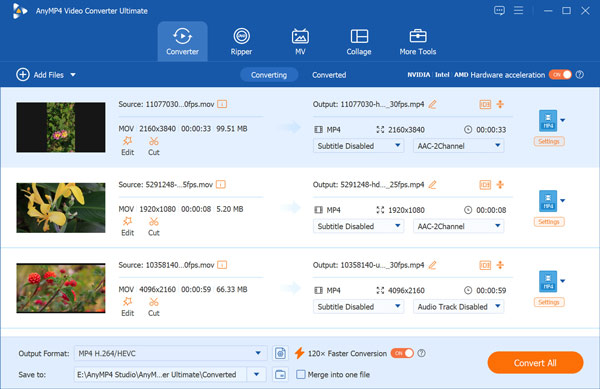
AnyMP4 Video Converter Ultimate stands out as the most robust desktop software for handling heavy‑duty transcoding. During our laboratory tests, it decoded massive 4K ProRes MOV files effortlessly. The software leverages full hardware acceleration (Intel QSV, NVIDIA NVENC, and AMD VCE), allowing it to process batch conversions without spiking CPU usage or freezing background tasks. It doesn't just swap container tags; it allows deep optimization of the underlying H.264/HEVC codecs, ensuring that even at high compression ratios, the video retains a high VMAF visual quality score while locking the audio at a crisp 320kbps bitrate.
Secure Download
Secure Download
Key Features:
PROS
CONS
1. Launch AnyMP4 Video Converter Ultimate on your PC or Mac.
2. Drag and drop your raw .mov files directly into the central workspace, or click Add Files to import an entire folder.
3. Click the format dropdown on the top right. Under the Video tab, select MP4 and choose Same as source or click the Gear Icon to lock the audio bitrate to 320kbps and enable HEVC codec if needed.
4. Check the Hardware Acceleration icon at the bottom, specify your output path, and click Convert All to experience the rapid processing.
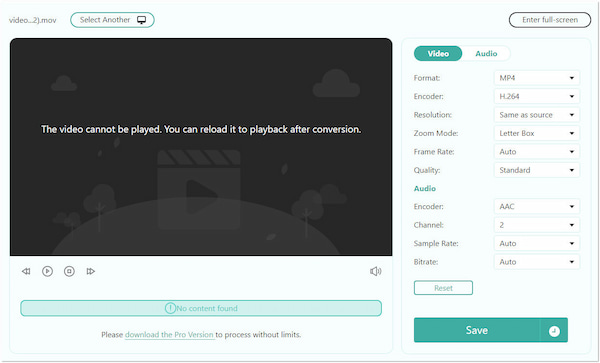
For users who want a quick fix without bloating their local drive, Free Video Converter Online delivers exceptional performance. Unlike other web tools that slap a watermark on your file unless you pay up, this service keeps your videos clean and unblemished. During our testing browser session, we discovered that it handles standard 1080p conversions significantly faster than its competitors because it performs the adjustments locally via browser extensions rather than relying solely on slow cloud rendering queues.
Key Features:
PROS
CONS
Navigate to the official Free Video Converter Online portal using any desktop browser.
1. Click the Add Files to Convert launcher button to initialize the secure web environment.
2. Select your local MOV file from your finder window.
3. Toggle the bottom format radio button to MP4. If desired, click the Cog Icon next to the file to adjust the frame rate.
4. Hit the Convert button, choose a destination folder on your desktop, and the MP4 file will save automatically upon completion.
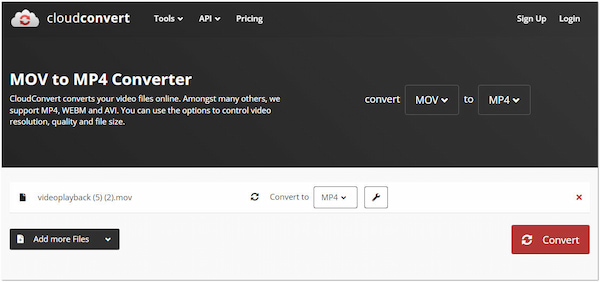
CloudConvert is a sophisticated cloud‑based powerhouse that bridges the gap between local storage and cloud infrastructure. We found it uniquely valuable for enterprise setups where files are stored on Google Drive or Dropbox. Instead of downloading a 2GB MOV file to a local machine just to convert it, CloudConvert pulls the file directly into its secure cloud engine, executes a highly customized transcoding script, and pushes the resulting MP4 directly back to your cloud folder.
Key Features:
PROS
CONS
1. Open CloudConvert and click the Select File dropdown to pull a MOV file from your computer or Google Drive.
2. Set the conversion criteria to MOV to MP4.
3. Click the Wrench Icon if you need to enforce technical parameters like specific H.264 profiles or audio codecs.
4. Click the red Convert button and let the cloud infrastructure process the rendering queue.
5. Click the green Download button once the live preview indicator confirms completion.
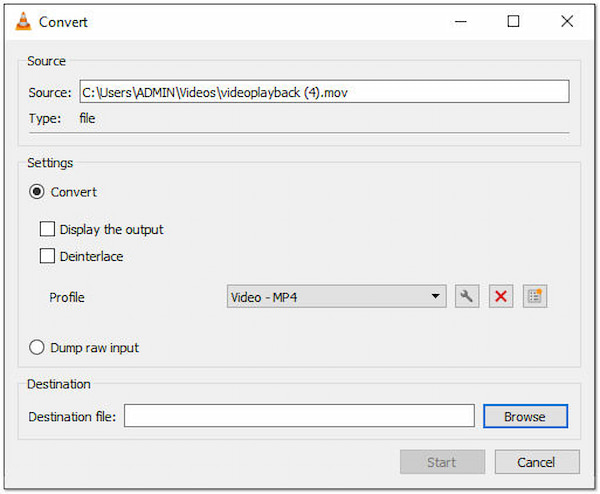
While globally celebrated as an invincible media player, VLC Media Player contains a hidden, highly competent transcoding engine underneath its hood. Our hands‑on experience revealed that while its user interface feels a bit dated and intimidating for beginners, it provides solid, uncompressed MP4 outputs. Because it relies entirely on local CPU cycles without specialized UI wrappers, it is highly reliable for standard 1080p conversions when you find yourself working on a clean computer without internet access or paid software.
Key Features:
PROS
CONS
1. Open VLC Media Player. Do not play a video; instead, navigate to the top menu and select Media > Convert / Save.
2. Click the Add button to locate and queue the target .mov files. Click Convert / Save at the bottom.
3. In the profile dropdown list, select Video - H.264 + MP3 (MP4).
4. Click the Tools Icon next to the profile to ensure the video codec matches your desired resolution.
5. Specify a distinct filename ending explicitly in .mp4 in the destination box, then click Start.
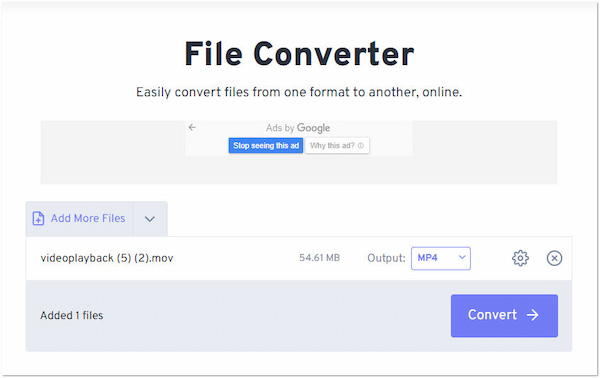
FreeConvert is engineered specifically for handling larger files that normally fail on standard online platforms. It permits file uploads up to a generous 1GB on its free tier. In our lab evaluation, we noted that its standout feature is its advanced settings panel, which allows users to compress the video size during the conversion process by adjusting the target file size percentage—a perfect feature for optimizing videos for Discord or email attachments.
Key Features:
PROS
CONS
1. Visit FreeConvert.com and click the blue Choose Files button to upload your MOV assets.
2. Verify that the output format flag is set firmly to MP4.
3. (Optional) Click the Gear Icon to adjust video dimensions or to activate a specific bitrate ceiling.
4. Click Convert To MP4 to push the file to their processing servers.
5. Once the status bar changes to "Done", click the Download button to retrieve your optimized video.
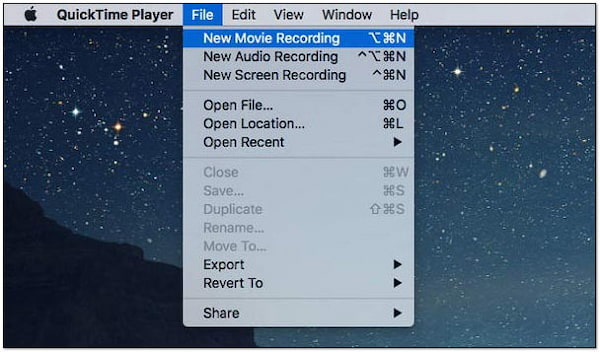
For macOS users, QuickTime Player is an integrated utility that requires zero downloads. Although Apple designed it primarily for media consumption, its internal "Export As" function acts as an efficient encoder. Our tests on an M3 Pro Mac showed that because QuickTime operates on native macOS frameworks, it transcodes high‑bitrate Apple ProRes MOV files into compressed H.264 MP4 structures with incredible efficiency, leveraging Mac hardware acceleration flawlessly.
Key Features:
PROS
CONS
1. Right‑click your MOV file on your Mac and select Open With > QuickTime Player.
2. Click File in the top menu bar, scroll down, and hover over Export As.
3. Choose your desired target resolution (e.g., 1080p or 4K).
4. In the saving dialog window, look for the format checkbox and ensure it is configured to use Greater Compatibility (H.264), which generates a universal .mp4 file. Click Save.
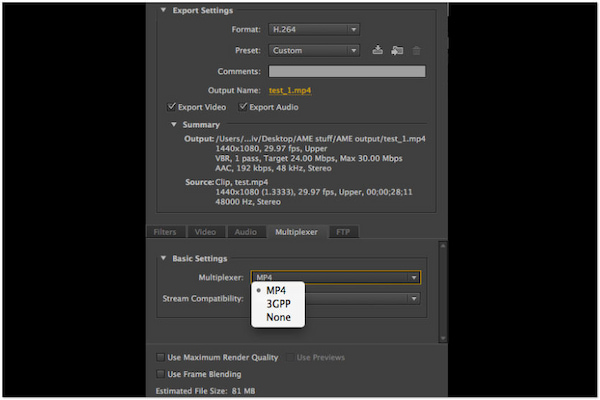
Adobe Media Encoder is the absolute gold standard for video professionals, studio editors, and creative directors. Operating within the Creative Cloud ecosystem, this software handles complex transcoding workloads across network servers. When we threw mismatched frame rates and complex multi‑channel audio tracks at it, the system automatically flattened them into highly standardized, industry‑compliant MP4 structures. Its automation capabilities are unmatched, making it a staple for high‑volume video production pipelines.
Key Features:
PROS
CONS
1. Launch Adobe Media Encoder and click the + icon in the Queue panel to import your source MOV videos.
2. In the first format column, select H.264 from the dropdown menu (this is the universal codec for standard MP4).
3. Select your preferred preset (e.g., Match Source - High Bitrate or specific platform profiles like YouTube 4K).
4. Click the green Play arrow icon located in the top‑right corner of the Queue panel to initiate immediate background encoding.
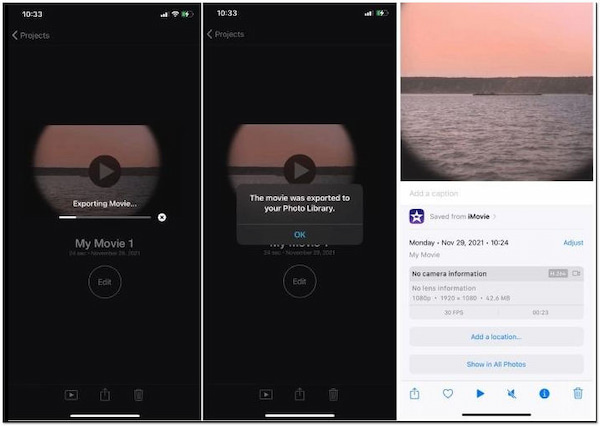
iMovie serves as a dual‑purpose creative application for Mac and iOS ecosystems. While it is fundamentally pitched as an entry‑level non‑linear editor, it functions excellently as a secure converter for non‑technical users. In our testing workflow, we found that importing raw smartphone‑generated MOV footages into iMovie and exporting them as "Better Compatibility" projects yields a perfectly flattened, web‑ready MP4 file that preserves high‑fidelity stereophonic audio.
Key Features:
PROS
CONS
1. Fire up iMovie on your Mac or iOS device and start a fresh Movie project.
2. Import your .mov asset into the media bin and drag it straight down onto the editing timeline.
3. Make any necessary creative cuts or audio adjustments.
4. Click the Share icon in the upper right corner and select File.
5. Change the quality parameter to your preferred level and ensure the Compress option is set to Faster or Better Compatibility to produce a clean .mp4 output.
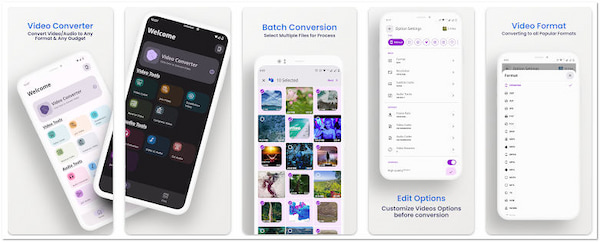
Video Converter by VidSoftLab is a specialized mobile application engineered for the Android platform. During our mobile testing phase on a flagship Android device, we utilized it to convert MOV clips transferred from an iPhone so they could be edited locally on Android. It handles background conversions gracefully, allowing you to compress and convert files without locking your screen or killing mobile battery life.
Key Features:
PROS
CONS
1. Download and open Video Converter from the Google Play Store on your Android device.
2. Tap the Video Converter icon on the main menu and grant access to your storage directory.
3. Select your target MOV video file and tap the next arrow.
4. Select MP4 from the format carousel and adjust your resolution target (e.g., 1080p).
5. Tap the checkmark icon to begin the local mobile conversion process, then save it to your camera roll.
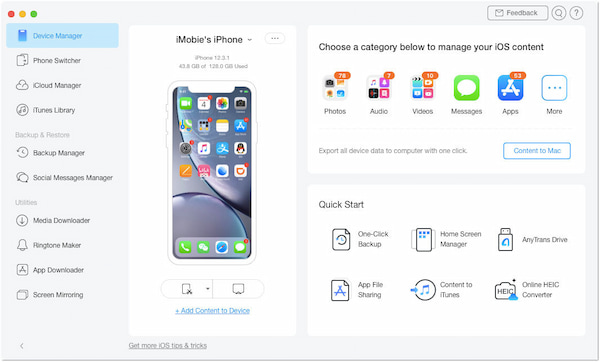
AnyTrans is an alternative iOS data management tool that includes a powerful background conversion engine. In our testing scenario, we found it incredibly useful for breaking down compatibility barriers during cross‑platform transfers. When syncing high‑volume MOV videos from an iPhone to a Windows PC, AnyTrans intercepts the transfer pipeline and automatically transcodes the files on‑the‑fly, delivering standard MP4 files directly to your PC desktop.
Key Features:
PROS
CONS
1. Install and launch AnyTrans on your Windows computer or Mac.
2. Connect your iPhone via a USB cable and navigate to the Device Manager dashboard.
3. Open the Settings menu within AnyTrans and select the Transcoding tab.
4. Set the default conversion format for video transfers to MP4.
5. Select the MOV videos you want to copy to your computer and click the Export to PC button; the files will land on your drive pre‑converted to MP4.
Does converting MOV to MP4 reduce video quality?
The quality of a converted video depends entirely on the settings and codecs used during the conversion process. When using a professional converter like AnyMP4 Video Converter Ultimate with an optimized H.264/HEVC profile and high bitrates, the visual quality loss is practically imperceptible to the human eye.
How do I convert a MOV file without losing quality online?
To minimize quality loss when using web‑based tools, you should choose a platform like Free Video Converter Online that supports high‑resolution outputs. Before starting the conversion, open the settings menu and lock the output resolution to match your source file (such as 4K or 1080p) to preserve original clarity.
What is the easiest way to convert MOV to MP4 on a Mac?
For a single, quick file conversion, the easiest method is using the pre‑installed QuickTime Player. Simply open the MOV file in QuickTime, select File > Export As, and save it using the "Greater Compatibility (H.264)" setting to generate a standard MP4 file without needing to install third‑party software.
Is MOV more efficient than MP4?
Efficiency depends on your operating system and your production goals. MOV is highly efficient within the Apple ecosystem and functions beautifully as an editing format because it supports uncompressed intra‑frame codecs like ProRes. However, MP4 is vastly more efficient for distribution and daily use because it offers excellent compression ratios and universal compatibility across almost all platforms and web browsers.
Are MOV files inherently higher quality than MP4 files?
Not necessarily. MOV and MP4 are container formats, meaning they act as boxes holding video and audio tracks. The actual video quality is determined by the codec (like H.264, HEVC, or ProRes) and the specific bitrate used during recording. A highly compressed MOV file can easily look worse than a high‑bitrate MP4 file.
Choosing the right MOV to MP4 converter depends on your specific workflow requirements, file sizes, and hardware availability.
Evaluate your specific file sizes and choose the tool above that best matches your daily digital workflow.
Secure Download
Secure Download
 Posted by Alice Thorne to Convert Video
More readings
 5 Best MOV to MP3 Converters (2026): Pro Quality & Speed Tested
Extract 320kbps MP3 from MOV files with our top 5 tested tools. Features detailed reviews, batch guides, and expert tips for lossless audio extraction.
 5 Best MOV Recorders to Capture A Video in MOV Format for PC/Mac
When you want to capture a video in MOV file format on your PC or Mac, you should learn more about the 5 best MOV recorders to record the desired files.
 AVI to MOV for Mac/PC: 3 Ways to Keep Original Quality
Need to play AVI on QuickTime or iMovie? Learn how to convert AVI to MOV on Mac/Windows without losing quality. Try for free!
 9 Best Ways to Convert MP4 to AVI with Top 9 MP4 to AVI Converters
How to convert MP4 to AVI for being compatible with more devices? Here are the best 9 ways of converting MP4 to AVI with free & online converters.
 Add your comments to join the discussion here