- Convert video, audio, and DVD over 500 formats.
- GPU acceleration to speed up the conversion process at 70X faster.
- More than 16 editor tools in the toolbox (Updating).
- Create videos for TikTok, YouTube, Facebook, etc.

Free Download100% Clear & Secure
Free Download100% Clear & Secure
MP4 to Audio
Back to main page
Setting
Custom resolution:
| Core Features | Web Version | Pro Desktop |
| Max File Size | 50MB (Login: 100MB) | No Limit |
| Daily Limit | 2 Files (Login: 10 Files) | Unlimited |
| AI Video Upscaling | No | Yes (Up to 4K/8K) |
| GPU Acceleration | No | Yes (70X Faster) |
| Batch Processing | No | Yes |
Failed to upload media file! Please try again, or use AnyMP4 Video Converter Ultimate for Desktop.(Error code: 20015)

The original video resolution is higher than 1080p. If you want to output the original high resolution, you need to download the Pro Version. Or would you like to output the default 1080p resolution?

Summary:
Extracting audio from video files is a common necessity for creators, students, and professionals alike. Whether you need to turn a recorded webinar into a podcast, save a music video track for high-end speakers, or isolate a voiceover from a raw video file, knowing how to rip audio from MP4 efficiently can save you hours of work.
In this comprehensive guide, we walk you through the 10 best free and premium ways to extract audio from MP4 across Windows, Mac, and Linux platforms. From advanced desktop encoders with high-end audio parameter controls to quick web-based extraction solutions, you will find the absolute best method tailored to your workflow and technical experience.
How We Test:
| Extraction Speed | Audio Quality | Difficulty | Best For | |
|---|---|---|---|---|
| AnyMP4 Video Converter Ultimate | Ultra-Fast (Hardware Accelerated) | Lossless (Up to 320kbps) | Beginner | High-fidelity batch extraction |
| Audacity | Moderate | High | Intermediate | Detailed audio editing & LAME adjustments |
| FFmpeg | Instant (Stream Copy) | Lossless | Expert | Command-line precision |
| VLC Media Player | Moderate | Standard | Beginner | Quick, one-off local extractions |
| QuickTime | Fast | Standard | Beginner | Built-in Mac audio exports |
| HandBrake | Fast | High | Intermediate | Open-source video-to-audio processing |
| iMovie | Moderate | High | Beginner | Mac users needing basic timeline edits |
| AnyMP4 Free Online Video Converter | Internet Dependent | High | Beginner | Free cloud-based batch conversion |
| 123Apps | Internet Dependent | Standard | Beginner | Quick online browser extractions |
| CloudConvert | Internet Dependent | High | Beginner | Cloud-based format flexibility |
When you need to rip audio from MP4 without compromising sound fidelity, professional desktop software is the most reliable choice.
At a Glance:
AnyMP4 Video Converter Ultimate is a powerful tool to turn MP4 to audio. It supports over 500 formats and preserves the original audio quality perfectly. Here is how to use it:
Secure Download
Secure Download
1. Load the MP4 video
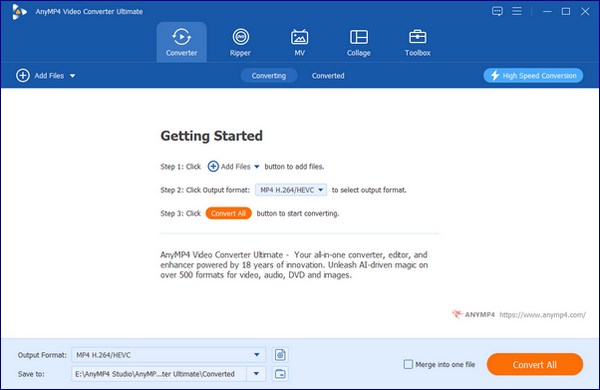
Download, install, and launch this MP4 audio extractor on your computer. Click the "Add Files" button to load your MP4 video into the program.
2. Select output audio format
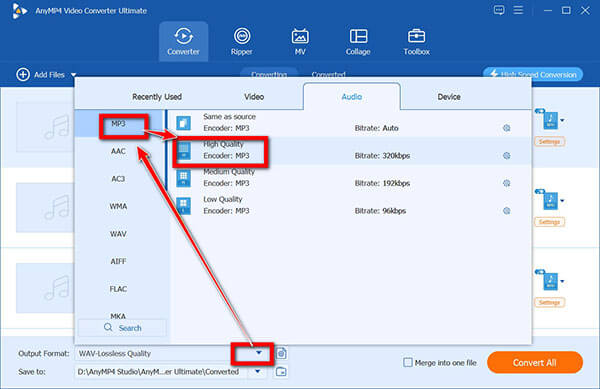
Click the "Output Format" drop-down menu on the bottom left corner. Switch to the Audio tab and choose your preferred format, such as MP3, FLAC, or WAV.
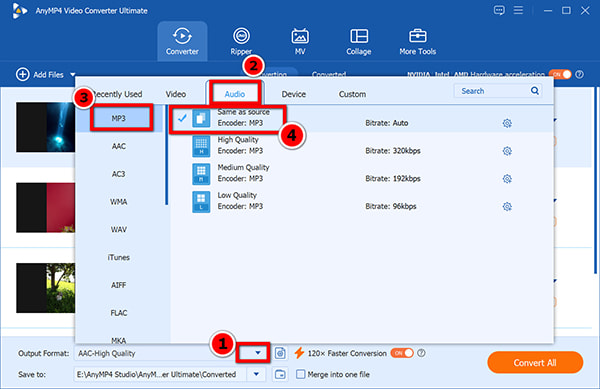
For the highest quality, click the "Custom Profile" gear icon and set the bitrate to 320kbps to ensure high-quality MP3 encoding. Choose "Same as source" to prevent transcoding loss.
3. Extract audio from MP4
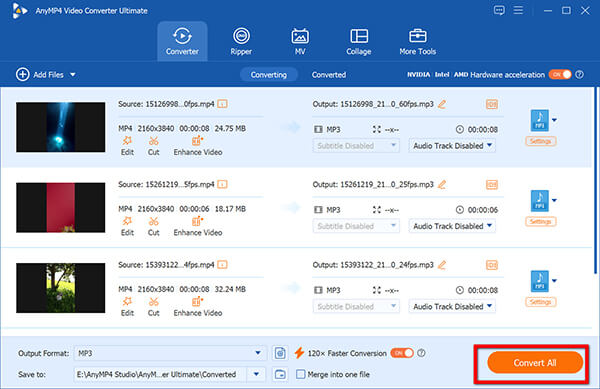
Choose a destination folder for your new audio file at the bottom. Finally, click the "Convert All" button to start to isolate audio from MP4. Thanks to hardware acceleration, the process will finish in seconds.
Summary
In short, AnyMP4 Video Converter Ultimate is the premier choice for users prioritizing time-saving hardware acceleration, flawless audio fidelity, and seamless batch processing capabilities.
At a Glance:
Audacity is a popular, free, and open-source digital audio editor. It is excellent if you need to manipulate the audio track after extraction.
1. Install necessary plugins
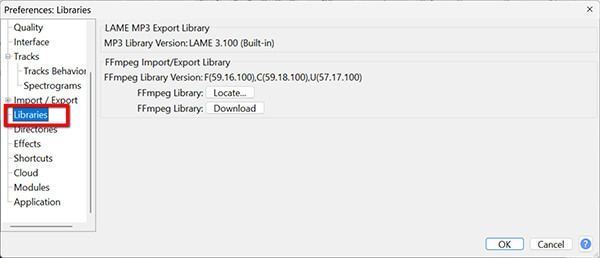
Download and install Audacity. To allow the software to recognize MP4 video files, you must also download and install the optional FFmpeg library plugin for Audacity.
2. Import the MP4 file
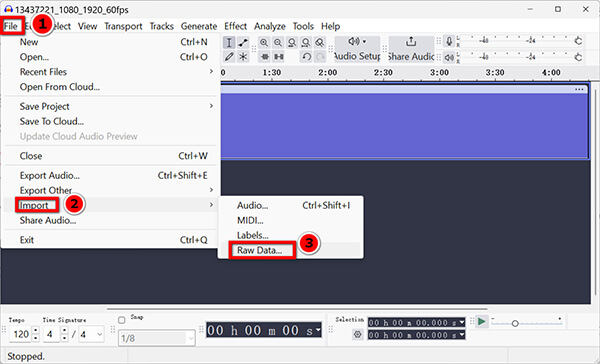
Go to File > Import > Raw Data and select your MP4 file. Audacity will automatically extract the audio track and display its waveform on the timeline. Here, you can trim or edit the audio.
3. Export as an audio file
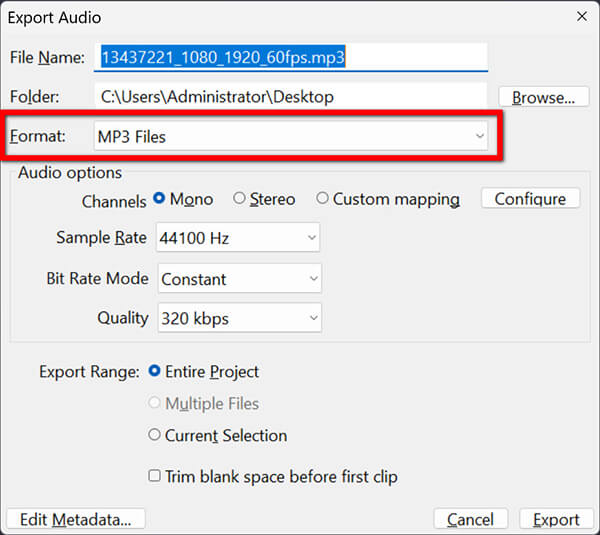
Go to File > Export > Export as MP3 (or WAV/OGG). Adjust the quality and bitrate settings in the pop-up window, then click save.
Summary
To sum up, Audacity is unmatched for users who need advanced audio manipulation, precision frequency editing, and granular export controls completely for free. Besides, if you only need audio file, you can use Audacity audio recording software to capture sound file.
At a Glance:
If you are comfortable with coding, FFmpeg is the absolute fastest way to get audio from MP4.
1. Install FFmpeg
Download FFmpeg from its official website. Extract the files and add the FFmpeg "bin" folder to your computer's System Environment Variables path.
2. Navigate to your video folder
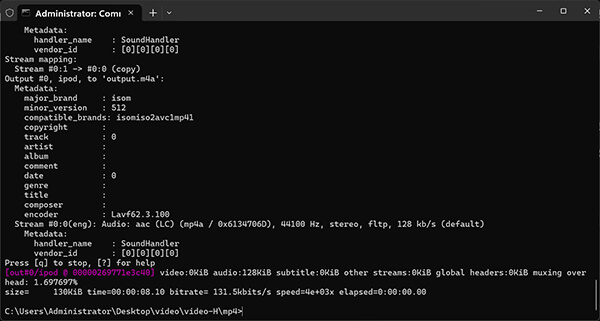
Press the Windows Key + R, type cmd, and press Enter to open the Command Prompt. Before running any extraction, you must tell the system exactly where your video is saved using the cd (change directory) command. For example, if your MP4 is in a folder on your desktop, type the following and hit Enter:
cd C:\Users\Administrator\Desktop\video\video-H\mp4
3. Run the lossless extraction command
Once the command line is pointing to the correct folder, you can run the extraction. We highly recommend putting your filenames inside quotation marks ("") to prevent errors caused by spaces in the file name. Type this command and hit Enter:
ffmpeg -i "test.mp4" -vn -acodec copy "output.m4a"
Change test.mp4 to the actual name of your video file. If the tool shows a red error like "Output file does not contain any stream," it simply means your source MP4 video has no audio track to extract!)
This command skips the re-encoding process and instantly isolates the audio track.
Summary
Ultimately, FFmpeg is the most powerful tool for developers and tech-savvy users who want instant, lossless extraction through scriptable commands directly within their target file directories.
At a Glance:
VLC is perfect for users who already have it installed and need a one-off conversion without new software.
1. Access the Convert menu
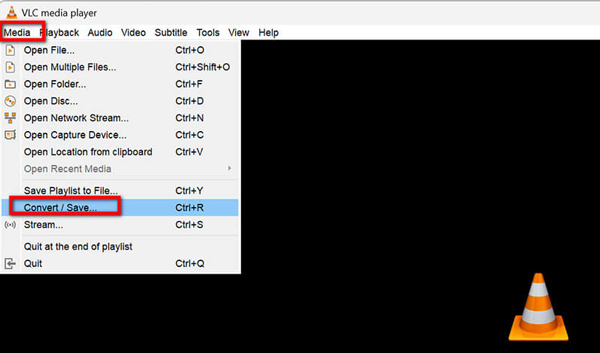
Open VLC Media Player. Click on Media in the top-left corner and select Convert / Save from the drop-down menu.
2. Add your MP4
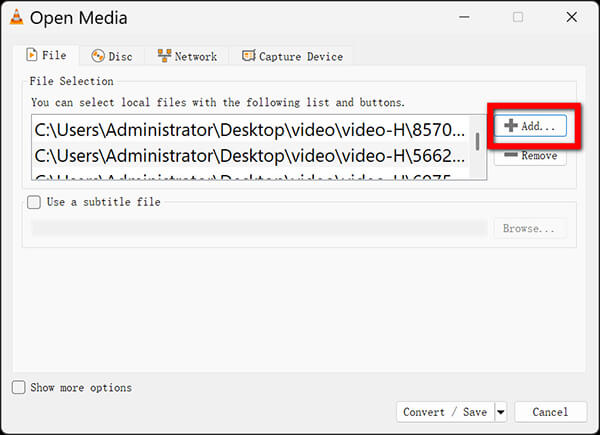
In the "File" tab, click the Add button and browse for your MP4 video. Then, click the Convert / Save button at the bottom.
3. Choose audio format and save
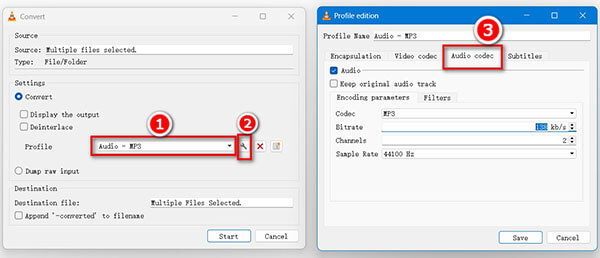
In the Profile section, select Audio - MP3 (or FLAC/CD). Click "Browse" to name your new file and select a destination. Finally, click Start.
Summary
In conclusion, VLC Media Player is a highly convenient and capable alternative for standard-quality audio extractions if you prefer using your existing media player.
At a Glance:
The native macOS media player, QuickTime, makes it incredibly simple to export audio from MP4 without downloading anything.
1. Open the video
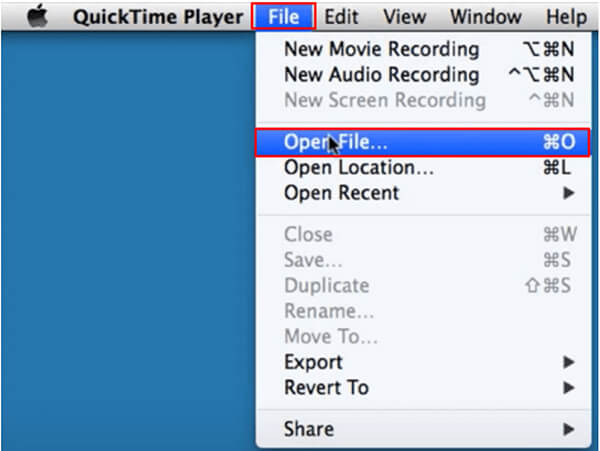
Right-click your MP4 file, hover over "Open With", and select QuickTime Player.
2. Select Export As
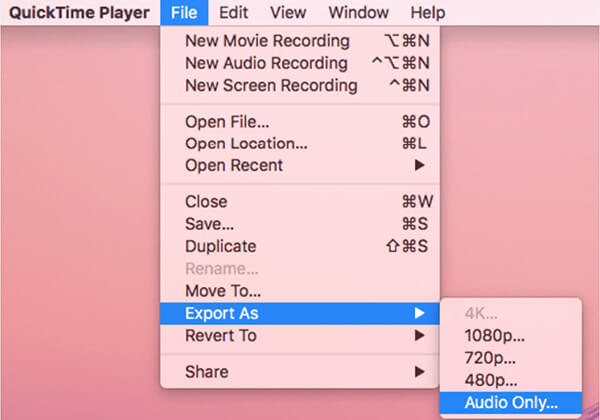
In the top menu bar, click on File, scroll down to Export As, and choose the Audio Only option.
3. Save the file
Name your audio file, select where you want to save it on your Mac, and click Save. It will instantly render as a high-quality M4A file.
Summary
For Mac users, QuickTime provides the most seamless, secure, and straightforward built-in method to rip audio tracks efficiently.
At a Glance:
HandBrake is highly reliable but slightly complex for audio-only tasks.
1. Load the source
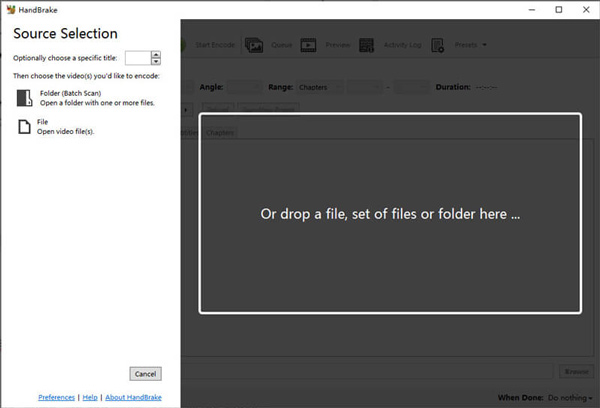
Open HandBrake and drag your MP4 video into the main window.
2. Adjust Audio settings
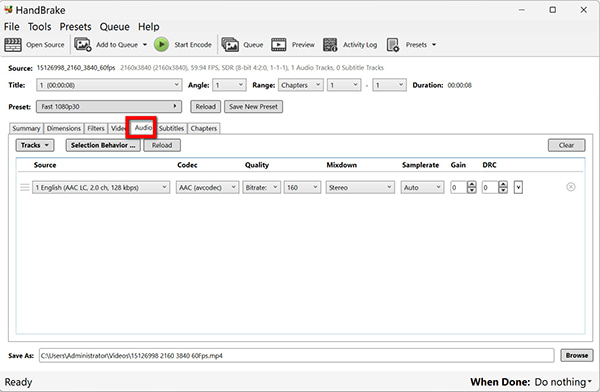
Navigate to the Audio tab. Choose your preferred audio codec (like MP3 or AAC). For zero loss, you can select an "Auto Passthru" option.
3. Export the file
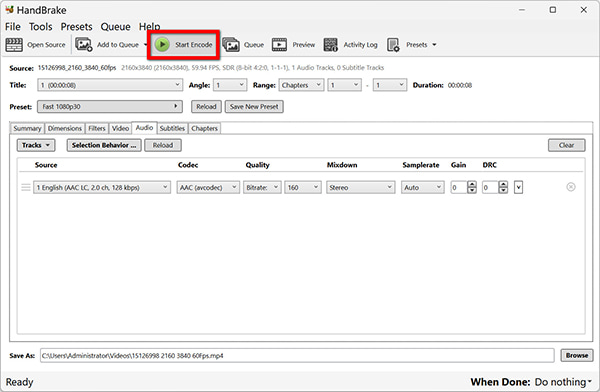
Since HandBrake outputs video containers, set the output to MP4/MKV and click Start Encode. You may need to rename the file extension to an audio format or use it in conjunction with other players.
Summary
Overall, while HandBrake is primarily a video tool, it remains a robust, free option for users wanting to manipulate codecs and transcode media securely.
At a Glance:
If you need to cut out silent parts of a video before extracting the audio, iMovie is an excellent choice.
1. Import and drag to timeline
Open iMovie, create a new project, and import your MP4 file. Drag the video clip down into your editing timeline.
2. Edit or Detach Audio (Optional)
You can trim the clip as needed. If you want to separate the tracks visually, right-click the video clip and select Detach Audio.
3. Export Audio Only
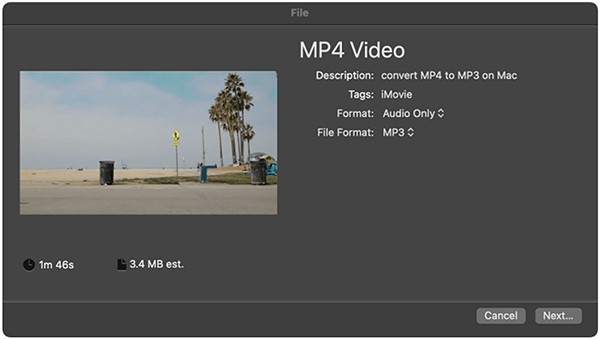
Click the Share button in the top right corner and select Export File. Change the "Format" setting from "Video and Audio" to Audio Only, choose your file type, and click Next to save.
Summary
iMovie is the ideal solution for Apple users who need to perform basic timeline edits or trim their media precisely before rendering the final audio track.
For quick tasks where installing software isn't viable, web-based extractors are highly convenient. Note: Converting highly compressed web audio can sometimes result in lossy to lossy conversion degradation.
At a Glance:
AnyMP4 Free Online Video Converter provides a highly efficient way to transcode video to audio files without forcing you to buy premium upgrades. Unlike most rigid online converters that limit you to single-file operations, this platform supports batch processing, allowing you to queue multiple MP4 clips simultaneously. It serves as an ideal, lightweight alternative for creators who need a rapid desktop-level conversion environment directly within their browser tab.
1. Upload MP4 file
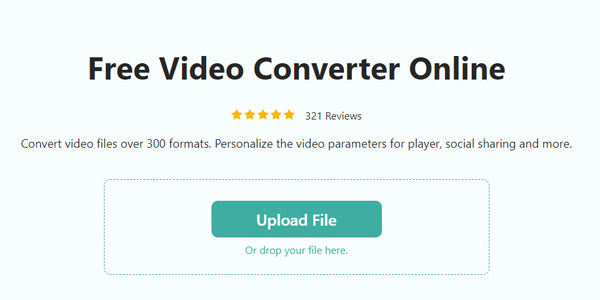
Go to the AnyMP4 Free Online Video Converter website. Click the Upload File button to select the MP4 files from your computer.
2. Add MP4 and pick audio format
In the converter dashboard, click the Audio icon at the bottom right and pick MP3, WAV, or AAC. You can click the gear icon to modify bitrates.
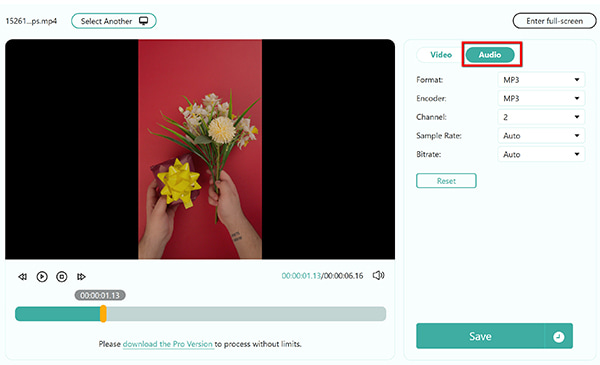
3. Extract audio from MP4 online
Click the Save button, and the cloud tool will process the MP4 file, and once it is done, you can download your extracted audio file.
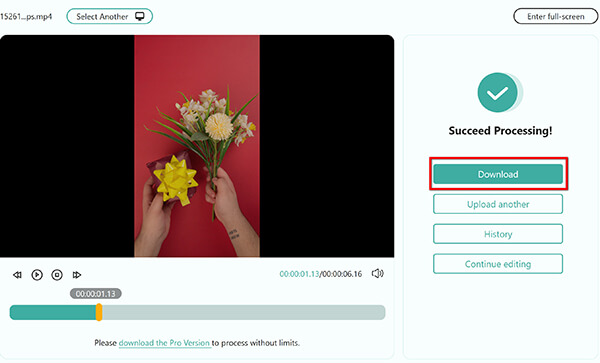
Summary
In essence, AnyMP4 Free Online Video Converter is the overall best free online extractor, enabling high-quality multi-file audio extraction directly in your web browser without hidden premium restrictions.
At a Glance:
123Apps offers an intuitive, application-like workflow that functions beautifully on both desktop and mobile web browsers. Its standout advantage is the built-in trimming slider, which lets you isolate a specific timestamp or highlight from your MP4 video before hitting the convert button. It is highly recommended for users who want to extract precise song choruses or sound bites without loading heavy audio timeline editors.
1. Upload video
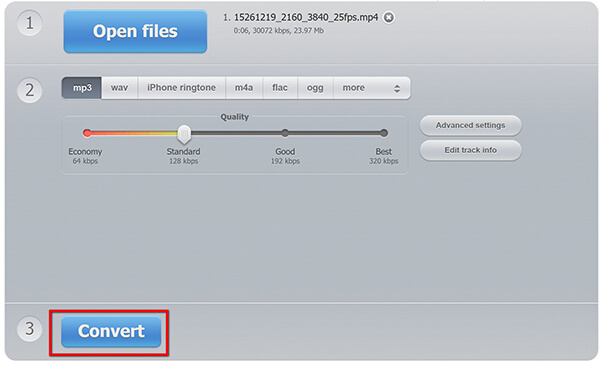
Go to the 123Apps Audio Extractor website. Click the Open files button and select the MP4 from your local drive or cloud storage.
2. Choose format
Wait for the file to load, then select your desired output format from the options provided (MP3, WAV, iPhone ringtone, etc.).
3. Extract and download
Click the Convert button. Once the processing is complete, click Download to save the audio file.
Summary
To summarize, 123Apps offers a clean, ad-light, and straightforward extraction experience for users needing quick, basic conversions on the go.
At a Glance:
CloudConvert behaves more like an enterprise-grade cloud server than a typical consumer utility tool. It offers advanced parameter customization panels where tech-savvy users can tweak specific audio codecs, set exact audio bitrates, and adjust master volume levels before rendering. Coupled with its reliable cloud architecture and strict data security protocols that delete data shortly after processing, it is the safest online solution for converting sensitive or professional recordings.
1. Select the files
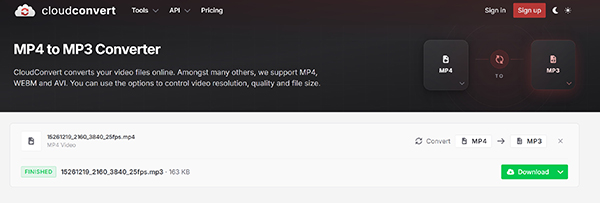
Navigate to CloudConvert's MP4 to MP3 page. Click Select File and upload your MP4.
2. Configure settings
Click the wrench icon next to the output format. Here, you can specify the audio codec, change the audio bitrate, and adjust the volume.
3. Convert
Hit the Convert button. The cloud servers will process the file, and you can download the result once it is finished.
Summary
All in all, CloudConvert stands out among online tools for its advanced parameter controls, format flexibility, and strict data security protocols.
Getting the format right is just as important as the extraction tool. Here is a technical breakdown to help you maintain maximum fidelity:
How do I extract audio from MP4 without losing quality?
Use a lossless extractor like AnyMP4 Video Converter Ultimate. Select "Same as source" or "FLAC/WAV" as the output format to ensure the bitrate and sample rate remain identical to the original video, effectively avoiding transcoding loss.
Can I isolate audio from MP4 on a Mac for free?
Yes, Mac users can use the built-in QuickTime Player to export audio-only files instantly, or download the free VLC Media Player for more output format options.
What is the fastest command to get audio via FFmpeg?
Use the command ffmpeg -i input.mp4 -vn -acodec copy output.m4a. This command skips re-encoding completely, making the process near-instant.
Isolating audio from MP4 videos does not have to be a complicated technical chore. The best approach relies entirely on your file scale and quality needs. For general consumers seeking quick adjustments, built-in system tools like QuickTime (Mac) and VLC Player provide safe, cost-free local workflows. If you prefer to bypass software installations altogether, web interfaces like AnyMP4 Free Online Video Converter get the job done smoothly inside any browser tab.
However, if you are handling large batches of content or require absolute audio precision, such as a guaranteed 320kbps bitrate and complete protection against transcoding loss, desktop powerhouses like AnyMP4 Video Converter Ultimate provide the most secure, hardware-accelerated, and professional environment. Choose the tool that best fits your project specifications and start upgrading your audio workflow today.
 Updated by Alice Thorne to Convert Audio, Convert Video
More readings
 Speed Up Audio (Without Pitch Change): 4 Quick Methods
Speed up audio files instantly using Audacity, VLC, and dedicated tools like AnyMP4. Learn how to change audio speed without changing pitch in 4 simple steps.
 3 Ways to Compress Audio to Reduce File Size
Learn how to compress audio files with simple steps. Download the audio compressor, iTunes, AnyMP4 Video Converter Ultimate and Audacity to make it quickly.
 10 Best MP4 to WAV Converters for Lossless Audio Extraction
We tested the 10 best MP4 to WAV converters for computers and mobile devices. Get expert tips on PCM and bit rates to extract WAV without losing quality.
 Convert MP4 to MOV (Lossless & Fast) - 4 Best Ways [2026]
How to convert MP4 to MOV without quality loss? Follow our guide to convert formats in seconds with desktop or free online tools. Secure, fast, and 4K included.
 Add your comments to join the discussion here