
Secure Download
Secure Download
With the advancement of technology, many of our things can be done clearly and completely online. For example, we can easily listen to a class or attend a meeting on our computer. So, do you want to record what the teacher said in the meeting for later viewing, or do you want to record your company's teleconference to write a summary of the meeting? So, how to record desktop audio? You just come to the right place. This article will show you 4 different ways to record audio from the computer. Thus, you can get offline playback of the computer sound directly. Now, let's see how to record internal audio on Windows and macOS step by step.
| Windows Voice Recorder | QuickTime Player | AnyMP4 Free Online Audio Recorder | Audacity | AnyMP4 Screen Recorder | |
|---|---|---|---|---|---|
| Platform | Windows | Mac | Web | Windows, Mac, and Linux | Windows and Mac |
| Best For | Capturing voice notes, lectures, or meetings. | Recording voice memos, lectures, or meetings using a microphone. | Quick, easy, and browser‑based audio capture. | Free, flexible, and powerful audio recording. | Professional and versatile recording. |
| Mic Sound |  |
|
|
|
|
| System Sound |  |
|
|
(via WASAPI on Windows) |
|
| Audio Editing | Trim, clip, and adding markers | Trim, split, cut, and reorder | |
Duplicate, trim, and split | Trim, Merge, Convert, Compress, and Edit ID3 tag and meta media information. |
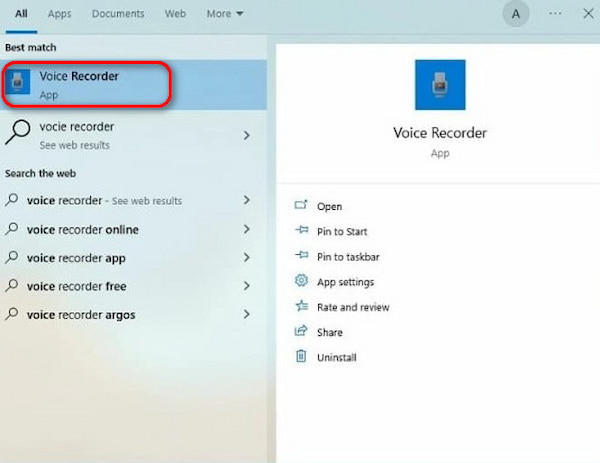
Windows Voice Recorder is the default software to record audio from computer on Windows 10. After downloading Voice Recorder app on your Windows 10 computer, you can record audio from the internal or external microphone directly. After that, you can play and edit Windows 10 voice recording files.
Here’s how to record audio from computer:
1. Download and install Windows Voice Recorder app from Microsoft Store.
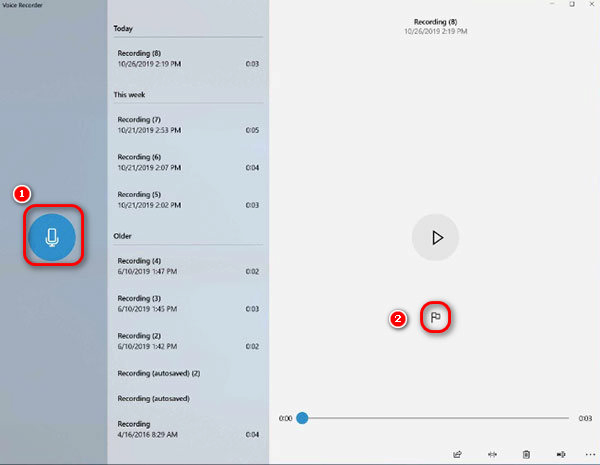
2. Make sure your microphone is applicable. Then click Record on the left part. One thing that should be noticed is that this tool can only record microphone sounds, not direct system sounds such as music or video audio played from speakers.
3. You can click the Flag button to add a marker into this audio recording if necessary.
4. Click Stop to stop recording audio on Windows 10. You can find the voice recording file in the Sound recordings folder inside Documents as .m4a format.
On Windows computers, I often use the Voice Recorder, a system feature for capturing sound from PC. This tool is simple to use, but its functionality is only basic. It can meet my needs for recording and marking the highlights of the recorded files.
As for Mac users, you can use QuickTime Player or Voice Memos to record sound from computer. To record internal audio on Mac, this section will use QuickTime Player as an example. Here're the detailed steps to record computer audio on Mac with QuickTime Player. (QuickTime Player not working?)
Here’s how to record computer audio on Mac:
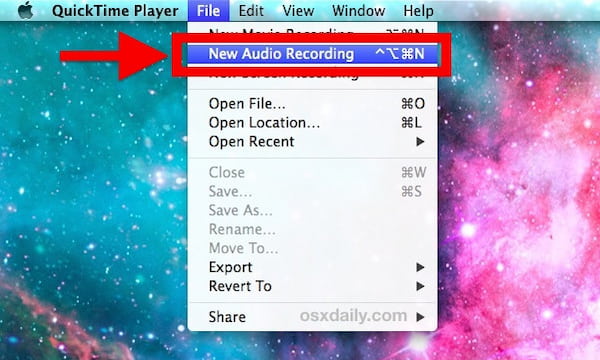
1. Open QuickTime Player on Mac. Choose New Audio Recording from the File drop-down list.
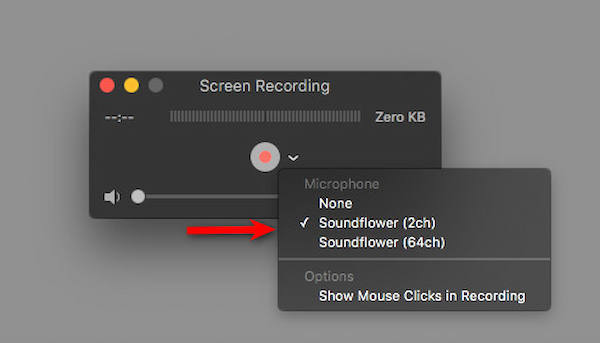
2. Unfold the drop-down icon to select the audio recording source and quality.
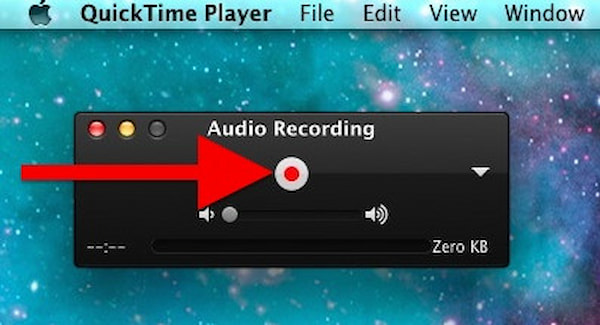
3. Click the Record button to start and stop Mac audio recording. QuickTime Player makes it easy to record microphone sound, but if your needs require that you also record system sound, additional configuration is required to assist.
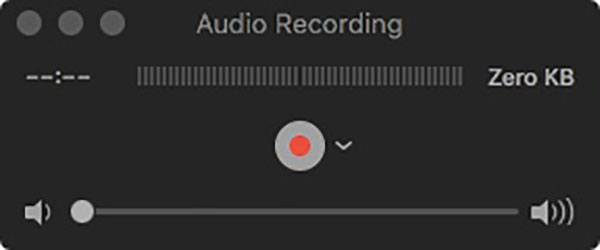
4. Click File and then choose Save As to save the recording audio file on Mac.
When using a Mac, I often use QuickTime Player to record audio. It is a convenient tool for recording screen or audio. The recording sound of the computer process is very intuitive and allows for simple cutting and editing of the recorded file once it's finished. However, QuickTime cannot record system audio directly, which is an inconvenience.
AnyMP4 Free Online Audio Recorder can help you record audio from computer online. The free audio recorder is capable to record system audio and microphone audio simultaneously or separately. Later, you can save the recorded audio file as MP3 format. Both Windows and Mac users can record desktop audio online with this tool.
Here’s how to record audio on computer:
1. Click Launch Free Recorder and download its launcher.
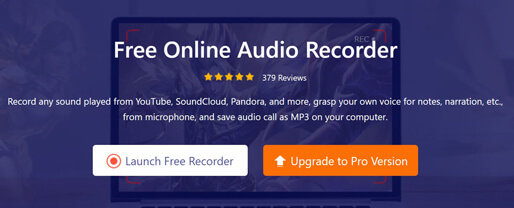
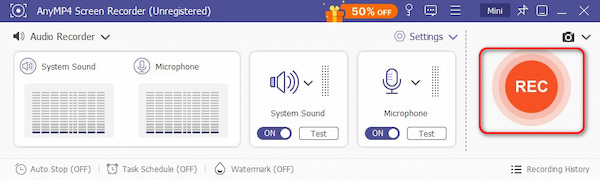
2. Enable System Sound to record internal audio from your computer. You can turn on Microphone to record external audio at the same time. Then click REC to start recording computer sound
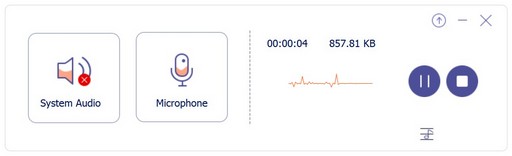
3. Click Stop to finish audio recording and save it as .mp3 file extension. You can unfold the three-line icon to access recording history.
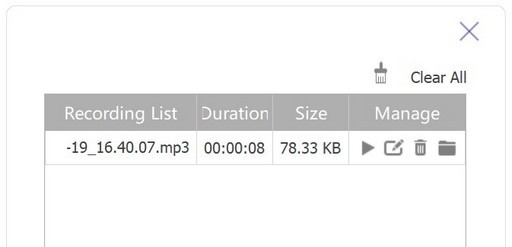
Using online browser tools to record audio is easy and convenient. I usually use AnyMP4 Free Online Audio Recorder. There is no need to download; I can record audio directly in the browser. It's convenient for quick tasks when I'm not on my main workstation.
Audacity is a free audio editor that allows you to record, edit, and process audio files. Among its most useful features is the ability to capture audio directly from your computer’s sound card. This means you can record system sounds, application audio, and microphone input simultaneously.
Here’s how to record sound from computer:
1. In the Audio Host dropdown menu, select Windows WASAPI. This allows you to record audio directly from the output device (loopback mode).
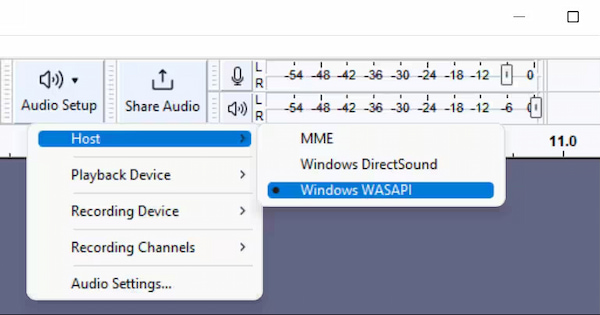
2. In the Audio Setup section, choose the device you use to listen to audio as your input device. Look for the device with (loopback) in its name to ensure that the system audio is captured.
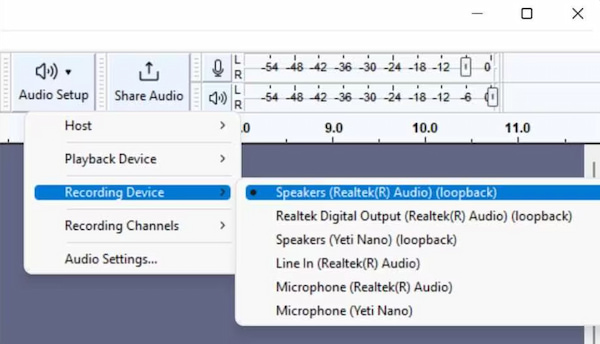
3. Before starting, play the audio you want to capture to make sure it is audible. Click the Record button to record your computer’s audio in real time. Once you’ve captured all the audio, click Stop or press the spacebar.
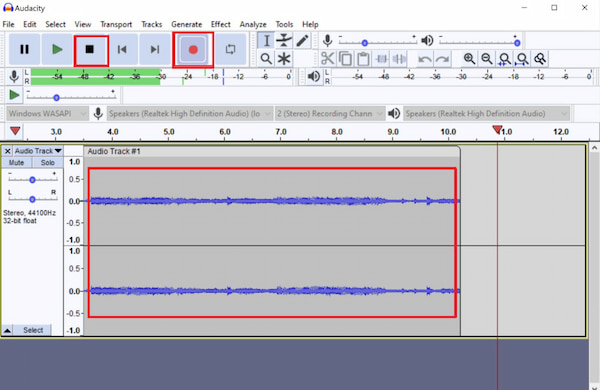
Note: WASAPI mode can record silent audio streams but cannot record if there is no active audio stream. Ensure your audio is playing before hitting record. If you find it complicated to use, consider these Audacity alternatives.
AnyMP4 Screen Recorder is a multipurpose capturing tool that can record mic and system sound simultaneously. It allows you to record music, online calls, or tutorials in lossless, high-quality sound. It ensures that every detail of your audio recording is preserved. For busy users, the scheduled recording feature allows you to set automatic start and stop times. This is perfect for webinars, live streams, or timed lectures. It also comes with built-in AI noise reduction, which filters out background noise to deliver a cleaner, professional-quality recording. Plus, it is fully compatible with both Windows and macOS, making it a reliable solution for any computer audio recording task.
Here’s how to record computer audio on Windows:
Secure Download
Secure Download
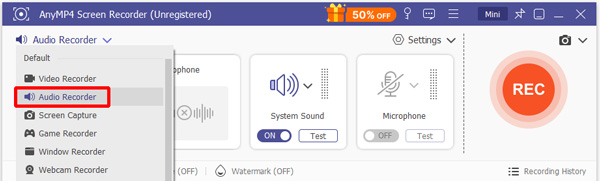
1. Launch AnyMP4 Screen Recorder after the installation. To record audio from computer to MP3 or other formats, click Audio Recorder in the main interface.
2. Turn on System Sound to record internal audio on computer. If you want to record external audio as well, you can turn on Microphone to solve the problem. Volume up or down the input audio source based on your need.
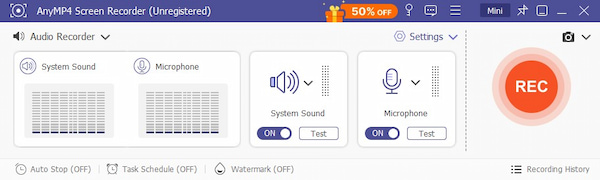
3. Play the audio you want to record. Click REC to start recording computer audio. You can pause or stop recording based on your need.
Note: You can click to enter the Audio Test interface to set the microphone recording volume and delay function.
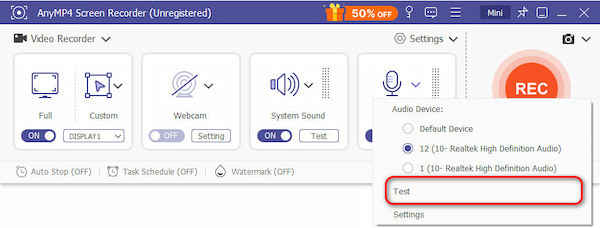
In addition, this computer audio recorder has a very effective feature to increase the microphone recording volume while reducing noise. You can do this by enabling Microphone noise cancellation and Microphone enhancement.
4. Click Play to pre-listen the recorded audio file. You can adjust the audio length within the built-in audio trimmer as well. At last, click Save to save and record audio from computer and microphone. You can share or manage the recorded audio file in Recording History window as well.
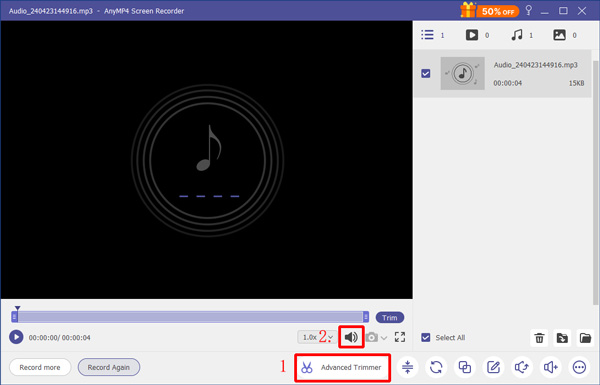
Recording audio with a computer or microphone is very simple. I often use AnyMP4 Screen Recorder, which is easy to operate. It can record PC audio, video, games, and other kinds of screens. After recording, it can even be used directly for post-editing, which is a very convenient, one-stop solution.
Can I record the sound from a protected streaming service?
Recording from protected streaming platforms may not work due to digital rights management. You might hear silence or distorted audio. Always check the service’s terms of use before recording.
Why does my recording only have microphone audio, but no computer sound?
Re-check your settings for WASAPI, Stereo Mix, or System Audio toggle depending on your software. Ensure system audio is enabled as the input source while recording.
What is the best format for recorded audio?
WAV is best for high-quality recordings and editing. However, if you want a smaller file size with reasonable quality, MP3 is a good option.
Why is there no sound in my recording?
There are several reasons why there is no sound on your audio recording on computer. This includes system audio not enabled in your recording software and the volume might be muted or too low.
Is it legal to record computer audio?
It depends. You can record audio from computer, provided you will use it for personal use only. However, recording copyrighted media for distribution may violate laws.
Can I record internal audio without a microphone?
Yes. using tools like AnyMP4 Screen Recorder or AnyMP4 Free Online Audio Recorder, you can capture internal audio directly from the computer without a microphone.
This article summarizes four ways to record audio from the computer. You can use the above four methods to record audio from your computer into a digital file. You can also flexibly record screen audio and microphone sound on a Windows or macOS system. We hope this article is useful for you. If you have any problems recording computer audio, please feel free to contact us.
Secure Download
Secure Download
 Posted by Alice Thorne to Record Audio
More readings
 Unbiased Review of LoiLo Game Recorder and the Best Alternative
As a game recording application, LoiLo Game Recorder is free and it has no watermark. If you want to learn it, you can get a complete review and guide in this article.
 Best Video Background Changers for Computer and Mobile
This article collects some of the best video background changers that you can use to replace the original background with your favorite scenes on computer and mobile.
 Top 6 Audio Recording Software to Record Audio Files with High Quality
Looking for proper audio recording software to capture the desired audio on your computer? Here are 6 best audio recorders for Windows and Mac from the article.
 3 Effective Methods to Record Audio from Browser
Discover three easy and reliable ways to record audio from browsers. Learn how to record streaming music, webinars, podcasts, and more effortlessly.
 Add your comments to join the discussion here