How to Convert DVR to MP4: 5 Easy Ways That Work (2026)
Quick Recommendations:
- Need to process 30 CCTV clips at once offline? Go with AnyMP4 (jump to Method 1).
- Just want a quick free desktop tool for one file? Try VLC (jump to Method 2).
- Working with an online DVR-MS file and don't mind the cloud? Use CloudConvert or FreeConvert (jump to Methods 3 & 4).
- Love using command lines? FFmpeg is your best friend (jump to Method 5).
Got some old CCTV DVR video files lying around and want to watch them on your phone or laptop? You're in the right place.
What is a DVR format? How do you take full advantage of the video file? Actually, the DVR format is not a frequently used video format that you might be familiar with. In order to use the DVR video for other devices, it is recommended to convert DVR to MP4 instead.
This article introduces more information about DVR and MP4, as well as the top 5 methods to transcode DVR video to MP4. With the tools, you can easily convert CCTV DVR video format to MP4, AVI, WMV, WebM, MOV, MKV, etc., without quality loss.

|
Price |
CCTV Support |
DVR-MS Support |
Batch Processing |
Privacy / Local |
Best For |
| AnyMP4 Video Converter Ultimate |
Free Trial / Paid |
 (Full) (Full) |
|
(Fast) |
100% Local |
Large CCTV batches, offline use |
| VLC Media Player |
Free |
Limited |
|
 |
100% Local |
Quick, free single file fix |
| CloudConvert |
Free (25/day) |
|
|
(Cloud) |
Cloud Auto-Delete |
Online DVR-MS conversion |
| FreeConvert |
Free (1GB) |
|
|
(Cloud) |
Cloud Auto-Delete |
sign-up, browser-based |
| FFmpeg |
Free & Open |
|
|
(Scripted) |
100% Local |
Tech fans, automation |
What Is a DVR File? (CCTV vs DVR-MS)
DVR (Digital Video Recorder) is an electronic device that records analog video in a digital format. The videos are saved to a local hard drive or networked mass storage device. A DVR file is usually compressed in H.264 so it can move across the internet quickly while keeping good quality.
What are the common DVR file extensions?
Depending on your recording device and manufacturer, DVR video files can come with a few different suffixes:
- • .dvr: The standard universal DVR recording format.
- • .dvr-ms: A proprietary format used mainly by Windows Media Center.
- • .dav: A private, encrypted stream format used by Dahua and other mainstream security systems. (If you have Dahua files, check our guide on using a DAV file player).
- • .h264 or .h265: Raw video streams exported directly from Hikvision or other CCTV equipment.
- • .ts / .mpg / .mpeg: MPEG-2 transport stream containers used by some set-top boxes or older security recorders.
The trouble is, a standard media player won't open a DVR file right out of the box. You need special hardware or software. That's why you need to transcode your DVR format into something universal, like MP4, MOV, WMV, or AVI. MP4 is the clear winner here because nearly every phone, tablet, and PC plays it smoothly.
Are DVR Files Encrypted?
A common question is whether you can convert any DVR recording right away. The good news is that most standard DVR, .dvr-ms, and .mpg footage files are non-encrypted streams. They simply use proprietary containers or lack proper file index headers, which is why regular media players can't open them out of the box. Because they are non-encrypted, you can easily transcode and extract them into a universal format like MP4 using the methods below without losing quality.
Note
If you happen to be using proprietary, heavily encrypted formats like Dahua's .dav files, those require specialized tools or a dedicated DAV file player instead.
DVR vs NVR: What's the Difference?
People often mix these two up. A DVR (Digital Video Recorder) works with analog security cameras using coaxial cables, encoding the video right on the device. An NVR (Network Video Recorder) works with digital IP cameras over an Ethernet network.
No matter which system you use, the exported files usually need a push to play nicely on modern devices. Running them through a proper video converter gets your footage ready for sharing in no time.
Method 1: AnyMP4 Video Converter Ultimate (Best for Offline & Batch)
AnyMP4 DVR to MP4 Converter is the best choice when you have a mountain of security footage to clear out. When I had to convert 30 clips from an old CCTV system, doing it one by one was a nightmare until I used a batch queue. It handles over 300 formats, keeps your data 100% private on your local PC, and skips file size limits.
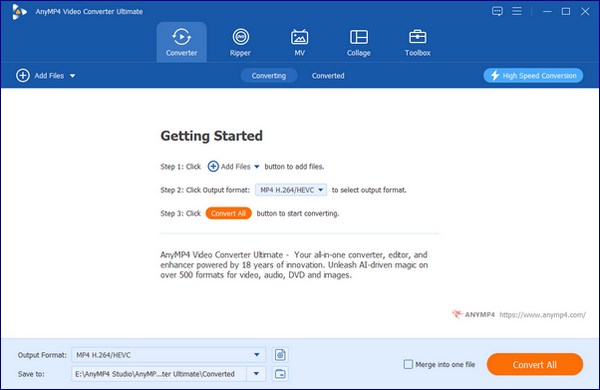
1. Add DVR files
Free download and install AnyMP4 Video Converter Ultimate on your computer, then launch the program.
Click the Add Files button to add your DVR file one by one, or click the drop-down arrow to add one or multiple DVR files to the program simultaneously.
2. Select MP4
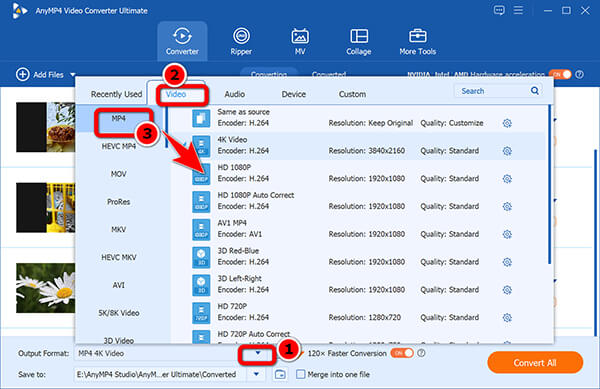
Click the Convert All to drop-down arrow and move to the Video tab, where you can choose MP4 as the output format. You can also click the profile settings icon next to the MP4 format to adjust the video codec, resolution, and other parameters.
3. Convert DVR to MP4
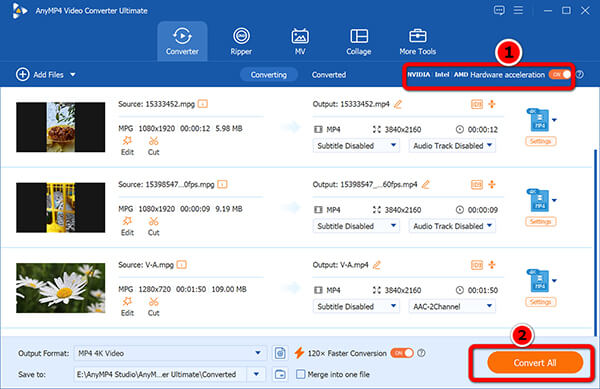
Once you have selected the MP4 format, confirm the destination folder at the bottom. Finally, click the Convert All button to start converting DVR to MP4.
Method 2: VLC Media Player (Free & Built-In)
Got VLC on your laptop already? It’s more than just a video player. I use it all the time when I need a quick free fix to convert DVR to MP4 without installing extra software.
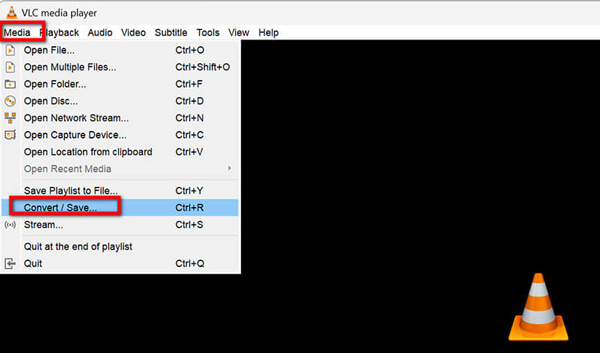
1. Open VLC on your computer. Click Media at the top menu bar and select Convert / Save.
2. In the Open Media window, click the Add button to browse and select your DVR file from your local storage.
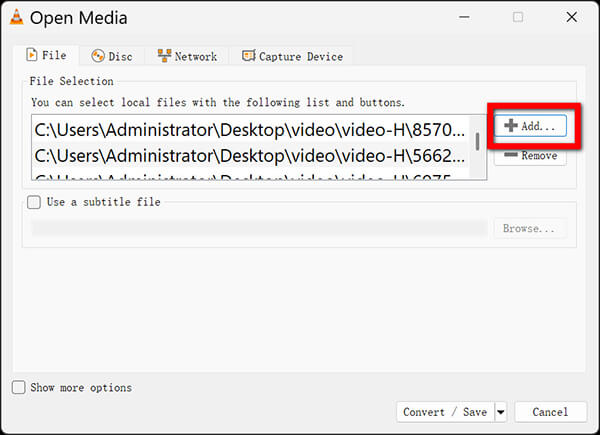
3. Click the Convert / Save button at the bottom of the window to open conversion settings.
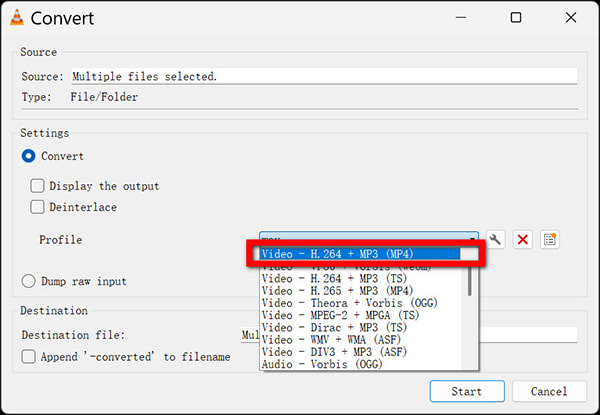
4. In the Profile dropdown menu, make sure to select Video - H.264 + MP3 (MP4) as your output container.
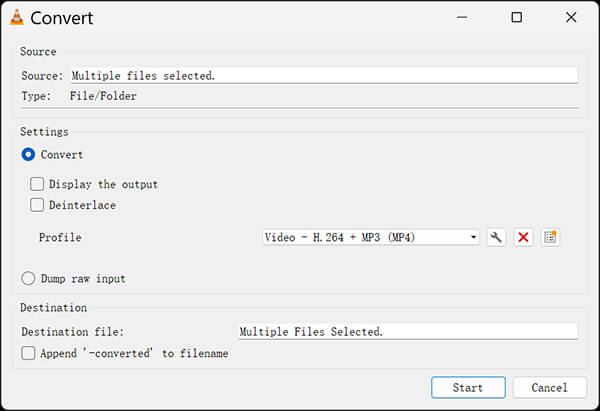
5. Click the browse icon to choose your destination folder, name your output file, and hit Start. VLC will process the file right on your desktop.
Note
If you are dealing with heavily encrypted or proprietary CCTV DVR formats, VLC might struggle. For those stubborn files, jump back to Method 1.
Method 3: CloudConvert (Best for DVR-MS Online)
Don't want to install software right now? I get it. If you're handling standard DVR-MS recordings from Windows and want an online tool, CloudConvert is solid.
1. Open your browser and search for CloudConvert, then go to their official conversion page.
Click Select File to add your DVR file from your computer, URL, Dropbox, Google Drive, or OneDrive.
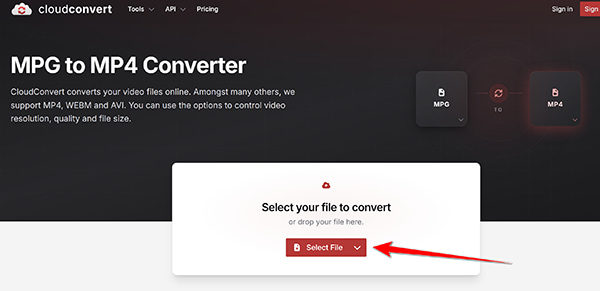
2. Check that the output format is locked to MP4. You can also click the Options button to change the video resolution or codecs if needed.
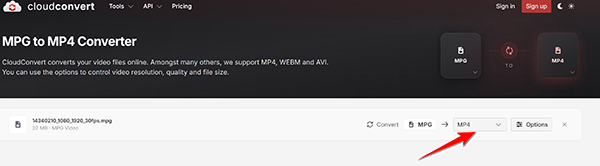
3. Click the Convert button. Once processing is complete, download your new MP4 file directly back to your device.
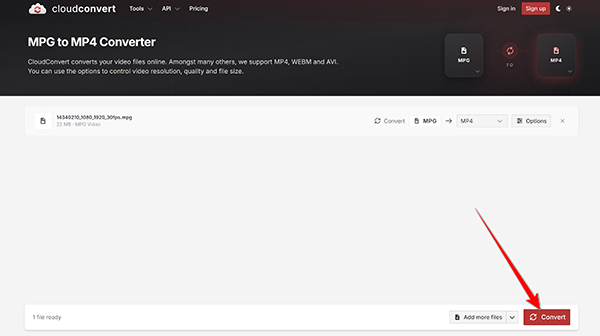
Keep in mind that online tools are great for smaller Windows files, but they aren't built for massive, encrypted CCTV video folders.
Method 4: FreeConvert (Free Online, No Sign-Up)
Sometimes you just want to drop a file on a page and get results without creating an account. FreeConvert lets you handle files up to 1GB for free right in your browser as a reliable DVR to MP4 converter software alternative.
1. Head over to the FreeConvert website on your browser.
Click Choose Files to upload your DVR file or drag and drop it right into the browser window.
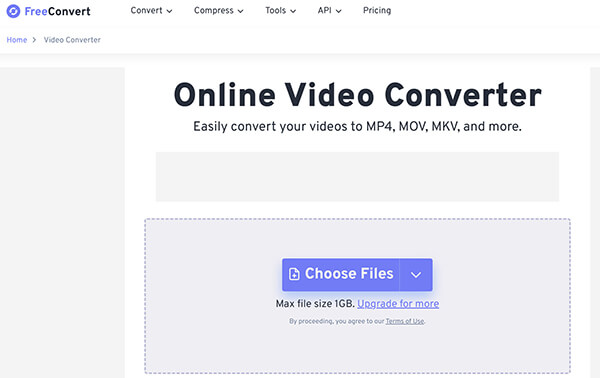
2. Verify that the output option next to your file is set to MP4.
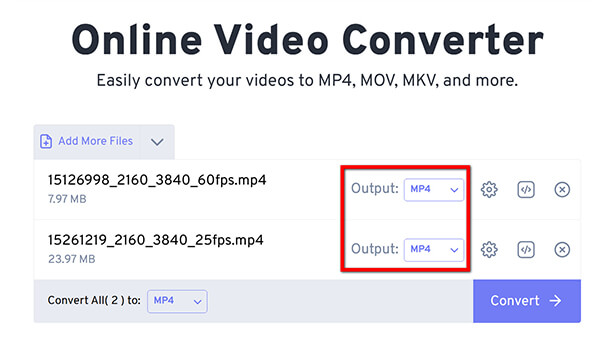
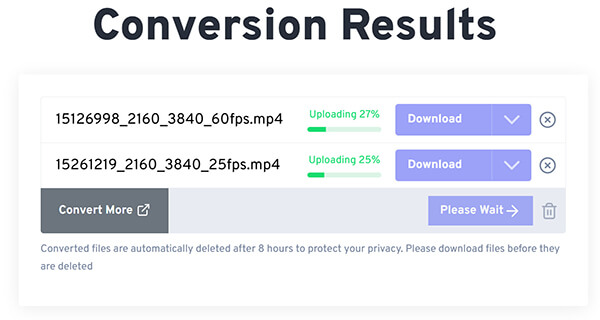
3. Click the blue Convert button. When the progress bar hits 100%, hit Download to save your MP4 file.
Method 5: FFmpeg (Best for Advanced Users)
If you like working with a terminal window, FFmpeg is lightning-fast and handles almost any DVR file you throw at it without breaking a sweat.
1. Download and install FFmpeg on your computer, then open up your Command Prompt (Windows) or Terminal (Mac/Linux).
Note
Put the FFmpeg .exe file into the same folder as your DVR file. Then right-click the blank place in this folder, and select Run in Terminal.
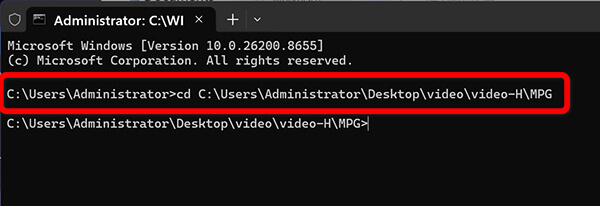
2. Navigate to the folder containing your recording and run this clean command:
ffmpeg -i input.dvr-ms -c:v libx264 -crf 18 -c:a aac output.mp4
Note
‘input’ is the DVR file name, and you should change it here.
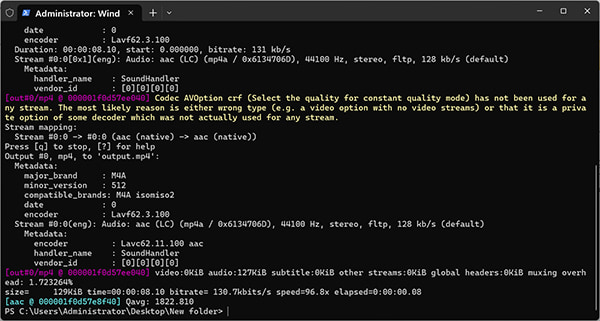
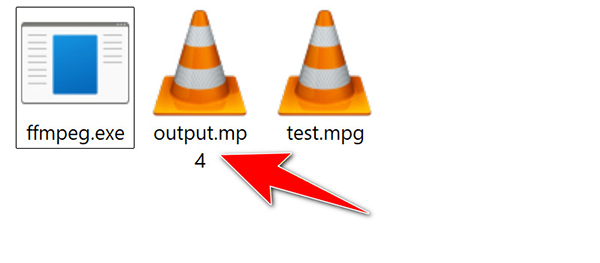
3. Hit Enter. Then you will find the new generated MP4 file in the same folder as the source DVR file.
Changing the -crf value lets you control the balance between file size and video sharpness (-crf 18 gives you near-lossless visual quality). It's my favorite way to batch-process files using simple scripts.
Also, you can use a professional program to enhance your CCTV video quality.
FAQs About DVR to MP4 Conversion
Q: What is DVR format?
A: The DVR file type is created by Windows Media Center, a Windows program that can record and playback television shows; contains the TV program information, the time recorded, and the video itself; saves video encoded in the MPEG-2 format; used for watching recorded TV shows.
Q: How do I open a DVR file?
A: Windows Media Center is capable of recording and playing DVR files recorded onto your PC in the DVR-MS format.
Q: Can VLC play DVR files?
A: If you want to play DVR files in VLC, you have to make sure that VLC has contained the audio and video decoders for this DVR file. DVR file has the MPEG-2 video decoder and AAC audio decoder. In order to play DVR files correctly in VLC, the MPEG-2 video decoder and AAC audio decoder must be installed.
Q: Can I convert DVR to MP4 online?
A: Yes, web tools like CloudConvert work well if your files are small or in the DVR-MS format, though desktop software is safer for large CCTV files.
Q: How do I convert DVR to MP4 without losing quality?
A: Use a reliable converter like AnyMP4 and set the output profile to high-definition H.264 MP4 without compressing the source resolution down. (Check H.264 vs. H.265 here.)
Q: How to convert CCTV DVR footage to MP4 (Hikvision / Dahua)?
A: Most security systems let you export files directly as MP4 during playback. If not, use an offline tool like AnyMP4 to process the exported container safely.
Q: Can I convert DVR to MP4 on Mac?
A: Absolutely. Tools like AnyMP4 have dedicated Mac versions, and VLC works smoothly on macOS too.
Q: Is DVR to MP4 conversion free?
A: Yes, tools like VLC, FFmpeg, and online trials let you convert files at zero cost.
Conclusion
After reading this article, you must know how to convert DVR to MP4. And you may find it so easy to do DVR to MP4 conversion to follow these methods we introduce to you:
- • AnyMP4 Video Converter Ultimate for batch/offline conversion of CCTV footage (no size limit).
- • VLC or FFmpeg for free desktop conversion.
- • CloudConvert (25 free conversions/day) and FreeConvert (1GB free) online for DVR-MS files.
If you like this article and think it is useful, just share it with your friends who are still in need.