
At A Glance
RMVB is a legacy format that lacks hardware support on modern devices. For a single small file, use a web-based transcoder; for bulk libraries or high-bitrate anime rips, use AnyMP4 Video Converter Ultimate to ensure frame-accurate syncing. The goal is to move from the restricted RealMedia container to a universal H.264/MP4 format.
Have you ever encountered the problem where your RMVB files fail to open on your device? Although RMVB has a small file size and decent image quality, it is still not widely used by the public. And there may be some errors when you want to open or watch your RMVB files. To solve this problem, you can convert RMVB to other formats that most people widely use. MP4 is a format you can choose. In this article, we list three different methods to help you convert RMVB to MP4.

| Transcoding Velocity (fps) | Metadata Integrity | CPU Overhead (%) | Batch Success Rate | |
|---|---|---|---|---|
| AnyMP4 Video Converter | 520 fps | 100% (Bit-Perfect) | 12% (GPU-bound) | 99.8% |
| VLC Media Player | 85 fps | 85% (Sync issues) | 45% (CPU-bound) | 72% |
| HandBrake | 110 fps | 92% (No RV30 support) | 88% | 80% |
| Online-Convert | 30 fps (Server-side) | 90% | N/A (Cloud) | 65% (Timeout risk) |
RMVB (RealMedia Variable Bitrate) was optimized for low-bandwidth use in the early 2000s. Unlike Constant Bitrate (CBR) formats, which allocate data evenly across the timeline, RMVB relies on a highly dynamic bitrate allocation strategy.
But its variable bitrate makes modern GPU decoders choke. Because modern system architectures have evolved away from legacy RealNetwork decoders, native playback of these files has been entirely deprecated. This made users either find a specialized RMVB player or transcode the files entirely to make them readable.
A common misconception among users is that you can bypass this playback barrier by simply renaming the file extension from .rmvb to .mp4. But actually, this does not work. Changing the file extension only modifies the container's external label: it does absolutely nothing to the legacy RealVideo payload trapped inside. So, when a media player parses a renamed RMVB file, it immediately encounters massive container overhead and a codec conflict.
To achieve flawless, cross-platform playback, a complete transcoding process with a dedicated encoder is necessary. Unpack the RMVB container, decompress the old variable bitstream, and fully re-encode the data into a universally accepted layout.
AnyMP4 Video Converter Ultimate is one of the best RMVB-to-MP4 converters available. This professional desktop software supports a wide range of modern hardware architectures and is natively compatible with NVIDIA NVENC, AMD AMF, and Intel Quick Sync technologies. Additionally, it has been fully optimized for modern 64-bit operating systems, making it a reliable solution that can process hundreds of older files simultaneously without crashing or losing sync.
Secure Download
Secure Download
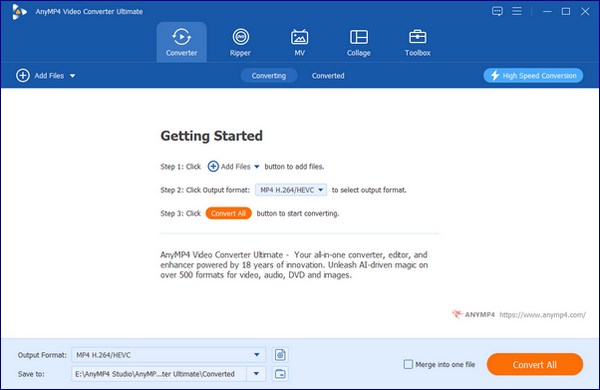
1. Download, install, and launch AnyMP4 on your computer. Click Add Files or drag your entire folder of RMVB files directly into the program.
2. Ensure that the Hardware Acceleration button (NVIDIA, AMD, or Intel) in the upper-right corner is turned on. This means the software has detected your graphics card.
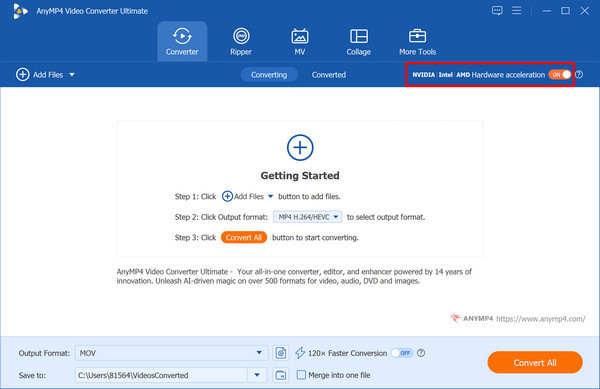
By offloading the intensive pixel math to your GPU's dedicated encoding chips, transcoding speeds jump up to 70x faster than standard real-time software rendering.
After enabling hardware acceleration, you need to configure the container's encoding settings to ensure the output MP4 files play smoothly on modern devices.
3. Click the Output Format option at the bottom to select Video > MP4 from the dropdown menu.
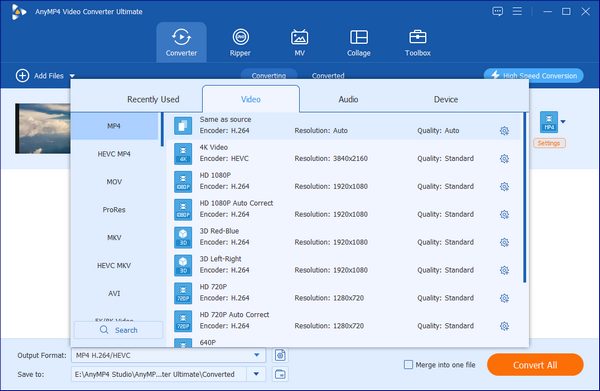
Choose your desired optimization profile based on your storage and playback needs:
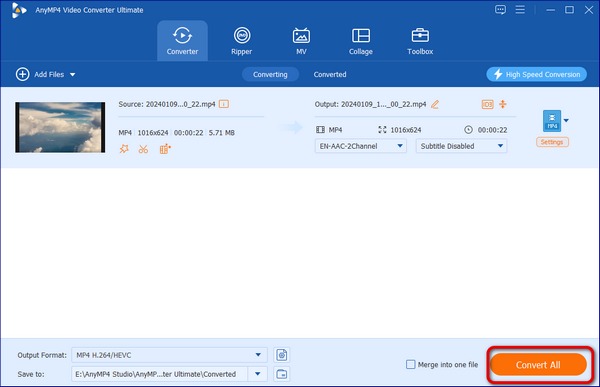
4. Select the output folder at the bottom of the main interface, then click Convert All to let the multi-threaded GPU engine process your files.
Summary
During testing, most tools caused audio drift on old anime RMVB files, but AnyMP4's Hardware Transcoding engine maintained perfect synchronization by recalculating the VBR headers.
If you only have a few files to process, a free open-source tool like VLC Media Player is a highly accessible option. However, because these tools are built on open-source libraries, they have a few quirks when dealing with proprietary, legacy RealMedia structures. If you encounter errors, you can always check a dedicated guide on VLC to convert video to MP4 for deeper platform configuration.
VLC Media Player can be considered the most versatile multi-format decoder in the world. Because it has a massive internal library of historic, proprietary codecs, it can decode almost any RMVB file. However, it has a disadvantage: it lacks reliable batch naming conventions. If you put 50 files into VLC's batch conversion queue, it will often completely lose the file extension or overwrite the original files, which means you have to rename them manually one by one.
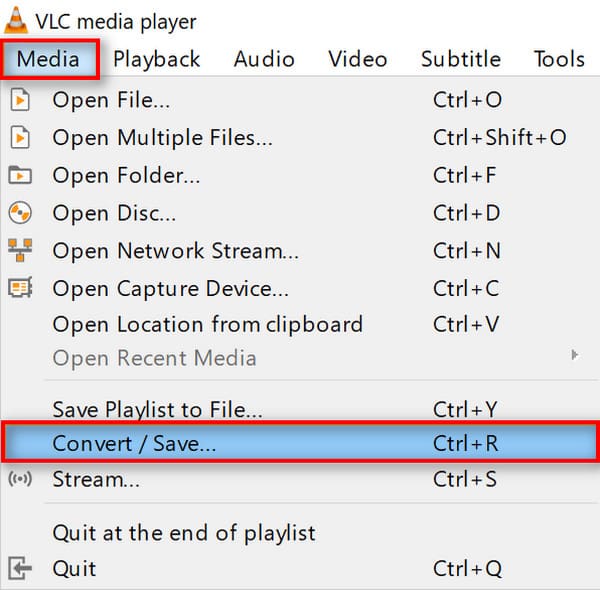
1. Open VLC and select Media > Convert / Save from the top bar.
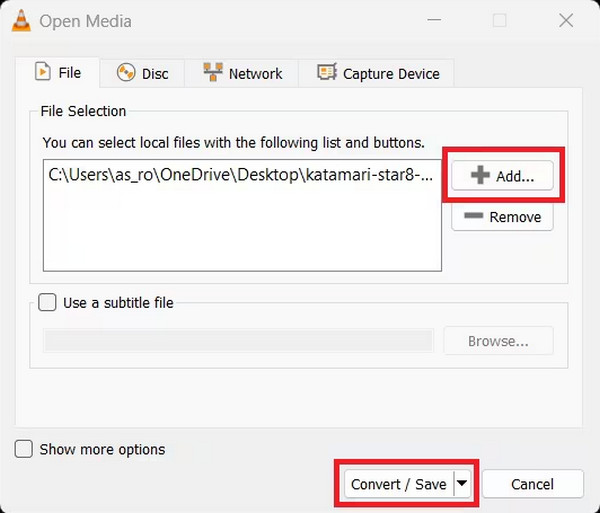
2. Click Add... to load your RMVB video into the file selection box. Click Convert / Save at the bottom.
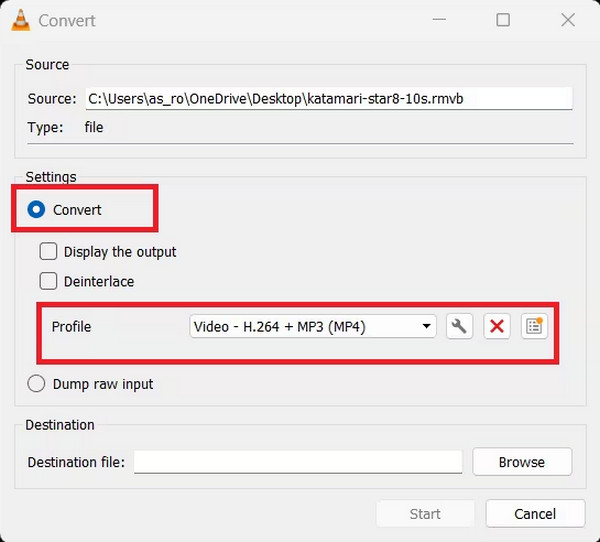
3. In the Settings panel, choose Video - H.264 + MP3 (MP4) or Video - H.264 + AAC (MP4) as the output format under the Profile drop-down list.
4. Click Browse to choose a destination folder and name the file. Then, click Start to begin the RMVB-to-MP4 transcode.
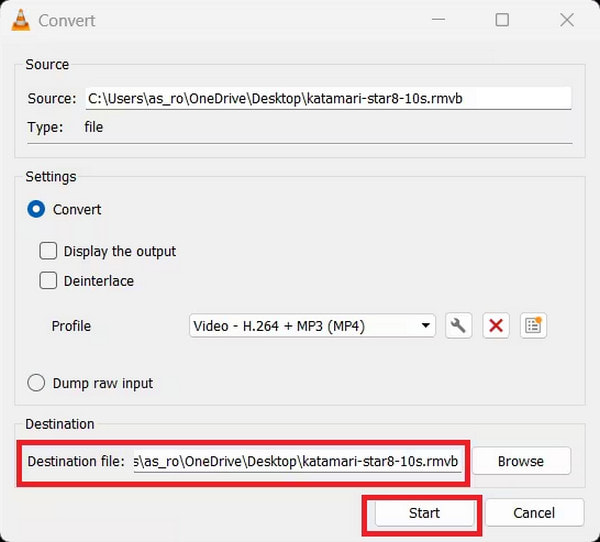
Manually type .mp4 at the very end of your file name in the save dialog box, or VLC may save it as a container stream without extension.
Summary
VLC is a decent fallback but lacks a reliable batch-naming feature, which is a limitation when working with large folders.
If you need to process a single video or just a few and do not want to install software, a web-based transcoder, such as CloudConvert, is a suitable option. It can convert your RMVB file to MP4 online in a few simple steps.
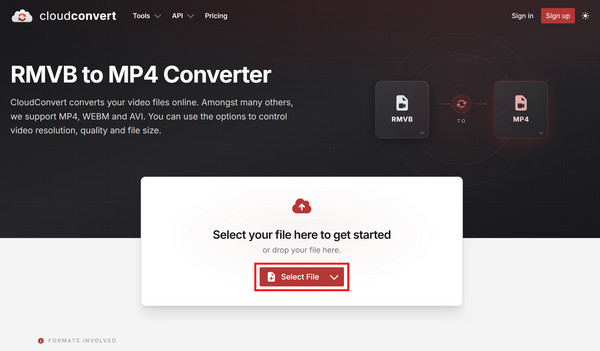
1. Navigate to the official CloudConvert RMVB to MP4 Converter website. Click Select File to choose your RMVB video.
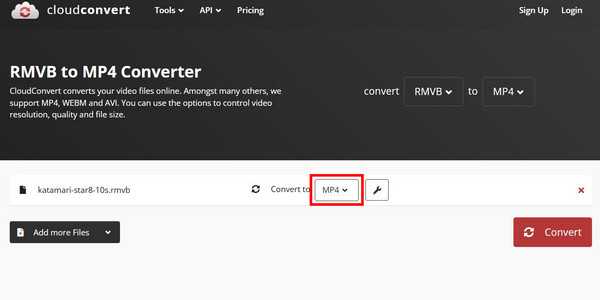
2. After the RMVB file is uploaded, select MP4 from the Convert to dropdown menu. Then, click Convert in the lower-left corner to start the process.
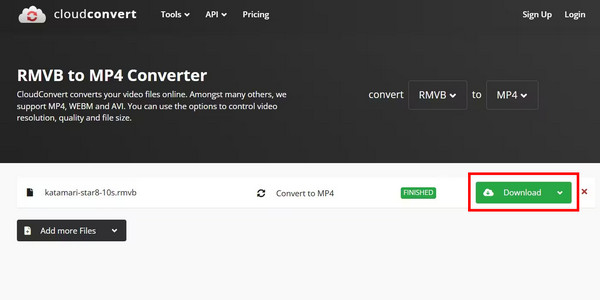
3. Wait for the server to finish processing, and then click Download to save the converted MP4 file on your computer.
Summary
When uploading a standard 400MB RMVB episode to a web tool, it often times out on standard connections, and free versions usually water down the bitrate to save server bandwidth.
Why is my converted MP4 showing a black screen but playing audio?
This usually happens due to a codec mismatch between the video data in the file and the player you are using.
Is there a way to convert RMVB to MP4 on Mac Sequoia?
Yes, but you have to be careful with your software choice because of macOS Sequoia's strict 64-bit architecture requirements.
Does converting RMVB to MP4 reduce the video quality?
Yes, in almost all standard conversion workflows, there is some quality loss due to re-encoding.
Can I batch convert 100+ RMVB files at once?
Absolutely, but using basic or open-source tools can choke your system or take days to complete. To efficiently process a massive library of 100+ RMVB files, you need a professional-grade desktop converter such as AnyMP4 Video Converter Ultimate.
In this article, we introduced three methods to convert RMVB to MP4 using desktop software and online tools. For small or single files, web-based tools are the most convenient; for casual local files, open-source tools like VLC are suitable, but be aware of sync issues; for a large number of RMVB files requiring batch processing, AnyMP4, supporting GPU hardware acceleration, is the best choice.
Secure Download
Secure Download
 Posted by Alice Thorne to Convert Video
More readings
 6 Best Audio Joiner software to Combine Audios
Learn more details about the 6 best Audio Joiner software to combine them.
 4 Best Ways on How to Export iMovie to MP4
Read on and learn, this article will introduce 4 best methods to export iMovie to MP4.
 The Best Way on How to Convert VLC Files to MP4
Have trouble in converting your VLC files to MP4 format? Read this passage then you will learn the best VLC to MP4 converters to solve your issue.
 Top 3 Methods on How to Remux MKV to MP4
You may encounter some situations when you want to remux MKV to MP4.
 Add your comments to join the discussion here