2026 Updated 5 Best Open-Source Screen Recorders
Quick Answer: What Is the Best Open-Source Screen Recorder?
- Best Overall: OBS Studio (Free, 4K, works on Windows, Mac, and Linux with zero watermarks).
- Best for Windows Shortcuts: ShareX (Fast hotkeys, scrolling shots, and instant cloud uploads).
- Best for Old PCs: CamStudio (Super lightweight, great for basic 1080p clips on slow Windows machines).
- Best Modern Windows App: Captura (Smooth captures with a clean, easy-to-use look).
- Best for Linux: SimpleScreenRecorder (Low CPU use and real-time previews).
Tired of downloading free screen recorders only to find out they hide your HD exports behind a paywall, slap a giant watermark across your video, or bombard your screen with annoying pop-up ads? If you are on a tight budget or just hate bloated commercial software, finding a reliable tool can feel like an endless headache.
That is why turning to a free open-source screen recorder is often the smartest move. Open-source projects give you complete freedom with no hidden fees, absolute data privacy, and no surprise subscriptions. However, not all open-source projects are built equal, and some feature active developer communities releasing weekly updates, while others have been completely abandoned. We tested 5 popular open-source screen recorders to help you find the right one.
How We Test
We put each recorder through five straightforward checks to see how they stack up:
- • Features: What can it actually record? (Just video, or does it handle mic audio, webcams, full screens, and specific windows?)
- • Platforms: Does it run on your device, whether that is Windows, Mac, or Linux?
- • Community Health: Are developers still actively fixing bugs and pushing out updates, or is the project dead?
- • Ease of Use: Can a normal human figure it out in five minutes, or do you need a degree in video editing?
- • Output Quality: Does the final video look sharp and run smooth, or does it stutter and lag?
| Tool |
Platform |
GPU Accel |
Max Res |
Best For |
| OBS Studio |
Win, Mac, Linux |
 |
4K |
Power Users & Streamers |
| ShareX |
Windows |
|
1080p |
Quick Captures & Shortcuts |
| CamStudio |
Windows |
 |
1080p |
Older PCs & Basic Clips |
| Captura |
Windows |
|
4K |
Modern Windows Recording |
| SimpleScreenRecorder |
Linux |
|
HD |
Linux Users |
Open-Source vs. Free Screen Recorder: What's the Difference?
When people look for a tool to record their desktop, they often use the terms "open-source" and "free" interchangeably. However, they are quite different:
- • Open-Source Screen Recorders: These programs give you the actual source code. They are 100% free, run by communities, and built without hidden corporate agendas. You will never run into sudden paywalls, forced subscriptions, or annoying ads.
- • Standard Free / Freemium Recorders: These tools belong to private companies. While they let you download and use the app for free, they often lock important features—like HD exports, watermark removal, or internal audio recording—behind a paid upgrade.
A good open-source recorder needs an active community. If a project has active developers on GitHub, bugs get fixed fast. It also needs to support your operating system without crashing your CPU.
1. OBS Studio - Cross-Platform Powerhouse
- • GitHub Snapshot: 60K+ stars | Monthly releases | GPL v2 | Active since 2012.
- • Community & Extensions: The online community is massive. If you get stuck, you can find thousands of YouTube tutorials, active forum threads, and helpful community plugins.
- • Who This Is For: Power users and creators who want total control over their audio and video.
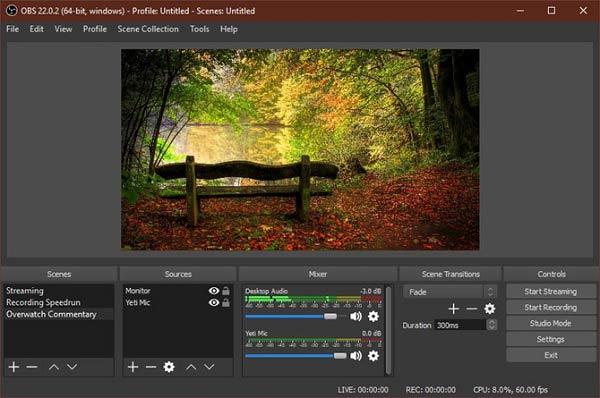
OBS Studio is easily one of the most reliable and heavy-duty screen recorders you can get your hands on. It runs smoothly on Windows, Mac, and Linux without forcing you into a paid subscription or hiding features behind a paywall. It lets you capture high-framerate gameplay and record a step-by-step desktop tutorial with multiple audio tracks. Besides, OBS also supports full 4K recording and gives you absolute control over your audio mixer and scene layouts. Best of all, although it is free, it leaves no annoying watermarks or sudden time limits cutting you off mid-stream.
Strengths:
- Uses your graphics card to keep your CPU cool and prevent overheating.
- Over 100 community plugins for advanced audio filters and virtual cameras.
- The exact same features work seamlessly across Windows, Mac, and Linux.
Weaknesses:
- It has a steep learning curve. Expect to spend 30 minutes just figuring out the settings.
- There is no built-in video editor. You need another tool to trim your clips.
2. ShareX - Windows Automation King
- • GitHub Snapshot: 25K+ stars | Active updates | GPL v3 | Lightweight app.
- • Community & Extensions: It has a loyal Reddit community that shares custom task workflows, automated scripts, and troubleshooting tips.
- • Who This Is For: Windows users who want to take quick clips and screenshots without opening a heavy program.
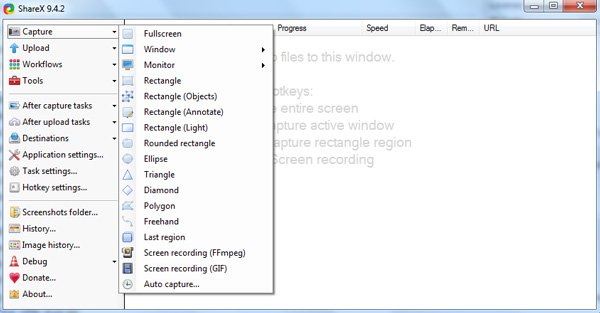
ShareX is a powerful, lightweight screen capture tool built specifically for Windows PC. It does not work as a standard video recording tool, but also gives you advanced scrolling screenshots, automatic cloud backups, and instant image markup right out of the box. It hides in your taskbar until you need it, letting you trigger advanced captures with a simple keystroke. Because it's fully open-source, you get pro-level features without a single ad, popup, or surprise paywall in sight. It's a hard favorite for power users who want things done yesterday.
Strengths:
- Hotkeys support to make recordings super fast.
- Built-in tools let you slap arrows, text, and blur effects right onto your captures.
- No ads, no watermarks, and no annoying pop-ups.
Weaknesses:
- The interface looks a bit busy and old-fashioned.
- Mac and Linux users are completely out of luck.
3. CamStudio - Lightweight Simple Recorder
- • GitHub Snapshot: Community-forked | Occasional updates | GPL | Legacy project.
- • Community & Extensions: Documentation is sparse, but basic user guides and community forums are easy to find online.
- • Who This Is For: People with older computers who just need to record a simple tutorial.
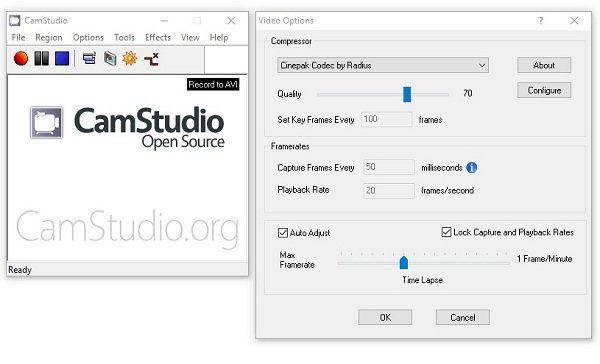
If you just want an easy screen recorder, CamStudio is a classic open-source option for Windows. It handles basic desktop recording, software guides, or quick webcam clips without any confusing setup. The app stays super lightweight so it won't crash older or slow PCs. It doesn't have any modern flashy features, but it gets the job done when you need a fast AVI or SWF file without installing a massive software package.
Strengths:
- Very small file size that won't slow down old computers.
- Simple menu layout that anyone can understand in one minute.
Weaknesses:
- Maxes out at 1080p resolution. It won't handle modern 4K gaming well.
- The interface looks like it was built in the year 2005.
4. Captura - Windows Modern Alternative
- • GitHub Snapshot: 4K+ stars | Active community | MIT License | Clean UI.
- • Community & Extensions: Features a clean GitHub repository page with helpful troubleshooting guides and contributions from global developers.
- • Who This Is For: Windows 10 and 11 users who want a clean, modern open-source tool.
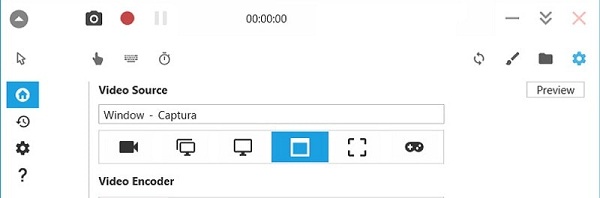
Captura is a clean, modern open-source screen recorder built specifically for Windows 10 and 11. It uses the Windows Desktop Duplication API to capture screen motion and apps with impressive smoothness. The software features a sleek interface that makes managing audio sources, webcam overlays, and mouse cursor visibility remarkably straightforward. You can easily export your sessions into popular formats like MP4, GIF, or AVI depending on what your project calls for. It also includes strong multi-language support for users around the globe.
Strengths:
- Supports multiple output formats like MP4, GIF, and AVI.
- Built-in support for over 30 different languages.
- Control your recordings with keyboard shortcuts instead of digging through menus.
Weaknesses:
- Can occasionally show a tiny bit of delay on lower-end graphics cards.
- Windows-only support.
5. SimpleScreenRecorder - Best for Linux
- • GitHub Snapshot: Stable releases | GPL | Linux focused | Lightweight codebase.
- • Community & Extensions: Well-loved by the Linux community with clear installation guides and support channels for Ubuntu, Fedora, and Debian users.
- • Who This Is For: Linux users who want a reliable, fast desktop recorder.
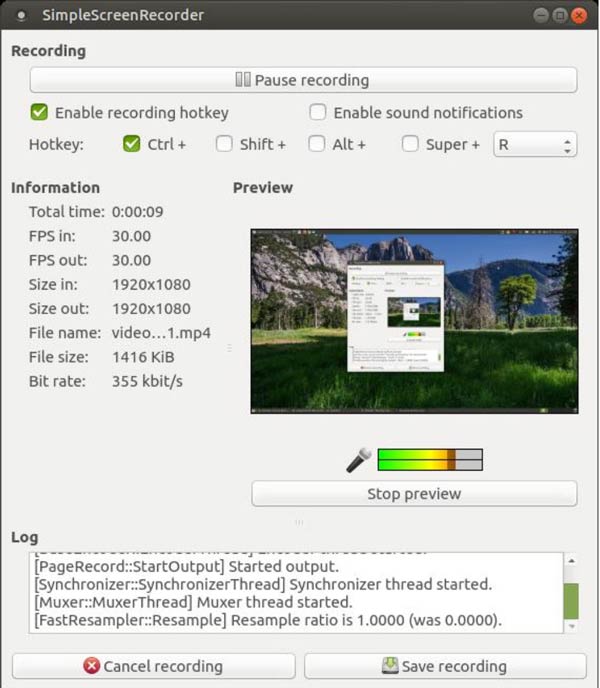
SimpleScreenRecorder was designed from the ground up to solve the common frustrations Linux users face when capturing desktop video. The developers built it to handle high-frame-rate application recording without lagging your system or dropping vital frames, which is good for recording gameplay on PC. It includes a convenient real-time preview window so you can verify your capture area before hitting the record button. The application interface is refreshingly straightforward compared to heavier alternatives while still offering deep custom options for experienced users. It remains the gold standard for recording gameplay, tutorials, or desktop sessions on Linux distributions.
Strengths:
- You can pause and resume your recordings whenever you want.
- Real-time preview shows you exactly what is being captured.
- Lower CPU usage than OBS on older Linux setups.
Weaknesses:
- It does not run on Windows or macOS.
Best Alternative: AnyMP4 Screen Recorder
Open-source tools are amazing, but they often come with downsides. OBS takes forever to figure out, ShareX only works on Windows, and old-school tools like CamStudio are missing modern features.
If you want to record the screen without effort, try AnyMP4 Screen Recorder. It uses full hardware acceleration to record your screen at 60 fps without lag. It uses GPU acceleration to keep CPU usage low and smooth. While recording, it has built-in editing tools to trim and clip your footage instantly. After recording, you can save videos in multiple formats like MP4, MOV, and WMV, so that you can play on any device or upload to a social media platform directly.
1. Download and install the software on your computer. Open it and click on Video Recorder.
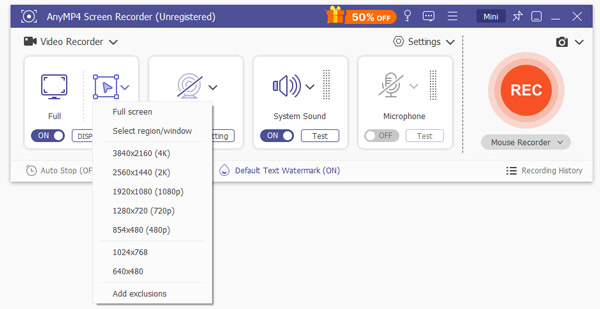
2. Choose what you want to capture. You can turn on Display to record your screen, Webcam for your face, and System Sound or Microphone for audio. Click the red REC button when you are ready.
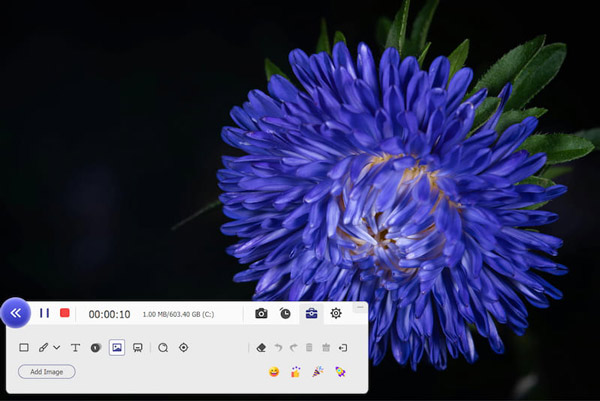
3. When you finish, click the Stop button. Use the built-in clip tool to trim out any parts you don't need, then click Save to export your video.
FAQs
Is OBS Studio completely free with no watermark?
Yes. OBS Studio is 100% free under the GPL v2 license. It never adds watermarks to your videos.
Does Windows 10/11 have a built-in screen recorder?
Yes. You can press the Windows Key + G to open Xbox Game Bar, which lets you record app windows and games for free.
What is the best open-source screen recorder for Linux?
SimpleScreenRecorder is the top choice for Linux users because it uses low CPU power and has a live preview window.
Are open-source screen recorders safe to use?
Yes, as long as you download them from their official GitHub pages or trusted project websites, because the source code is public and checked by developers.
What is the difference between open-source and freemium screen recorders?
Open-source recorders give you the keys to the kingdom, and every single feature is totally free and built on open code. Freemium tools are run by companies that give you a taste for free, but usually lock the good stuff (like HD exports, system audio, or removing watermarks) behind a paywall.
Conclusion
Choosing the right open-source screen recorder depends heavily on your operating system and technical comfort level. Here is the quick option of which tool you should use:
- • Want 4K recording and streaming? Pick OBS Studio.
- • Want quick screenshots and hotkeys on Windows? Pick ShareX.
- • Need something simple for an old Windows PC? Pick CamStudio.
- • Want a clean interface on Windows? Pick Captura.
- • Running Linux? Pick SimpleScreenRecorder.
- • Want an easy tool with zero setup hassle? Try AnyMP4 Screen Recorder.
Choose the best tool you need, and free download to record your screen.


 Add your comments to join the discussion here