
Quick Comparison: Which Video Color Editor is Right for You?
Video color editing is one of the most valuable techniques in video production. However, it is also one of the most demanding. Traditional color grading workflows require hours of adjusting curves and scopes until your eyes blur. The truth is, most creators don’t have time for traditional grading workflows, and you don’t need a colorist certificate to make your footage stand out. Today, beginner and professional software simplifies the process, offering intuitive controls, LUTs, filters, and AI enhancements that deliver professional-looking results in seconds. In this post, we highlight the best video color editor software available today. We will help you choose tools that enhance your videos quickly, efficiently, and creatively.
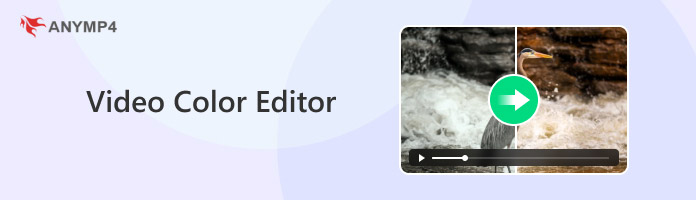
Color correction is the first step in enhancing video visuals. It addresses technical issues from recording, such as inaccurate white balance, improper exposure, or inconsistent colors between clips. By adjusting brightness, contrast, highlights, shadows, and temperature, editors ensure the footage looks natural and balanced. The goal is to restore realism through proper lighting and accurate color tones.
Color grading follows correction, shifting the focus toward the creative side of post-production. Rather than fixing technical inaccuracies, it enhances visual storytelling by establishing a specific mood or artistic style. Using tools like color wheels, curves, and LUTs, editors can apply warm tones for emotion, cool tones for drama, or high contrast for a cinematic finish.
Did You Know:
When choosing a video color editor, it is crucial to understand the limitations of your source footage. Most consumer cameras record in 8-bit, which contains 16.7 million colors. Professional cameras record in 10-bit, offering 1.07 billion colors. If you push 8-bit footage too hard in a color editor, you will see banding, ugly, pixelated steps in gradients like the sky.
| Video Color Tools | Primary Focus | Color Workflow | Professional Scopes | AI Enhancement | NLE Integration | Pricing | Best For |
|---|---|---|---|---|---|---|---|
| AnyMP4 Video Converter Ultimate | Multimedia toolkit with video enhancement and conversion | Slider-based adjustments for brightness, contrast, saturation, and hue. Filters for quick color looks |  |
 |
|
Free, with upgrades starting at $18.75 | Color fixes, AI enhancement, and final video polishing |
| DaVinci Resolve | Video editing and color grading | Node-based grading with color wheels, curves, HDR tools, and LUT | |
|
|
Free, with upgrades at $295 (One-time purchase) | Color grading, LUT workflows, and film production |
| Adobe Premiere Pro | Editing with integrated color grading | Lumetri Color panel with wheels, curves, LUTs, and adjustment layers | |
|
|
$22.99 per month | Professional editing with built-in color correction |
| Final Cut Pro | Video editing | Color wheels, color curves, and hue-saturation curves | |
|
|
$299.99 (One-time purchase) | Color grading and professional editing |
| CapCut | Social media video editing | Slider adjustments, LUT presets, HSL controls, and filters | |
|
|
Free, with upgrades starting at $7.99 | Basic color edits and social media video styling |
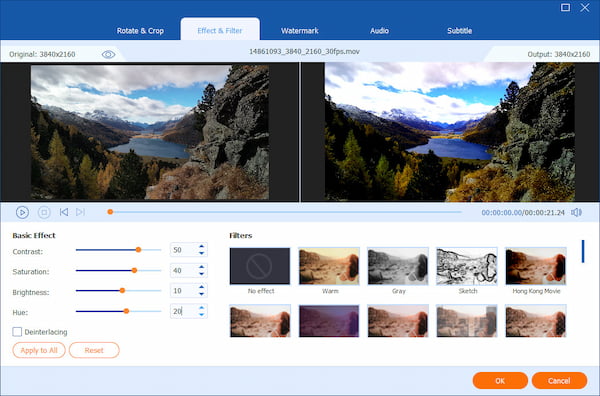
AnyMP4 Video Converter Ultimate is a multimedia bundle that goes far beyond file conversion. Though it is recognized as a converter, it also works as a video color enhancer. Inside the MV’s editing panel, you can adjust contrast, brightness, hue, and saturation to improve the clip’s overall color correction. For quick cinematic looks, the built-in filters can enhance your video tone. Beyond color adjustments, it includes a Video Enhancer powered by the newest and most advanced AI. It can upscale videos to 4K resolution, stabilize shaky footage, optimize video effects, and remove noise from low-quality clips.
Secure Download
Secure Download
What You'll Like:
What to Consider:
Personal Experience:
When I used AnyMP4 Video Converter Ultimate, I found it surprisingly efficient for quick enhancements. I adjusted brightness and saturation to fix a dull clip, then applied a filter to improve its appearance.
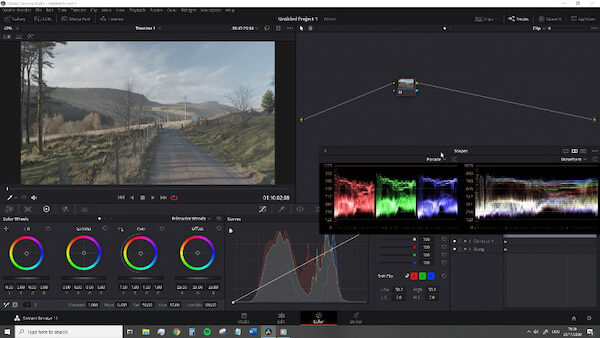
DaVinci Resolve is one of the best video color software platforms available today. It provides a highly advanced video color grade system used in professional movie production and post-production. It includes color tools such as color wheels, curves, HDR grading panels, scopes, and node-based workflows. With its dedicated Color Page, you can make detailed adjustments such as exposure balancing, highlight recovery, skin tone correction, and advanced free video editing software color correction workflows.
What You'll Like:
What to Consider:
Personal Experience:
While testing DaVinci Resolve, I noticed that its color tools are detailed, but also require some mastery. I experimented with the color wheels to fix shadows and highlights in a short cinematic clip. It is perfect for anyone who wants complete creative control over visual grading.
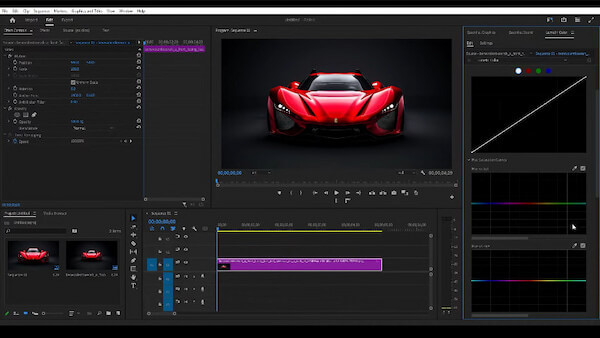
Adobe Premiere Pro is a highly popular editing platform that combines timeline editing with advanced visual adjustments. As a comprehensive video editor color correction solution, it features the powerful Lumetri Color panel. It allows editors to control exposure, contrast, temperature, tint, and saturation with precision. It also includes creative LUT support, color wheels, and curve tools to change the color of video footage in a cinematic way.
What You'll Like:
What to Consider:
Personal Experience:
Using Premiere Pro felt natural because the editing timeline and color tools work together smoothly. I tested the Lumetri panel by correcting a slightly overexposed clip and adjusting the white balance to warm the scene.
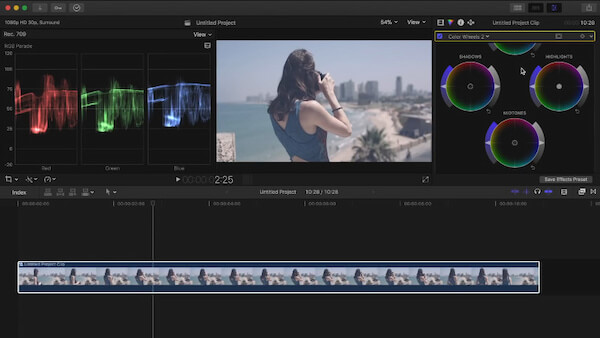
Final Cut Pro is Apple’s premium editing software designed exclusively for macOS. It means there is no Final Cut Pro for Windows available as of today. It includes powerful tools that work as a video color changer for cinematic adjustments. It provides color wheels, curves, and hue-saturation controls that allow you to fine-tune footage with professional precision. You can adjust exposure, balance highlights, and refine skin tones using intuitive visual controls.
What You'll Like:
What to Consider:
Personal Experience:
When I tested Final Cut Pro on a Mac, the performance stood out immediately. Adjusting color using the built-in wheels felt intuitive, and I quickly balanced highlights and shadows in my footage. It is best suited for Mac users who want high performance and professional editing tools.
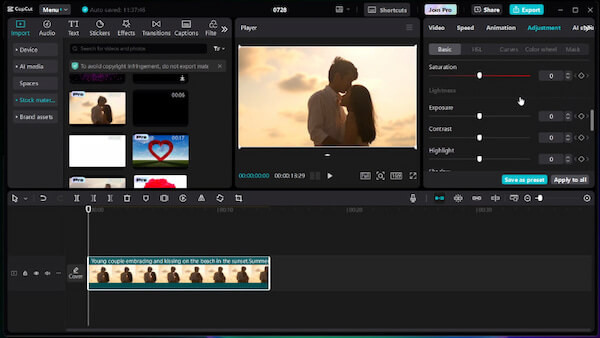
CapCut is an app to edit video color designed for content creators, especially those producing short-form videos. It allows you to adjust brightness, contrast, saturation, and temperature using simple sliders within the interface. It also includes a wide range of presets and filters that instantly transform a video's visual tone. Many creators use it as a lightweight video color editor when producing TikTok, Instagram, or YouTube content.
What You'll Like:
What to Consider:
Personal Experience:
When I used CapCut, I appreciated how quickly I could enhance a video clip without having to deal with complex editing tools. I applied a filter and slightly increased saturation to make the colors pop for a social media video. It is a perfect free color editor for quick color improvements without learning complicated editing software.
To achieve accurate and appealing results, a video color editor relies on several tools that help editors analyze and refine color properties. These tools make it easier to control brightness, adjust color intensity, and maintain consistent visuals across clips.
Scopes are professional monitoring tools used to analyze color and exposure levels in a video. The waveform scope shows brightness distribution across the frame, helping editors balance highlights, midtones, and shadows to avoid overexposed or overly dark areas. Meanwhile, the vectorscope displays color intensity and hue, allowing editors to check saturation levels and maintain natural-looking colors, especially skin tones.
Hue, Saturation, and Luminance (HSL) are essential controls for adjusting how colors appear in a video. Hue represents the color itself and can shift it to a different tone. Saturation controls how vibrant or muted a color looks, while Luminance adjusts the brightness of specific colors without affecting the entire frame.
Q1: What is the difference between color correction and color grading?
A1: Color correction adjusts white balance, exposure, contrast, and color balance to make the video look natural and consistent. Meanwhile, color grading is the creative process of applying a stylistic look or mood after correction.
Q2: What is a LUT, and how do I use it?
A2: A LUT (Look-Up Table) is a preset file used in video editing to transform the colors of footage quickly. To use a LUT, you import it into a video editing or color grading program and apply it to your clip through the color grading panel or effects section.
Q3: What is the best free video color editor?
A3: The best free video color editor available is DaVinci Resolve. It offers professional-grade color grading tools widely used in film and television production. It is one of the most capable free solutions for performing both color correction and cinematic color grading.
Q4: How can I change the color of a specific object in a video?
A4: To change the color of a specific object in a video, use color isolation tools such as masks, HSL qualifiers, or color selection tools. First, select the target color range using an HSL or color picker tool. Then, adjustments are applied to modify hue, saturation, or luminance while leaving the rest of the frame unchanged.
In conclusion, a video color editor is no longer just a tool for professionals. Creators of all levels can enhance, correct, and stylize their footage with ease. From quick adjustments to cinematic color grading, the right software can transform ordinary clips into visually striking videos. Among the options available today, AnyMP4 Video Converter Ultimate stands out as a versatile solution. With powerful color enhancement tools, filters, and AI-driven improvements, it makes professional-grade results accessible to everyone.
Secure Download
Secure Download
 Updated by Mark Cristobal to Editor, Edit Video
More readings
 3 Ways to Change the Color of a Video (Beginner Guide)
Learn how to change the color of a video like a pro here! Discover effective methods for color transformation to add visual impact to your videos.
 Colorize Video: Enhance Visuals Like Never Before
Discover the magic of colorize video! Learn how to breathe life into old black-and-white footage, turning them into stunning, vibrant masterpieces.
 Color Grading in Premiere Pro to Fix Video Visual Effect
Check this and learn the secrets of color grading in Premiere Pro with this guide. Elevate your editing skills and create visually captivating content.
 Improve Video Using Color Correction in Premiere Pro
Do your videos look bland? Check this post and learn the color correction in Premiere Pro. This post includes the steps to achieve a natural-looking clip.
 Add your comments to join the discussion here