
Stop-Motion At-A-Glance (Checklist):
Stop-motion is an animation technique that uses a series of photographs to make physical objects appear to move. Unlike standard video, which captures continuous motion, this technique relies on incremental adjustments made to a subject between individual shots. By carefully repositioning your subject and capturing each frame individually, you create an illusion of movement when played back. If you're someone who wants to create a stop motion animation, you're in the right place. This post will show you how to make a stop-motion video from start to finish. We will cover the fundamentals of stop motion, the essential setup and requirements, and the key steps for shooting and editing your animation. We'll provide clear instructions to bring your ideas to life and create professional-looking stop-motion animations.
How to make a stop motion video? To make a stop motion video, first understand the frame rate and choose the subject you want to animate. These two factors matter because the frame rate controls how smooth your animation appears, while the subject determines how flexible and expressive your movements can be.
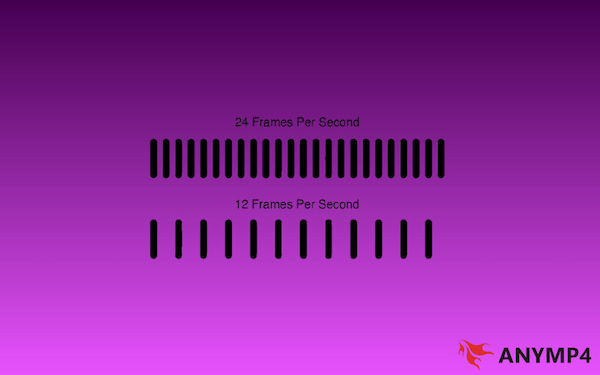
What is the standard stop motion frame rate? Frame rate, defined by the number of frames per second, determines the fluidity of your animation. A higher rate, such as 24 FPS, results in smoother, more lifelike movement. However, it requires creating more frames, which is more time-consuming. Conversely, a lower rate like 12 FPS produces a choppier look but is more manageable for beginners. Regardless of the rate, the key to smooth animation is consistency: moving your subject evenly to avoid jarring shifts.
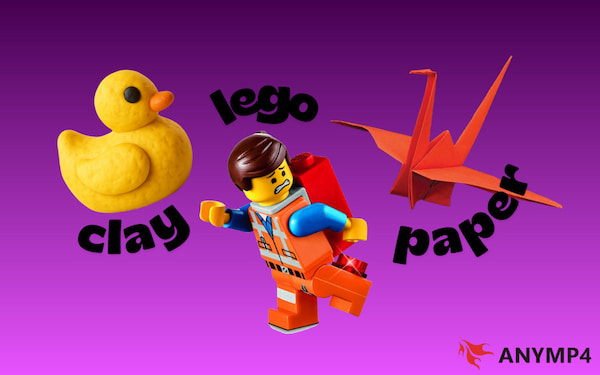
How can I make a stop motion video? First, you need a subject to film; the material you choose impacts both the aesthetic and the complexity of your project. Clay is ideal for expressive, fluid characters but requires messy, careful handling. In contrast, LEGO pieces offer sturdy, modular convenience for structured scenes, though they lack emotional range. Finally, paper is a lightweight, simple option for 2D storytelling, yet it remains fragile and less versatile for complex movements.
Stop motion animations are popular on YouTube, and many viewers find them relaxing to watch. If you're thinking about starting your content creation journey, stop motion is a creative way to begin. Grab your camera, start animating, and make a YouTube channel today.
Before you start animating, creating a solid setup is the foundation of a successful stop-motion animation. This first phase focuses on preparing your workspace, selecting the right camera gear, and ensuring stability. Proper setup improves the quality of your shots and saves time during editing by reducing errors and retakes. So, how to create a stop-motion video? You need to prepare these things first:
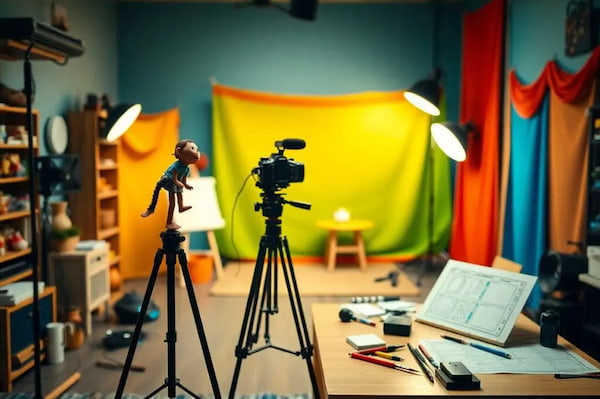
Consistent lighting is one of the crucial stop motion techniques. Slight changes in brightness or shadow can create flickering in the final animation. Natural light is unpredictable, so use an adjustable artificial lighting, like LED panels, to maintain uniform illumination. Pairing this with a sturdy tripod or camera mount keeps your camera perfectly still throughout the shoot. For intricate animations, use clamps, weights, or rigs to secure props and prevent accidental movement between shots.
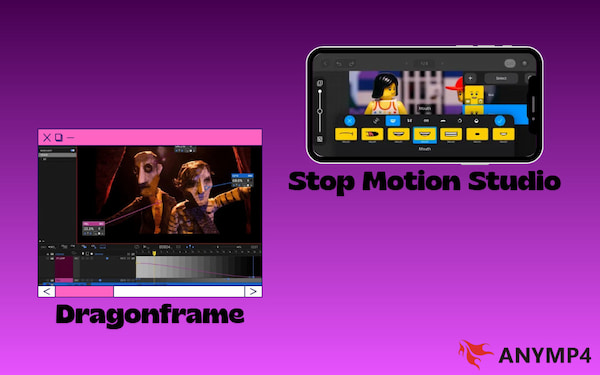
With your physical setup ready, dedicated stop-motion software can streamline the process and enhance precision. Dragonframe, a professional-grade industry standard, offers advanced features such as onion-skinning, precise frame timing, and direct camera control for instant corrections. How to make a stop-motion video with iPhone? You can use Stop Motion Studio, the best stop motion app. It offers a more accessible, mobile-friendly experience for beginners. It features essential editing tools and simplified export options. You can also turn Shorts into a video using the Stop Motion Studio app.
Our Lab Test Note: During our testing with a 100-frame Clay sequence, we found that even minor shifts in natural window light caused noticeable flickering. We recommend using blackout curtains and a fixed 5600K LED light source for professional-grade consistency.
With your setup complete, focus shifts to capturing frames and refining them through editing. Stop-motion photography demands patience; every micro-adjustment dictates the final animation's fluidity. Once captured, the editing process becomes vital for polishing sequences, correcting visual inconsistencies, and integrating sound. Mastering both precise shooting techniques and post-production tools ensures a smooth, engaging, and professional result.
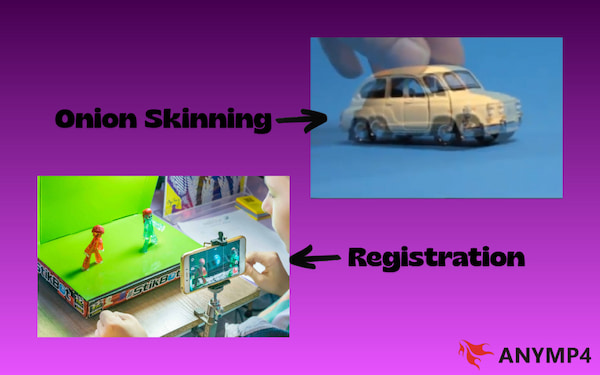
Onion skinning lets you see a faint overlay of the previous frame while positioning the next one. This visual guide helps ensure movements are small and consistent, preventing sudden jumps between frames. Most stop motion software, including Dragonframe and Stop Motion Studio, includes this feature to improve accuracy during shooting.
On the other hand, Registration refers to keeping your camera, background, and subject perfectly aligned throughout the entire animation process. Even a slight shift in camera position can make the animation look shaky. To maintain proper registration, mark the positions of props and camera stands, secure the set, and check framing frequently.
After capturing all the frames, post-production is where your stop-motion animation truly comes to life. AnyMP4 Video Converter Ultimate is a multimedia software bundle that can make stop-motion from video and photos. Though the name suggests otherwise, it goes beyond simple format conversion by offering an MV Maker. You can use this tool to assemble and finalize your stop motion videos efficiently.
The MV Maker lets you add sound effects, background music, and color corrections to enhance your stop-motion video. You can manually adjust contrast, brightness, saturation, and hue, or apply built-in filters to enhance your animation. In addition, it includes a trimmer that lets you remove unwanted video segments and refine your sequence. You can also adjust the duration of each photo, controlling how long each frame appears in the animation to achieve the desired motion speed. Other editing features include crop, rotate, and watermark tools, which are useful for framing adjustments and protecting your stop motion work.
The 5-Step Stop-Motion Workflow:
Here's how to make a stop motion animation video:
1. Start by securing a free download of AnyMP4 Video Converter Ultimate. Install the stop-motion editor and complete the setup process. After the installation finishes, open the software to access the dashboard.
Secure Download
Secure Download
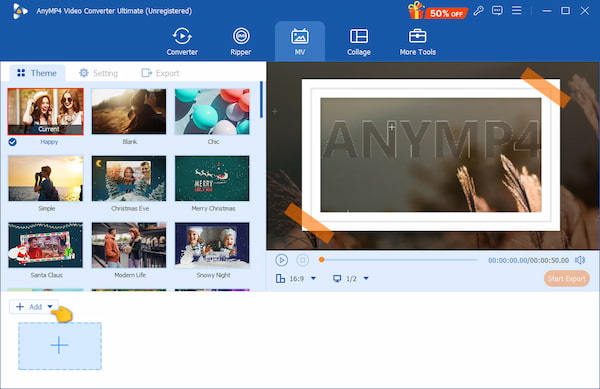
2. By default, the application opens to the Converter. Switch to the MV tab, then click +Add to import all the photos you captured for your stop-motion sequence. Drag each image to adjust it in the correct order to ensure the animation flows properly.
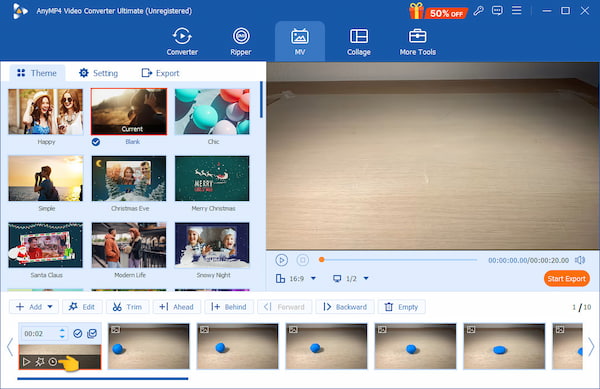
In stop-motion animation, controlling the display time for each photo is important. Click Clock on each photo to adjust the duration settings and control how long each frame appears. Shorter durations produce faster, smoother motion, while longer durations produce slower movement.
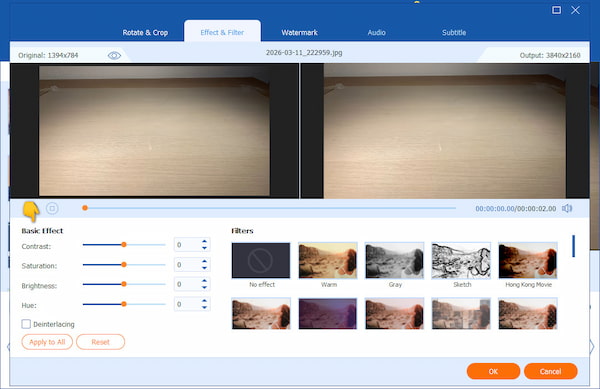
3. Click Edit and proceed to the Effect & Filter tab to improve the visual quality of your stop motion animation. Here you can manually adjust contrast, brightness, saturation, and hue to correct lighting inconsistencies between frames. You can also apply built-in filters to give your animation a specific visual style.
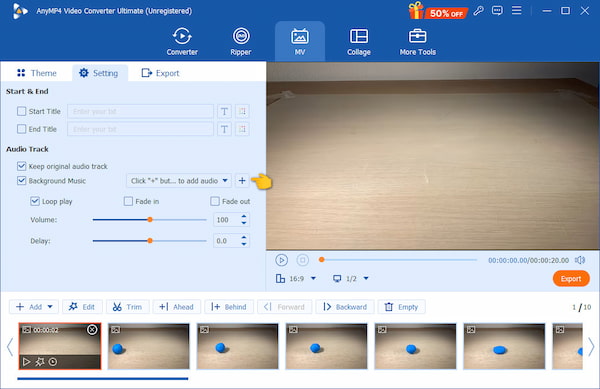
4. Move to the Settings section to add background music or sound effects. Check the Background Music box and click + to import an audio file. If needed, adjust the volume, apply a fade effect, or adjust the loop settings to match the length of your animation.
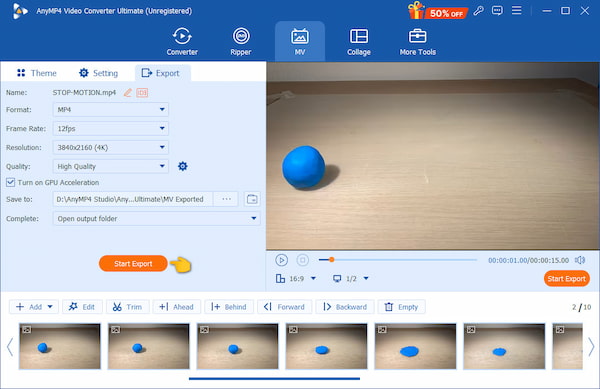
5. Switch to the Export section to finalize the stop motion animation. In the Format field, select formats such as MP4, MOV, WMV, AVI, MKV, or GIF. You can also customize frame rate, resolution, and quality. After adjusting all settings, click Start Export to render your frames into a complete stop motion video.
AnyMP4 Video Converter Ultimate lets you easily organize your captured frames, enhance visuals, add sound, and export a polished stop-motion animation. In addition to making stop-motion animations, you can also freeze-frame a video in the MV tab. You can use this technique for stylistic or storytelling effects in a stop-motion project.
Q1: What is the best frame rate for stop motion?
A1: 12 frames per second (FPS) is often used for a classic, slightly choppy stop motion look. It requires fewer frames, making it faster to produce. Meanwhile, 24 FPS is considered cinematic and produces very smooth motion, but it requires twice as many frames per second.
Q2: What is the best free stop motion app for iPhone/Android?
A2: For mobile users, Stop Motion Studio is the best free app for both iPhone and Android. It provides essential features like frame-by-frame capture, onion skinning, timeline editing, and basic sound integration. However, the free version has some limitations on resolution and effects.
Q3: How long does it take to make a stop motion video?
A3: It depends on the length of your animation, frame rate, and complexity of movements. A short one-minute video at 24 FPS requires 1,440 frames, and even small adjustments per frame can take several seconds to a minute each. For beginners, creating a simple 30-second stop motion could take several hours to a full day.
Q4: What is onion skinning in stop motion?
A4: Onion skinning is a stop-motion technique that overlays a faint image of the previous frame onto the live camera view. It lets you see exactly where your subject was in the previous frame, helping you make small, consistent movements between shots.
Creating a stop-motion video may seem challenging at first. However, with the right techniques, setup, and editing tools, anyone can learn how to make a stop-motion video that looks professional. From preparing your camera and lighting to carefully capturing frames and refining your animation, each step is essential for smooth, engaging motion. To simplify post-production and give your animation a polished finish, use AnyMP4 Video Converter Ultimate. Its MV Maker allows you to add sound effects, background music, color corrections, and export in different formats.
Secure Download
Secure Download
 Updated by Mark Cristobal to Edit Video
More readings
 How to Make Interactive Videos [Plan, Record, and Share]
This post will guide you how to make interactive videos. We will provide tips and tricks to create engaging interactive videos successfully. Check it out now!
 Is it Possible to Create Video With Midjourney? Know Here
Check our post and learn how to use AI to create video with Midjourney. Follow the steps to generate unique visuals and add a creative twist to your videos.
 How to Make a Training Video With Ease [Tips and Tricks]
This post will highlight how to make a training video for engaging and educating audiences. Discover the types and tips for creating a good training video.
 3 Simple Ways How to Make a Boomerang Video
How to Boomerang a video for Instagram? Check out this post to learn three easy ways to Boomerang an existing video.
 Add your comments to join the discussion here